• About
  • Special Reports
  • Topics
    • Climate
    • Earth Science
    • Oceans
    • Space & Planets
    • Health & Ecosystems
    • Culture & Policy
    • Education & Careers
    • Opinions
  • Projects
    • Postcards From the Field
    • ENGAGE
    • Editors’ Highlights
    • Editors’ Vox
    • Eos en Español
    • Eos 简体中文版
    • Print Archive: 2015–2025
  • Policy Tracker
  • Blogs
    • Research & Developments
    • The Landslide Blog
  • Newsletter
  • Submit to Eos
  • AGU.org
  • Career Center
  • Join AGU
  • Give to AGU
  • About
  • Special Reports
  • Topics
    • Climate
    • Earth Science
    • Oceans
    • Space & Planets
    • Health & Ecosystems
    • Culture & Policy
    • Education & Careers
    • Opinions
  • Projects
    • Postcards From the Field
    • ENGAGE
    • Editors’ Highlights
    • Editors’ Vox
    • Eos en Español
    • Eos 简体中文版
    • Print Archive: 2015–2025
  • Policy Tracker
  • Blogs
    • Research & Developments
    • The Landslide Blog
  • Newsletter
  • Submit to Eos
Skip to content
  • AGU.org
  • Career Center
  • Join AGU
  • Give to AGU
Eos

Eos

Science News by AGU

Support Eos
Sign Up for Newsletter
  • About
  • Special Reports
  • Topics
    • Climate
    • Earth Science
    • Oceans
    • Space & Planets
    • Health & Ecosystems
    • Culture & Policy
    • Education & Careers
    • Opinions
  • Projects
    • Postcards From the Field
    • ENGAGE
    • Editors’ Highlights
    • Editors’ Vox
    • Eos en Español
    • Eos 简体中文版
    • Print Archive: 2015–2025
  • Policy Tracker
  • Blogs
    • Research & Developments
    • The Landslide Blog
  • Newsletter
  • Submit to Eos

history

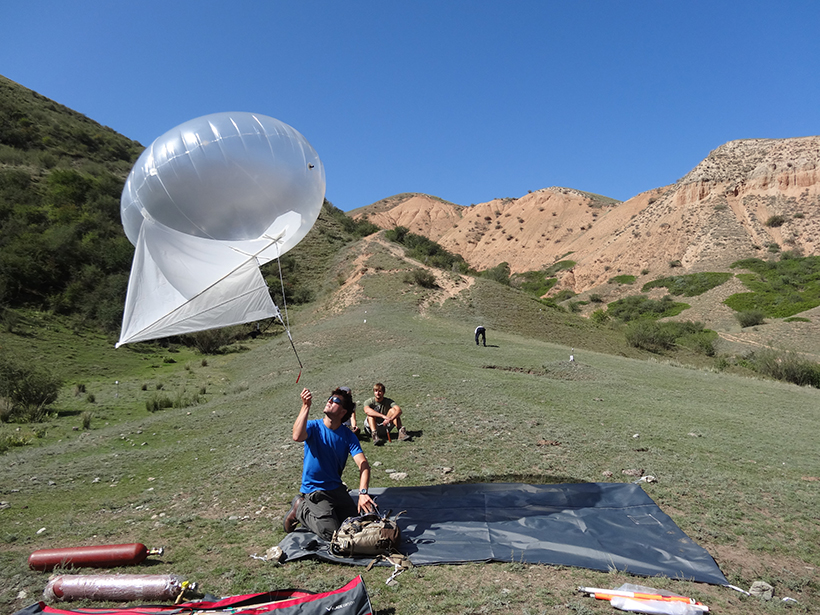
David Mackenzie with a balloon and a camera to survey 1889 earthquake ruptures.
Posted inResearch Spotlights

Tracking Down Elusive Origins of Kazakhstan's 1889 Chilik Quake

Sarah Stanley, Science Writer by Sarah Stanley 22 July 20165 October 2022

New fieldwork and satellite data suggest that three faults may have caused a large earthquake near Almaty, Kazakhstan, more than a century ago.
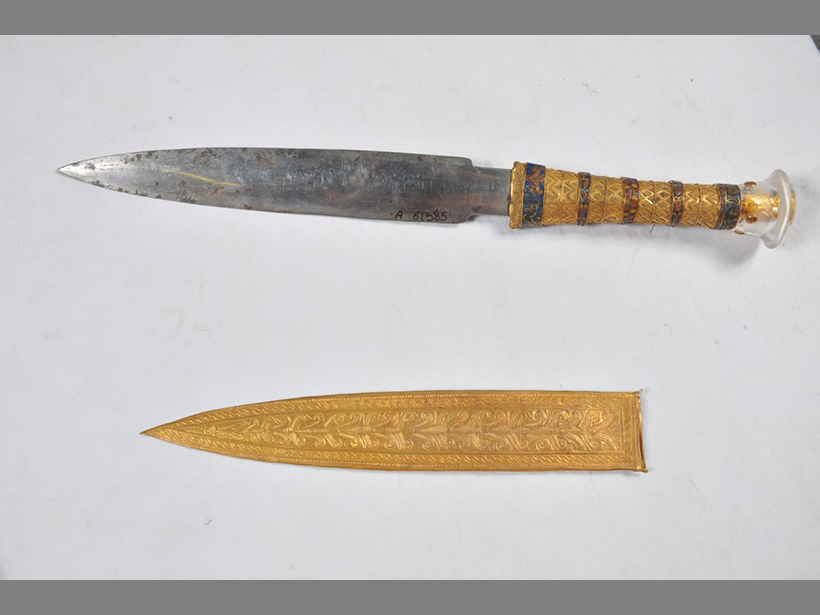
This dagger, recovered from King Tutankhamun’s mummy, sports a rock crystal pommel, a golden hilt, and a blade hammered from meteoritic iron.
Posted inNews

Pharaoh's Iron Dagger Made from a Meteorite, Study Confirms

by E. Deatrick 1 June 201613 January 2023

After examining the metal under bombardment by X-rays, scientists find the composition of King Tutankhamun's knife blade matches "iron of the sky."
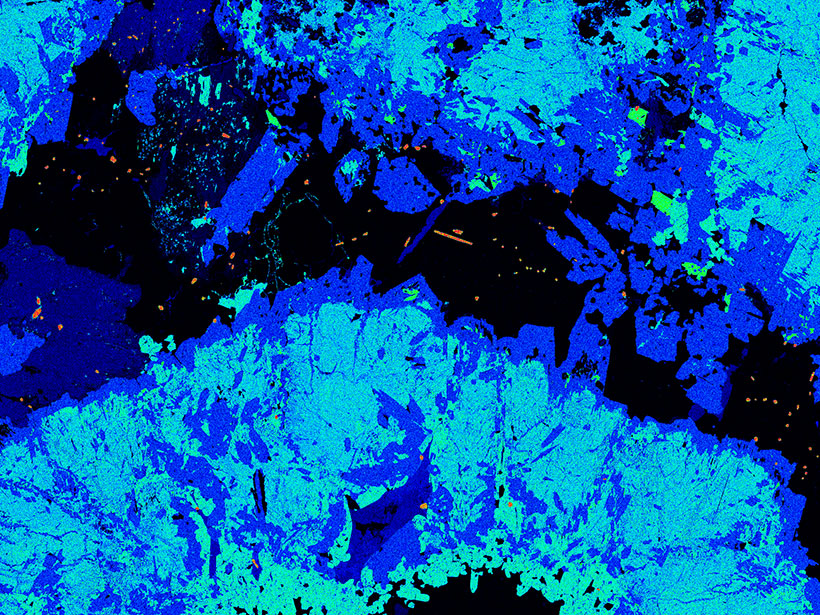
X-ray map, using calcium Kα radiation, of orbicular (disk-shaped) diorite from Davie County, N.C.
Posted inOpinions

The Broken Bridge Between Geology and Museums

by C. Tacker 6 May 201616 August 2022

For lack of funding, irreplaceable collections of mineral specimens may be lost. The Earth science community must rethink the role of museums as archives and outlets for information.

NASA-2015-Record-Warm-Global-Year-Since-1880
Posted inResearch Spotlights

Researchers Attribute Human Influence on Climate Back to 1930s

by Lauren Lipuma 11 April 201613 February 2023

A new study finds that humans likely have triggered the last 16 record-breaking hot years on Earth, up to 2014.

Posted inNews

Navy Ship Mysteriously Lost in 1921 Found via Science, Sleuthing

by Randy Showstack 25 March 201614 January 2022

Scientists painstakingly compared a shipwreck spotted in 2009 to a 1904 schematic of a long-lost tugboat. A naval gun on the wreck proved to be the "smoking gun" identifying the vanished ship.

The 1927 flood on the Lower Mississippi River was one of the most destructive in U.S. history.
Posted inResearch Spotlights

Reimagining a Fatal Flood

Kate Wheeling, freelance science writer by Kate Wheeling 17 March 20162 March 2023

Researchers use high-resolution simulations to reexamine the rainfall events that led to one of the most destructive floods in U.S. history.

Posted inResearch Spotlights

Unknown Tsunami Trigger Hides Along a Creeping Aleutian Fault

Cody Sullivan by C. Sullivan 3 March 201624 January 2023

A seismically quiet part of the Aleutian Subduction Zone may have caused tsunamis in the past—and may cause future tsunamis that could travel across the Pacific Ocean.

Posted inResearch Spotlights

Plate Displacement Rate Offers Insight into 2011 Tohoku Quake

by L. Strelich 4 February 201624 January 2023

For the first time, scientists use GPS to measure the displacement rate of the subducting Pacific Plate near the source of disastrous shaking in 2011.

Posted inResearch Spotlights

Climate Change Drives Increasing Snowfall in Western Antarctica

by L. Strelich 21 January 201614 March 2023

Using ice core records from West Antarctica, researchers look back at the past 300 years of snowfall over the Amundsen Sea.

Posted inNews

Purple Hearts Honor Four Meteorologists Killed in World War II

by Randy Showstack 24 November 20155 October 2021

Seventy-three years after they died in a German U-boat attack, a ceremony posthumously honors the U.S. Weather Service workers and highlights the importance of weather forecasting during the war.

Posts pagination

Newer posts 1 … 23 24 25 26 27 28 Older posts
Over a dark blue-green square appear the words Special Report: The State of the Science 1 Year On.

Features from AGU Publications

Research Spotlights

A Long-Term Look Beneath an Antarctic Ice Shelf

6 March 20266 March 2026
Editors' Highlights

Tropopause Temperature Drives Tropical Cyclone Simulation Diversity

6 March 20266 March 2026
Editors' Vox

Editorial Handover at Perspectives of Earth and Space Scientists

6 March 20266 March 2026
Eos logo at left; AGU logo at right

About Eos
ENGAGE
Awards
Contact

Advertise
Submit
Career Center
Sitemap

© 2026 American Geophysical Union. All rights reserved Powered by Newspack