• About
  • Special Reports
  • Topics
    • Climate
    • Earth Science
    • Oceans
    • Space & Planets
    • Health & Ecosystems
    • Culture & Policy
    • Education & Careers
    • Opinions
  • Projects
    • Postcards From the Field
    • ENGAGE
    • Editors’ Highlights
    • Editors’ Vox
    • Eos en Español
    • Eos 简体中文版
    • Print Archive: 2015–2025
  • Policy Tracker
  • Blogs
    • Research & Developments
    • The Landslide Blog
  • Newsletter
  • Submit to Eos
  • AGU.org
  • Career Center
  • Join AGU
  • Give to AGU
  • About
  • Special Reports
  • Topics
    • Climate
    • Earth Science
    • Oceans
    • Space & Planets
    • Health & Ecosystems
    • Culture & Policy
    • Education & Careers
    • Opinions
  • Projects
    • Postcards From the Field
    • ENGAGE
    • Editors’ Highlights
    • Editors’ Vox
    • Eos en Español
    • Eos 简体中文版
    • Print Archive: 2015–2025
  • Policy Tracker
  • Blogs
    • Research & Developments
    • The Landslide Blog
  • Newsletter
  • Submit to Eos
Skip to content
  • AGU.org
  • Career Center
  • Join AGU
  • Give to AGU
Eos

Eos

Science News by AGU

Support Eos
Sign Up for Newsletter
  • About
  • Special Reports
  • Topics
    • Climate
    • Earth Science
    • Oceans
    • Space & Planets
    • Health & Ecosystems
    • Culture & Policy
    • Education & Careers
    • Opinions
  • Projects
    • Postcards From the Field
    • ENGAGE
    • Editors’ Highlights
    • Editors’ Vox
    • Eos en Español
    • Eos 简体中文版
    • Print Archive: 2015–2025
  • Policy Tracker
  • Blogs
    • Research & Developments
    • The Landslide Blog
  • Newsletter
  • Submit to Eos

Modeling

Researchers put an old model to the test with new data to examine methane dynamics in wetland
Posted inResearch Spotlights

A New Model Yields a Better Picture of Methane Fluxes

Elizabeth Thompson by Elizabeth Thompson 27 November 20172 November 2021

Scientists update an old model with recent findings, allowing for a more accurate understanding of methane dynamics in wetlands.

Sea surface temperature departure from average, observed vs. forecast
Posted inScience Updates

Advancing Climate Forecasting

by W. J. Merryfield, F. J. Doblas-Reyes, L. Ferranti, J.-H. Jeong, Y. J. Orsolini, R. I. Saurral, A. A. Scaife, M. A. Tolstykh and M. Rixen 27 November 201714 February 2023

Better forecasts, new products: The World Climate Research Programme coordinates research aimed at improving and extending global climate forecasting capabilities.

Researchers look at ice sheet modeling of the Late Pliocene to better understand how sea levels may change as the planet warms
Posted inResearch Spotlights

How Earth’s Orbit Affected Ice Sheets Millions of Years Ago

by E. Underwood 22 November 201724 January 2024

A new study of the late Pliocene era could help scientists predict future sea level rise.

Residents of Palam Vihar in Gurgaon, Haryana, India, make their way through flooded streets after a typical monsoon spell
Posted inScience Updates

Preparing for the Future: Climate Products and Models for India

by S. Bhardwaj, M. d. S. Mesquita and N. J. C. Barreto 20 November 201720 March 2023

Kick-off Workshop of Indo-Norwegian Project PREPARE; Bergen, Norway, 27–31 March 2017

Three-dimensional imaging unveils the dynamics inside an active volcano
Posted inResearch Spotlights

Looking Inside an Active Italian Volcano

by E. Underwood 17 November 201729 September 2022

Scientists use 3-D imaging to reveal Solfatara crater’s inner plumbing.

Map of sea surface temperatures.
Posted inOpinions

Maintaining Momentum in Climate Model Development

by C. C. Ummenhofer, Aneesh Subramanian and S. Legg 15 November 201724 March 2023

As the current funding for climate process teams comes to an end, scientists emphasize the continuing need for teams that translate basic research into improved climate models.

Posted inEditors' Highlights

Improved Simulation of Gross Primary Productivity

by P. A. Dirmeyer 10 November 201717 March 2023

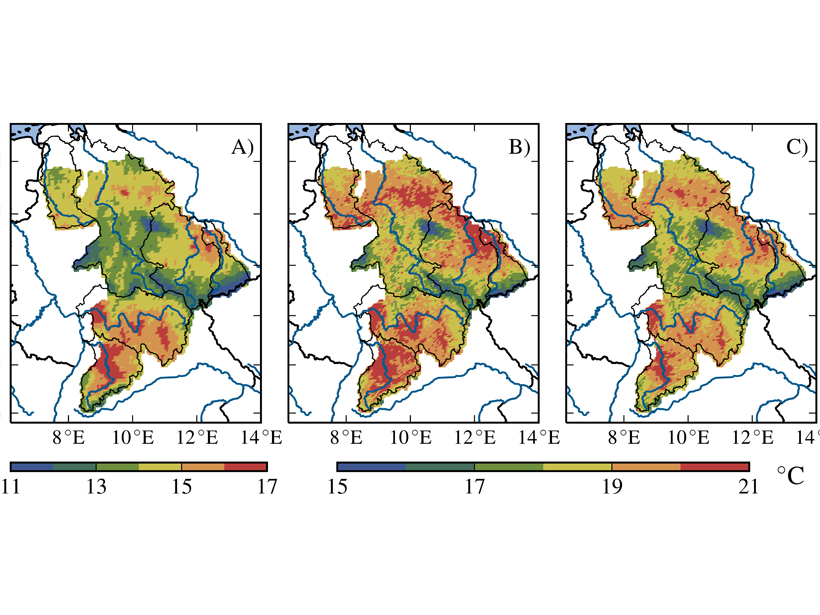
A new model better explains seasonal variations in biomass.

Researchers assess what kind of particles seed cloud formation from the preindustrial era to present day.
Posted inResearch Spotlights

Atmospheric Particles Aren’t the Same Cloud Seeds They Once Were

by E. Underwood 7 November 20173 May 2022

Still, more than half of the seeds required for cloud droplets to form in both the present-day and preindustrial atmospheres are made by trace gases that condense to form minute aerosol particles.

A satellite image of an atmospheric river on 20 February 2017, which helped the American west emerge from a 5-year drought.
Posted inFeatures

How Will Climate Change Affect the United States in Decades to Come?

by D. Wuebbles, D. W. Fahey and K. A. Hibbard 3 November 201730 March 2023

A new U.S. government report shows that climate is changing and that human activities will lead to many more changes. These changes will affect sea levels, drought frequency, severe precipitation, and more.

Posted inEditors' Highlights

New Insight into Ionospheric Feedback Instability

by Gang Lu 3 November 201721 February 2023

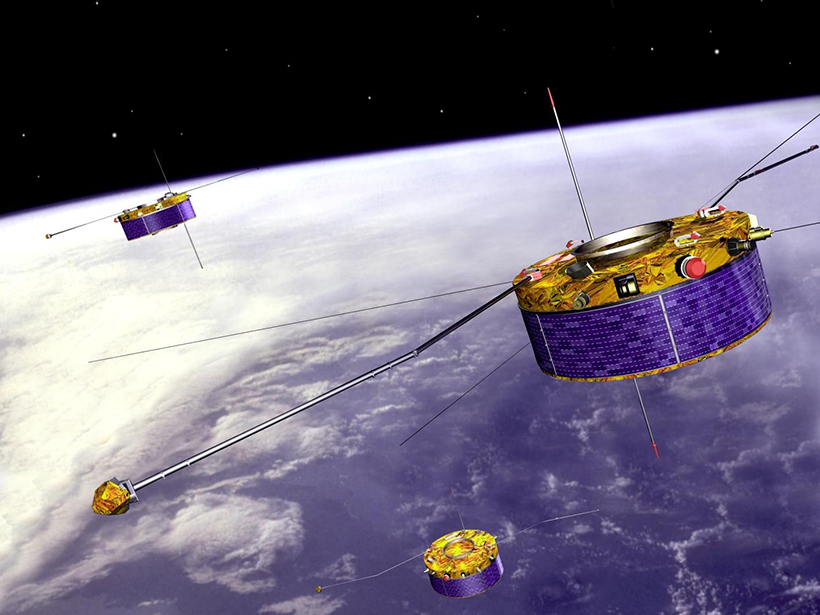
A new modeling effort could change our understanding of auroral arc formation.

Posts pagination

Newer posts 1 … 93 94 95 96 97 … 117 Older posts
Over a dark blue-green square appear the words Special Report: The State of the Science 1 Year On.

Features from AGU Publications

Research Spotlights

As Wildfires Increase in the West, So Does Suppression Spending

10 June 202610 June 2026
Editors' Highlights

Multi-Scale Fault Roughness Encapsulated in a Friction Law

11 June 202611 June 2026
Editors' Vox

Small-Scale Indian Ocean Dynamics Underpin Marine Ecology and Climate

4 June 20263 June 2026
Eos logo at left; AGU logo at right

About Eos
ENGAGE
Awards
Contact

Advertise
Submit
Career Center
Sitemap

© 2026 American Geophysical Union. All rights reserved Powered by Newspack