• About
  • Special Reports
  • Topics
    • Climate
    • Earth Science
    • Oceans
    • Space & Planets
    • Health & Ecosystems
    • Culture & Policy
    • Education & Careers
    • Opinions
  • Projects
    • Postcards From the Field
    • ENGAGE
    • Editors’ Highlights
    • Editors’ Vox
    • Eos en Español
    • Eos 简体中文版
    • Print Archive: 2015–2025
  • Policy Tracker
  • Blogs
    • Research & Developments
    • The Landslide Blog
  • Newsletter
  • Submit to Eos
  • AGU.org
  • Career Center
  • Join AGU
  • Give to AGU
  • About
  • Special Reports
  • Topics
    • Climate
    • Earth Science
    • Oceans
    • Space & Planets
    • Health & Ecosystems
    • Culture & Policy
    • Education & Careers
    • Opinions
  • Projects
    • Postcards From the Field
    • ENGAGE
    • Editors’ Highlights
    • Editors’ Vox
    • Eos en Español
    • Eos 简体中文版
    • Print Archive: 2015–2025
  • Policy Tracker
  • Blogs
    • Research & Developments
    • The Landslide Blog
  • Newsletter
  • Submit to Eos
Skip to content
  • AGU.org
  • Career Center
  • Join AGU
  • Give to AGU
Eos

Eos

Science News by AGU

Support Eos
Sign Up for Newsletter
  • About
  • Special Reports
  • Topics
    • Climate
    • Earth Science
    • Oceans
    • Space & Planets
    • Health & Ecosystems
    • Culture & Policy
    • Education & Careers
    • Opinions
  • Projects
    • Postcards From the Field
    • ENGAGE
    • Editors’ Highlights
    • Editors’ Vox
    • Eos en Español
    • Eos 简体中文版
    • Print Archive: 2015–2025
  • Policy Tracker
  • Blogs
    • Research & Developments
    • The Landslide Blog
  • Newsletter
  • Submit to Eos

moons

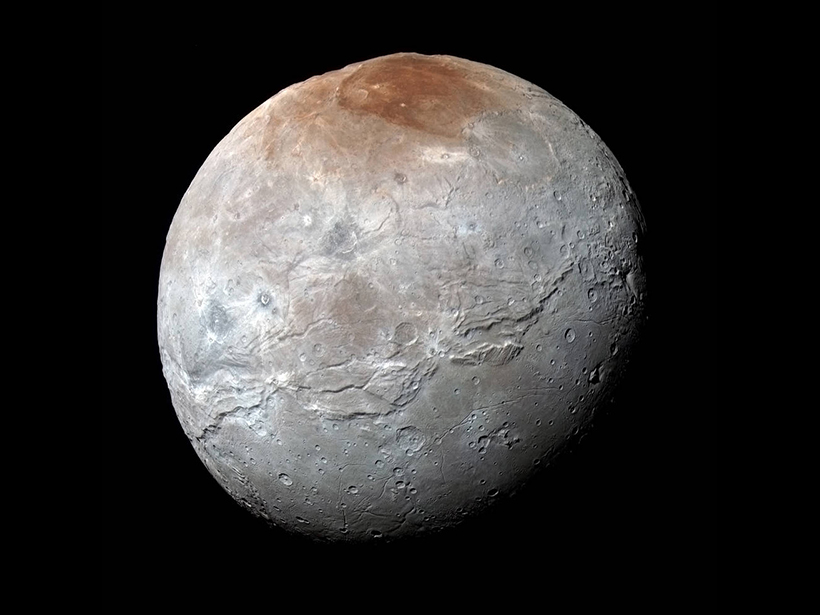
This image of Pluto’s moon Charon was captured by NASA’s New Horizons spacecraft as it approached Pluto on 14 July 2015.
Posted inNews

Scientists Solve Charon's Red Mystery

JoAnna Wendel, freelance science writer and illustrator by JoAnna Wendel 15 September 201625 October 2021

Why are Charon's poles dusted with reddish material?

Posted inEditors' Vox

Saturn’s Magnetosphere: A Dozen Years of Discovery

by Michael W. Liemohn 11 July 201611 January 2022

Twelve years of studying Saturn's magnetosphere has produced many compelling breakthroughs. Even more exciting, however, is what's left to learn.
Posted inNews

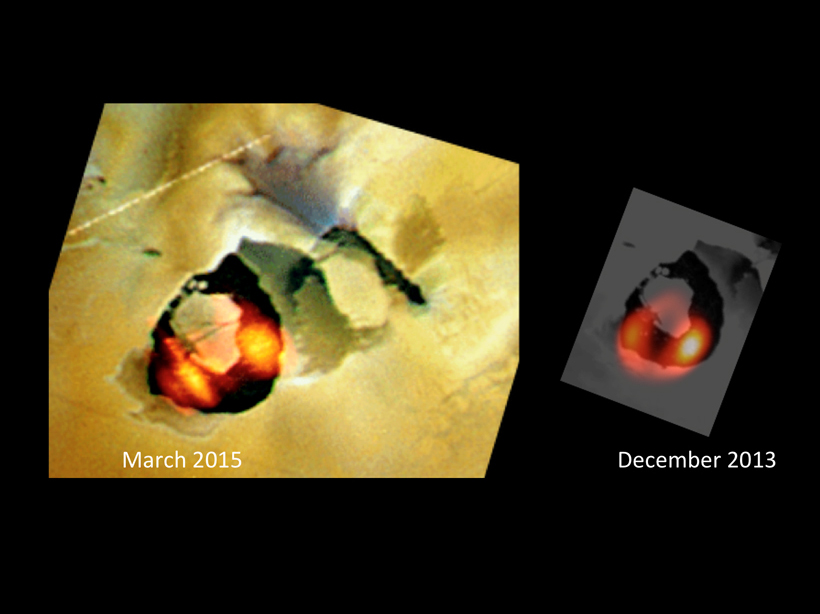
Jupiter's Europa Helps Earthlings See Sister Moon's Volcano

by R. Cowen 17 November 20152 May 2023

By briefly slipping between Earth and sister Jovian moon Io, Europa fortuitously enabled an Earth-based telescope to observe, with greater detail than ever before, a huge, puzzling volcano on Io.

Posted inNews

New Spin on Pluto's Moons

by R. Cowen 9 November 20156 January 2023

Strangely speedy rotation rates of Pluto's tiny orbiting companions show up in a trove of images taken as the New Horizons spacecraft approached the dwarf planet last spring and early summer.

Posted inNews

Pluto's Moons Nix and Hydra Show Their Faces

JoAnna Wendel, freelance science writer and illustrator by JoAnna Wendel 21 July 20156 January 2023

When the New Horizons spacecraft photographed Pluto last week, it snapped the most revealing images yet of two little-known moons of the dwarf planet.

Posts pagination

Newer posts 1 … 6 7 8
Over a dark blue-green square appear the words Special Report: The State of the Science 1 Year On.

Features from AGU Publications

Research Spotlights

Getting to Know Uranus’s “Breathing” Bow Shock

7 August 20267 August 2026
Editors' Highlights

Late Campanian Arabia-Eastern Anatolia Collision

4 August 20264 August 2026
Editors' Vox

How Bubbles Reshape Air-Sea Gas Exchange

5 August 20265 August 2026
Eos logo at left; AGU logo at right

About Eos
ENGAGE
Awards
Contact

Advertise
Submit
Career Center
Sitemap

© 2026 American Geophysical Union. All rights reserved Powered by Newspack