• About
  • Sections
  • Topics
    • Climate
    • Earth Science
    • Oceans
    • Space & Planets
    • Health & Ecosystems
    • Culture & Policy
    • Education & Careers
    • Opinions
  • Projects
    • ENGAGE
    • Editors’ Highlights
    • Editors’ Vox
    • Eos en Español
    • Eos 简体中文版
    • Print Archive
  • Science Policy Tracker
  • Blogs
    • Research & Developments
    • The Landslide Blog
  • Newsletter
  • Submit to Eos
  • AGU.org
  • Career Center
  • Join AGU
  • Give to AGU
  • About
  • Sections
  • Topics
    • Climate
    • Earth Science
    • Oceans
    • Space & Planets
    • Health & Ecosystems
    • Culture & Policy
    • Education & Careers
    • Opinions
  • Projects
    • ENGAGE
    • Editors’ Highlights
    • Editors’ Vox
    • Eos en Español
    • Eos 简体中文版
    • Print Archive
  • Science Policy Tracker
  • Blogs
    • Research & Developments
    • The Landslide Blog
  • Newsletter
  • Submit to Eos
Skip to content
  • AGU.org
  • Career Center
  • Join AGU
  • Give to AGU
Eos

Eos

Science News by AGU

Support Eos
Sign Up for Newsletter
  • About
  • Sections
  • Topics
    • Climate
    • Earth Science
    • Oceans
    • Space & Planets
    • Health & Ecosystems
    • Culture & Policy
    • Education & Careers
    • Opinions
  • Projects
    • ENGAGE
    • Editors’ Highlights
    • Editors’ Vox
    • Eos en Español
    • Eos 简体中文版
    • Print Archive
  • Science Policy Tracker
  • Blogs
    • Research & Developments
    • The Landslide Blog
  • Newsletter
  • Submit to Eos

moons

Artist’s rendering of exomoon candidate Kepler-1625b-i and its planet
Posted inNews

Large Exomoon Likely Orbits a Faraway World

Kimberly M. S. Cartier, News Writing and Production Intern for Eos.org by Kimberly M. S. Cartier 3 October 201817 January 2023

This Neptune-sized object would be the first moon discovered to orbit a planet outside the solar system, provided that additional observations continue to support the claim.

New research suggests that the movement of Europa’s ice crusts could be a sign of life.
Posted inResearch Spotlights

How Jupiter’s Icy Moons Got Their Bands and Grooves

by E. Underwood 31 July 201823 January 2023

Europa’s churning ice crust could reveal signs of ocean life, new study suggests.
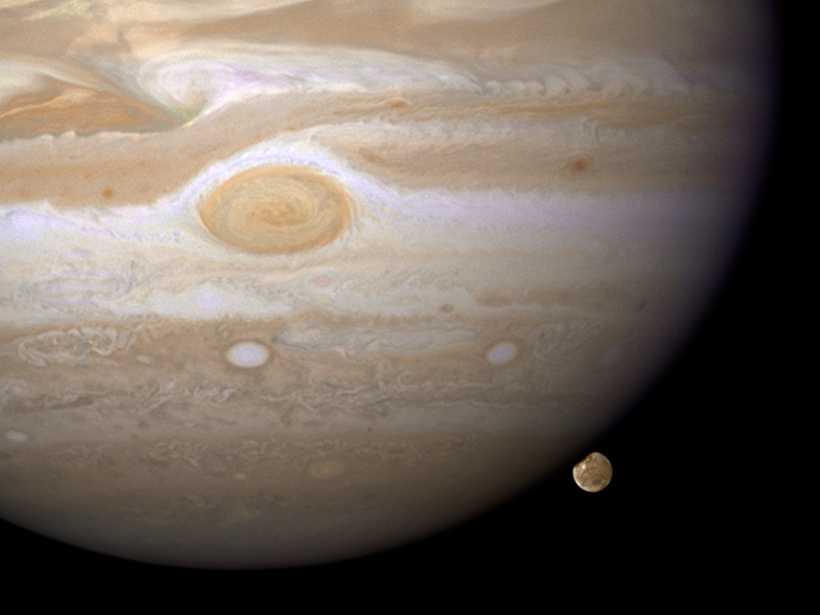
Jupiter and its largest moon, Ganymede
Posted inNews

Ten New Moons Discovered Around Jupiter

Kimberly M. S. Cartier, News Writing and Production Intern for Eos.org by Kimberly M. S. Cartier 17 July 201827 January 2022

The newly plotted moons of Jupiter include one “oddball” that orbits in the wrong direction and may be the remnant of a head-on collision.
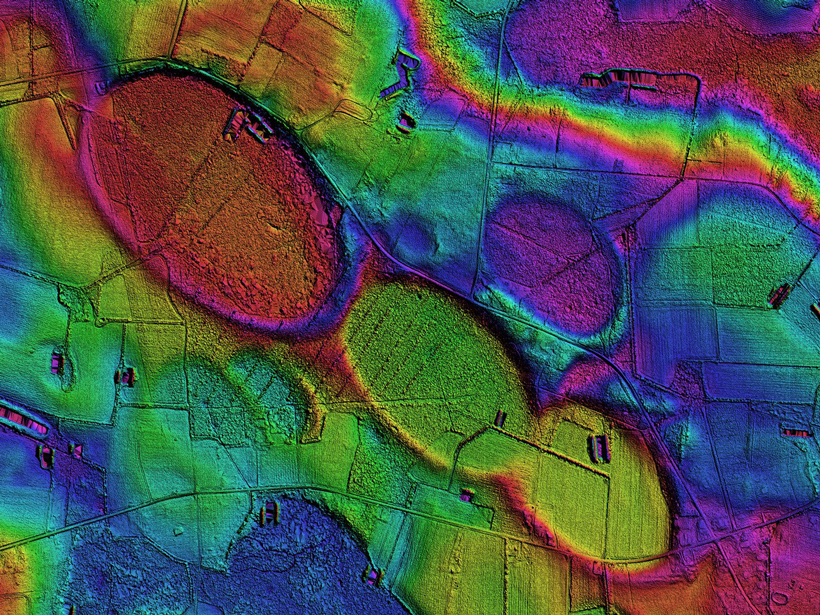
A lidar image of mysterious features on Earth called a Carolina Bays.
Posted inNews

Four Planetary Landscapes That Scientists Can’t Explain

JoAnna Wendel, freelance science writer and illustrator by JoAnna Wendel 11 December 201711 April 2023

These are just a handful of the hundreds of mysterious features across our solar neighborhood that beg to be studied closer.

Posted inEditors' Vox

Cassini’s Legacy in Print

by Jenny Lunn, Michael W. Liemohn, Mark Moldwin and E. P. Turtle 20 September 201717 February 2023

With over 750 papers published in AGU journals based on Cassini-Huygens mission data, three editors select some of the most noteworthy.

iapetus-ridge
Posted inNews

Iapetus's Ridge: The Result of Many Small Impacts?

JoAnna Wendel, freelance science writer and illustrator by JoAnna Wendel 30 March 201721 February 2023

A ridge around Saturn's third-largest moon has scientists scratching their heads.

A polar view of Saturn’s moon, Pan
Posted inNews

New Images of Pan, Saturn's Walnut Moon, in Unprecedented Detail

JoAnna Wendel, freelance science writer and illustrator by JoAnna Wendel 10 March 201720 April 2023

The finely detailed images can help future scientists study small bodies with weak gravity.

This image of Pluto’s moon Charon was captured by NASA’s New Horizons spacecraft as it approached Pluto on 14 July 2015.
Posted inNews

Scientists Solve Charon's Red Mystery

JoAnna Wendel, freelance science writer and illustrator by JoAnna Wendel 15 September 201625 October 2021

Why are Charon's poles dusted with reddish material?

Posted inEditors' Vox

Saturn’s Magnetosphere: A Dozen Years of Discovery

by Michael W. Liemohn 11 July 201611 January 2022

Twelve years of studying Saturn's magnetosphere has produced many compelling breakthroughs. Even more exciting, however, is what's left to learn.

Posted inNews

Jupiter's Europa Helps Earthlings See Sister Moon's Volcano

by R. Cowen 17 November 20152 May 2023

By briefly slipping between Earth and sister Jovian moon Io, Europa fortuitously enabled an Earth-based telescope to observe, with greater detail than ever before, a huge, puzzling volcano on Io.

Posts pagination

Newer posts 1 … 5 6 7 8 Older posts
A view of a bridge, with the New Orleans skyline visible in the distance between the bridge and the water. A purple tint, a teal curved line representing a river, and the text “#AGU25 coverage from Eos” overlie the photo.

Features from AGU Publications

Research Spotlights

An Ecosystem Never Forgets

19 December 202519 December 2025
Editors' Highlights

Frictional Properties of the Nankai Accretionary Prism

11 December 20259 December 2025
Editors' Vox

Hydrothermal Circulation and Its Impact on the Earth System

3 December 20253 December 2025
Eos logo at left; AGU logo at right

About Eos
ENGAGE
Awards
Contact

Advertise
Submit
Career Center
Sitemap

© 2025 American Geophysical Union. All rights reserved Powered by Newspack