• About
  • Special Reports
  • Topics
    • Climate
    • Earth Science
    • Oceans
    • Space & Planets
    • Health & Ecosystems
    • Culture & Policy
    • Education & Careers
    • Opinions
  • Projects
    • Postcards From the Field
    • ENGAGE
    • Editors’ Highlights
    • Editors’ Vox
    • Eos en Español
    • Eos 简体中文版
    • Print Archive: 2015–2025
  • Policy Tracker
  • Blogs
    • Research & Developments
    • The Landslide Blog
  • Newsletter
  • Submit to Eos
  • AGU.org
  • Career Center
  • Join AGU
  • Give to AGU
  • About
  • Special Reports
  • Topics
    • Climate
    • Earth Science
    • Oceans
    • Space & Planets
    • Health & Ecosystems
    • Culture & Policy
    • Education & Careers
    • Opinions
  • Projects
    • Postcards From the Field
    • ENGAGE
    • Editors’ Highlights
    • Editors’ Vox
    • Eos en Español
    • Eos 简体中文版
    • Print Archive: 2015–2025
  • Policy Tracker
  • Blogs
    • Research & Developments
    • The Landslide Blog
  • Newsletter
  • Submit to Eos
Skip to content
  • AGU.org
  • Career Center
  • Join AGU
  • Give to AGU
Eos

Eos

Science News by AGU

Support Eos
Sign Up for Newsletter
  • About
  • Special Reports
  • Topics
    • Climate
    • Earth Science
    • Oceans
    • Space & Planets
    • Health & Ecosystems
    • Culture & Policy
    • Education & Careers
    • Opinions
  • Projects
    • Postcards From the Field
    • ENGAGE
    • Editors’ Highlights
    • Editors’ Vox
    • Eos en Español
    • Eos 简体中文版
    • Print Archive: 2015–2025
  • Policy Tracker
  • Blogs
    • Research & Developments
    • The Landslide Blog
  • Newsletter
  • Submit to Eos

Oceans

A global map of subduction zones. The Mariana Trench is near the center with a zoomed-in image of bathymetry.
Posted inResearch Spotlights

Deep Earthquakes Suggest Well-Hydrated Mariana Subduction Zone

by Morgan Rehnberg 10 August 20222 March 2023

Earthquakes as deep as 50 kilometers below the seafloor were detected by 12 ocean bottom seismometers placed around the Challenger Deep.

Data from the J-OFURO3 satellite product showing monthly sea surface temperature variations across the global ocean. The red colors indicate sea surface temperature swings from month to month that are typically larger than 1.5°C, while dark blues and purples indicate variations that are typically smaller than 0.5°C.
Posted inResearch Spotlights

Spatial Scale Shapes the Ocean and Atmosphere’s Influence on the Climate

Aaron Sidder, freelance science writer by Aaron Sidder 9 August 20229 August 2022

Researchers measured the processes driving heat exchange between the Pacific Ocean and the atmosphere.

A banana field replaced by two shrimp ponds due to soil salinization in Zhongshan, Guangdong Province, China.
Posted inResearch Spotlights

The Shapes of Shrimp Farms Affect Their Groundwater Pollution

by Aara’L Yarber 8 August 20228 August 2022

New findings may help decisionmakers optimize shrimp farm layouts, which could help improve coastal water quality.

Scientists take groundwater samples at a karst aquifer field site.
Posted inNews

Groundwater May Fix as Much Carbon as Some Ocean Surface Waters

by Carolyn Wilke 28 July 20227 September 2022

Microbes from wells as deep as 90 meters created organic carbon at a rate that overlaps with some nutrient-poor spots in the ocean.

Photo of tubes of rock samples on a laboratory table with a microscope in the background.
Posted inNews

Stretching Crust Explains Earth’s 170,000-Year-Long Heat Wave

by Jennifer Schmidt 27 July 202227 July 2022

During a brief period in Earth’s past, a massive emission of carbon abruptly raised global temperatures, acidified oceans, and stamped out species. New data may help explain how it happened.

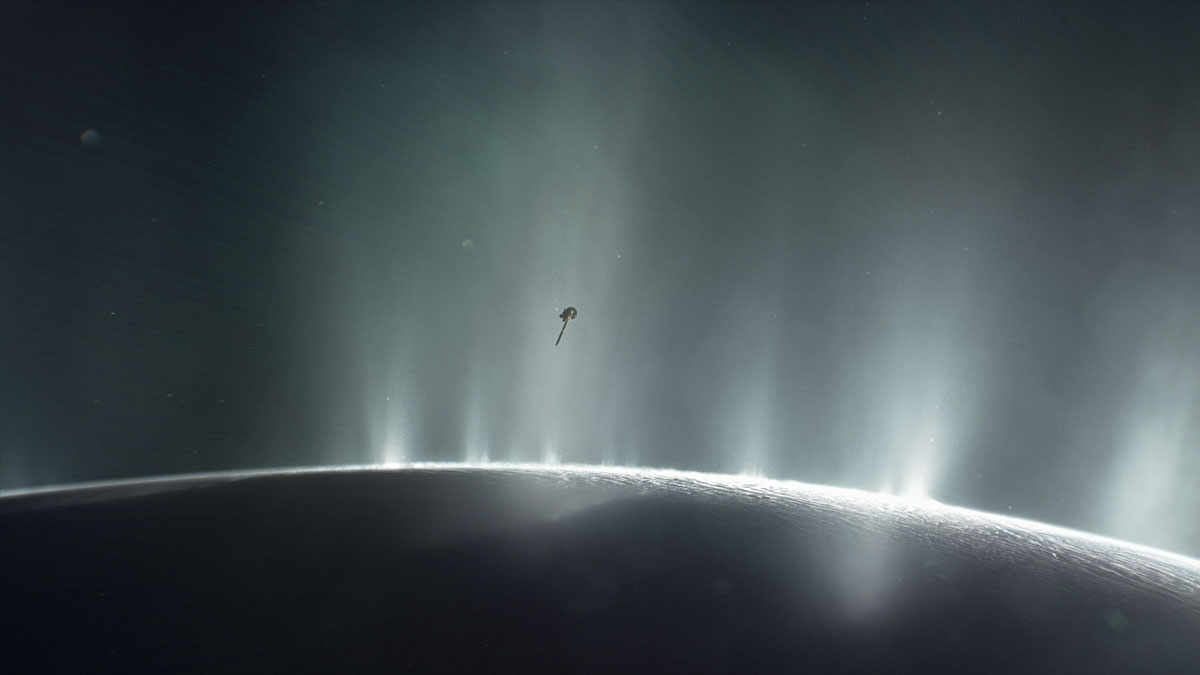
NASA的卡西尼号宇宙飞船捕捉到了位于木星前面的木卫二。
Posted inResearch Spotlights

海洋世界的动力可能受旋转控制

by Morgan Rehnberg 27 July 202227 July 2022

新的模拟结果表明,在自然罗斯比数较小的冰卫星上的地下海洋可能主要受到旋转效应的影响。

Jacqueline Campbell in a lab with a sample in hand, ready to observe it under a microscope.
Posted inFeatures

Jacqueline Campbell: Studying Oceans from Above

by Jure Japelj 25 July 202225 July 2022

Planetary scientist studies oceans with a combination of laboratory work and satellite imagery.

A woman smiling on a boat with snowy mountains in the background
Posted inFeatures

Freya Garry: Forwarding Knowledge on Climate and Gender

Jenessa Duncombe, Staff Writer by Jenessa Duncombe 25 July 202225 July 2022

A climate scientist builds a network for women and nonbinary people in her field.

Vancouver Island rising above the Strait of Juan de Fuca.
Posted inResearch Spotlights

Tracing Water Particles Back in Time

Aaron Sidder, freelance science writer by Aaron Sidder 22 July 202222 July 2022

Every summer, a low-oxygen pool settles off Canada’s western coast. A new study uses robust modeling to track the origins of the dense water.

Aerial image of blue whale breathing at the water’s surface.
Posted inNews

Wiretapped Cables and the Songs of Whales

Jenessa Duncombe, Staff Writer by Jenessa Duncombe 22 July 202217 February 2023

Researchers jerry-rigged fiber-optic cables in a fjord to eavesdrop on blue whales, with possible applications ranging from seafloor mapping to meteorology.

Posts pagination

Newer posts 1 … 43 44 45 46 47 … 111 Older posts
Over a dark blue-green square appear the words Special Report: The State of the Science 1 Year On.

Features from AGU Publications

Research Spotlights

How Much Will Western Wildfires Worsen Under Warming?

15 May 202615 May 2026
Editors' Highlights

A Digital Twin for Arctic Permafrost Beneath Roads

8 May 202612 May 2026
Editors' Vox

The Impact of Advocacy: American Geophysical Union’s Days of Action

14 May 202613 May 2026
Eos logo at left; AGU logo at right

About Eos
ENGAGE
Awards
Contact

Advertise
Submit
Career Center
Sitemap

© 2026 American Geophysical Union. All rights reserved Powered by Newspack