• About
  • Sections
  • Topics
    • Climate
    • Earth Science
    • Oceans
    • Space & Planets
    • Health & Ecosystems
    • Culture & Policy
    • Education & Careers
    • Opinions
  • Projects
    • ENGAGE
    • Editors’ Highlights
    • Editors’ Vox
    • Eos en Español
    • Eos 简体中文版
    • Print Archive
  • Science Policy Tracker
  • Blogs
    • Research & Developments
    • The Landslide Blog
  • Newsletter
  • Submit to Eos
  • AGU.org
  • Career Center
  • Join AGU
  • Give to AGU
  • About
  • Sections
  • Topics
    • Climate
    • Earth Science
    • Oceans
    • Space & Planets
    • Health & Ecosystems
    • Culture & Policy
    • Education & Careers
    • Opinions
  • Projects
    • ENGAGE
    • Editors’ Highlights
    • Editors’ Vox
    • Eos en Español
    • Eos 简体中文版
    • Print Archive
  • Science Policy Tracker
  • Blogs
    • Research & Developments
    • The Landslide Blog
  • Newsletter
  • Submit to Eos
Skip to content
  • AGU.org
  • Career Center
  • Join AGU
  • Give to AGU
Eos

Eos

Science News by AGU

Support Eos
Sign Up for Newsletter
  • About
  • Sections
  • Topics
    • Climate
    • Earth Science
    • Oceans
    • Space & Planets
    • Health & Ecosystems
    • Culture & Policy
    • Education & Careers
    • Opinions
  • Projects
    • ENGAGE
    • Editors’ Highlights
    • Editors’ Vox
    • Eos en Español
    • Eos 简体中文版
    • Print Archive
  • Science Policy Tracker
  • Blogs
    • Research & Developments
    • The Landslide Blog
  • Newsletter
  • Submit to Eos

open science

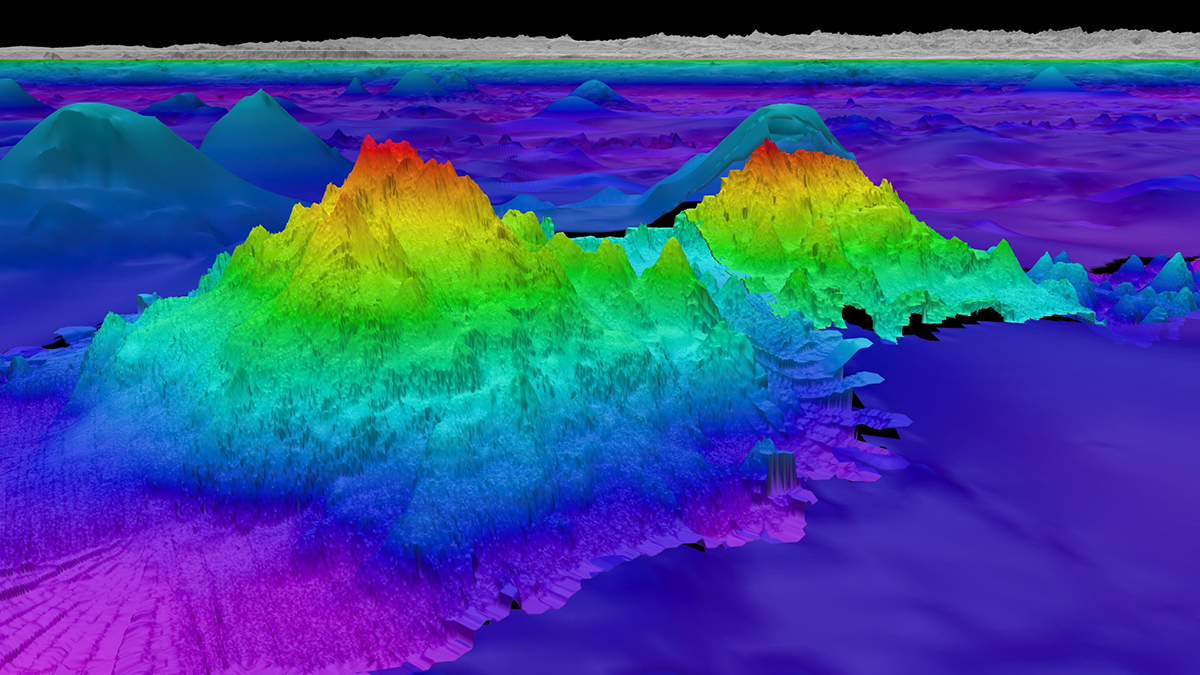
Seamount discovered by Schmidt Ocean Institute’s R/V Falkor (too)
Posted inNews

New Seafloor Map Only 25% Done, with 6 Years to Go

Tim Hornyak, Science Writer by Tim Hornyak 2 April 20242 April 2024

Beneath the waves, the vast majority of the ocean is unknown. Seabed 2030 is using cutting-edge technologies to fill in the bathymetric blanks and fully map the seafloor.

Photo of Alexandre Schubnel with a cover of JGR: Solid Earth.
Posted inEditors' Vox

Introducing the new Editor-in-Chief of JGR: Solid Earth

by Alexandre Schubnel 28 February 202428 February 2024

Learn about the person taking the helm of JGR: Solid Earth and his vision for the coming years.

一个由六张黑白图像组成的网格,其中三张图像分别代表火星表面的两个区域。中央的HiRISE MADNet数字地形模型镶嵌图像清晰度最高,分辨率最高。
Posted inResearch Spotlights

绘制火星地图:深度学习可帮助确定耶泽洛陨石坑着陆点

Sarah Derouin, Science Writer by Sarah Derouin 17 January 202417 January 2024

研究人员使用新技术更精确地估计了火星上的地面高度,为火星车着陆制作了更高分辨率的地图。

El agua del río corre a través de una presa.
Posted inScience Updates

Un enfoque holístico de los datos hidroeléctricos

by Debjani Singh 10 January 202410 January 2024

Una nueva plataforma en línea ofrece extensos datos y herramientas sobre los recursos hidroeléctricos de EE. UU., lo que permite tomar decisiones basadas en datos en el nexo energía-agua.

The mountain Telegonus Mensae on Io. In the bottom center of the image is a dark spot that could be an impact crater.
Posted inNews

Amateur Astronomer Finds a Possible Crater on Io

by Chiara Villanueva 15 December 202315 December 2023

The most volcanically active body in the solar system may have an impact crater, a discovery spotted by a curious nonprofessional scientist.

A person's hand pointing at an unlocked symbol.
Posted inEditors' Vox

AGU Publications Opens Science: Making Science Accessible and Equitable

by Paige Wooden, Jenny Lunn, Kristina Vrouwenvelder, Margaret Moerchen, Mia Ricci, Matt Giampoala and Brian Sedora 5 December 20236 October 2025

To celebrate the Year of Open Science, we highlight our efforts to make AGU journals and books more open, accessible, and inclusive.
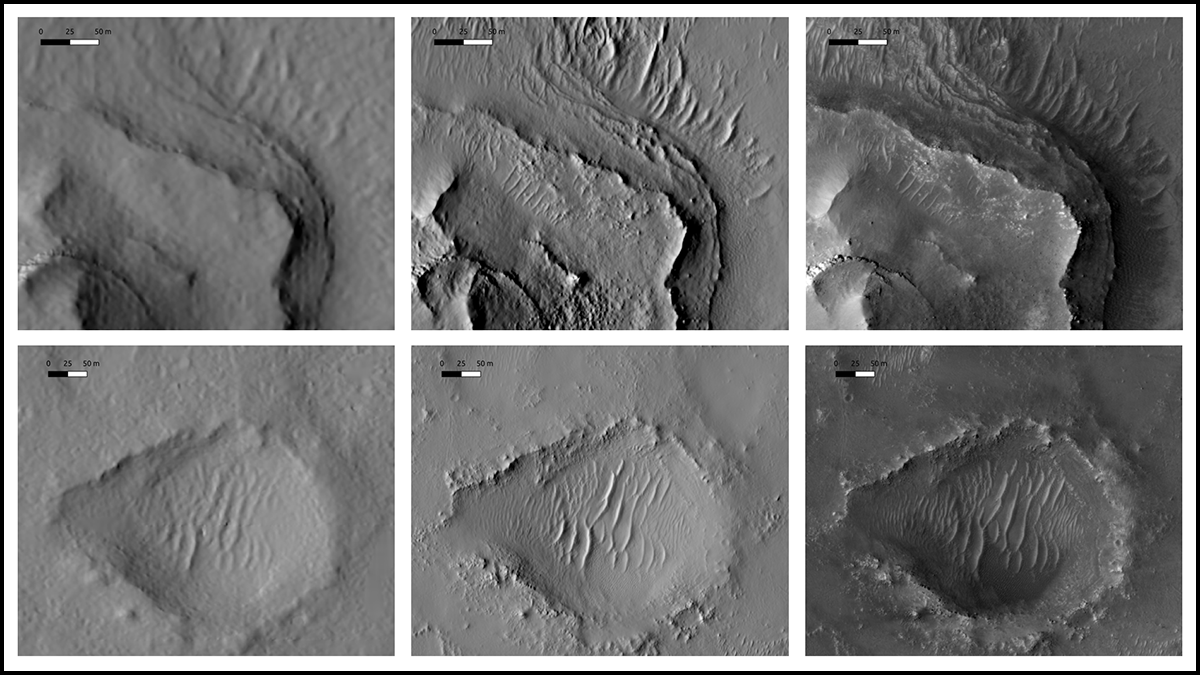
A grid of six black-and-white images, with three images each of two areas on the Martian surface. The images in the center from the HiRISE MADNet digital terrain model mosaic are the sharpest, with the highest resolution.
Posted inResearch Spotlights

Mapping Mars: Deep Learning Could Help Identify Jezero Crater Landing Site

Sarah Derouin, Science Writer by Sarah Derouin 1 December 202317 January 2024

Researchers used new techniques to more precisely estimate ground elevations on Mars, producing a refined resolution map for rover landings.
Posted inAGU News

Wide. Open. Science.

by Caryl-Sue Micalizio 15 November 202317 November 2023

This month, we explore how researchers are advancing and expanding the reach of Earth and space sciences.

A dark cliff next to a group of people with snowmobiles
Posted inNews

Digitally Preserving Svalbard’s Fragile Geology

by Bill Morris 18 October 202318 October 2023

A team of researchers is making the iconic rock outcrops of Svalbard available to the world through an open-source database of virtual geological models.

A spacecraft with solar panels extending off one side flies over the dark surface of the Moon with Earth in the background.
Posted inNews

A Lunar Mission Spots Its Failed Brethren

Katherine Kornei, Science Writer by Katherine Kornei 3 October 20233 October 2023

Data from NASA’s Lunar Reconnaissance Orbiter have been instrumental in pinpointing where other Moon-bound spacecraft have crashed.

Posts pagination

Newer posts 1 2 3 4 … 8 Older posts
A view of a bridge, with the New Orleans skyline visible in the distance between the bridge and the water. A purple tint, a teal curved line representing a river, and the text “#AGU25 coverage from Eos” overlie the photo.

Features from AGU Publications

Research Spotlights

Watershed Sustainability Project Centers Place-Based Research

4 December 20254 December 2025
Editors' Highlights

Changes in Slab Dip Cause Rapid Changes in Plate Motion

4 December 20252 December 2025
Editors' Vox

Hydrothermal Circulation and Its Impact on the Earth System

3 December 20253 December 2025
Eos logo at left; AGU logo at right

About Eos
ENGAGE
Awards
Contact

Advertise
Submit
Career Center
Sitemap

© 2025 American Geophysical Union. All rights reserved Powered by Newspack