• About
  • Special Reports
  • Topics
    • Climate
    • Earth Science
    • Oceans
    • Space & Planets
    • Health & Ecosystems
    • Culture & Policy
    • Education & Careers
    • Opinions
  • Projects
    • Postcards From the Field
    • ENGAGE
    • Editors’ Highlights
    • Editors’ Vox
    • Eos en Español
    • Eos 简体中文版
    • Print Archive: 2015–2025
  • Policy Tracker
  • Blogs
    • Research & Developments
    • The Landslide Blog
  • Newsletter
  • Submit to Eos
  • AGU.org
  • Career Center
  • Join AGU
  • Give to AGU
  • About
  • Special Reports
  • Topics
    • Climate
    • Earth Science
    • Oceans
    • Space & Planets
    • Health & Ecosystems
    • Culture & Policy
    • Education & Careers
    • Opinions
  • Projects
    • Postcards From the Field
    • ENGAGE
    • Editors’ Highlights
    • Editors’ Vox
    • Eos en Español
    • Eos 简体中文版
    • Print Archive: 2015–2025
  • Policy Tracker
  • Blogs
    • Research & Developments
    • The Landslide Blog
  • Newsletter
  • Submit to Eos
Skip to content
  • AGU.org
  • Career Center
  • Join AGU
  • Give to AGU
Eos

Eos

Science News by AGU

Support Eos
Sign Up for Newsletter
  • About
  • Special Reports
  • Topics
    • Climate
    • Earth Science
    • Oceans
    • Space & Planets
    • Health & Ecosystems
    • Culture & Policy
    • Education & Careers
    • Opinions
  • Projects
    • Postcards From the Field
    • ENGAGE
    • Editors’ Highlights
    • Editors’ Vox
    • Eos en Español
    • Eos 简体中文版
    • Print Archive: 2015–2025
  • Policy Tracker
  • Blogs
    • Research & Developments
    • The Landslide Blog
  • Newsletter
  • Submit to Eos

paleoclimatology & paleoceanography

A cave with white stalagmites and stalactites.
Posted inENGAGE, News

Cave Deposit Links Greenland’s and Europe’s Climate Records with a German Volcano

by Bill Morris 21 February 202521 February 2025

Dating a late Pleistocene eruption has big implications for understanding the Younger Dryas—and current climate change.

A rock formation with many layers sits beneath a blue sky.
Posted inResearch Spotlights

Ancient Climate Reconstruction Links Past and Future

Aaron Sidder, freelance science writer by Aaron Sidder 4 February 20254 February 2025

A new map of climate conditions during the Pliocene epoch—the last time Earth’s carbon dioxide concentrations hit 400 parts per million—could offer clues about possible climatic changes in store for the 21st century.
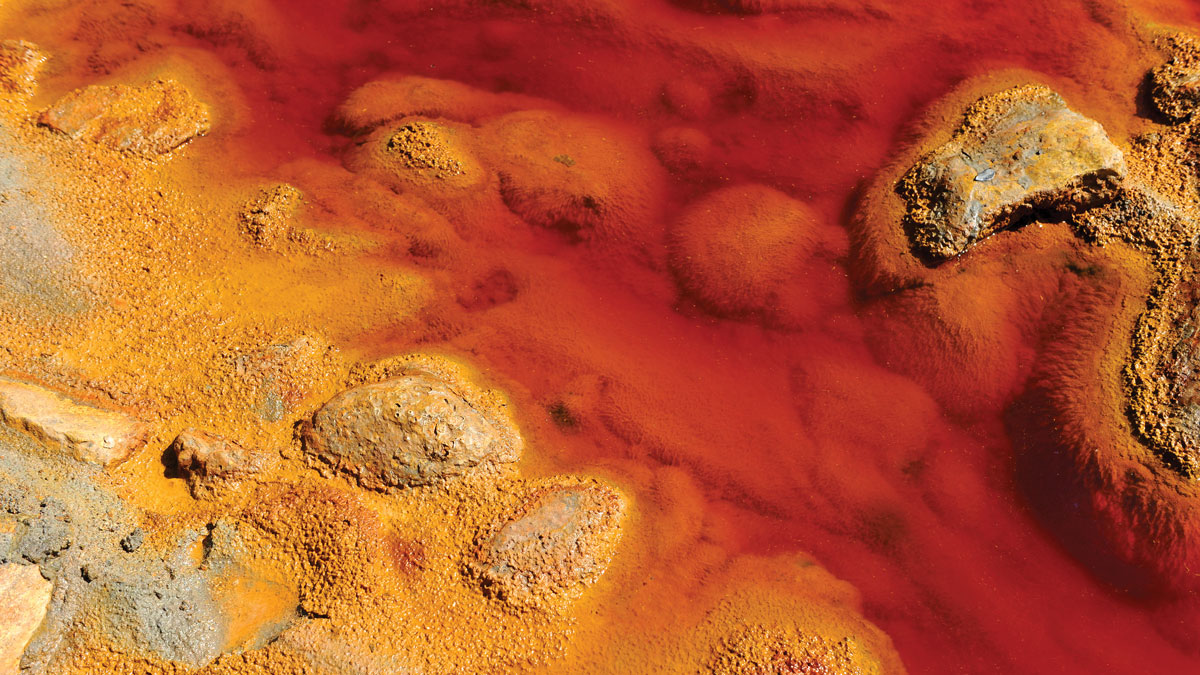
Acidic waters of the Rio Tinto in Spain
Posted inAGU News

A Planetary Perturbation Like No Other

by Caryl-Sue Micalizio 16 January 202527 January 2025

Scientists are tackling “the most profound questions about life itself” with complex computer modeling, billion-year-old bacteria, and old-fashioned fieldwork.
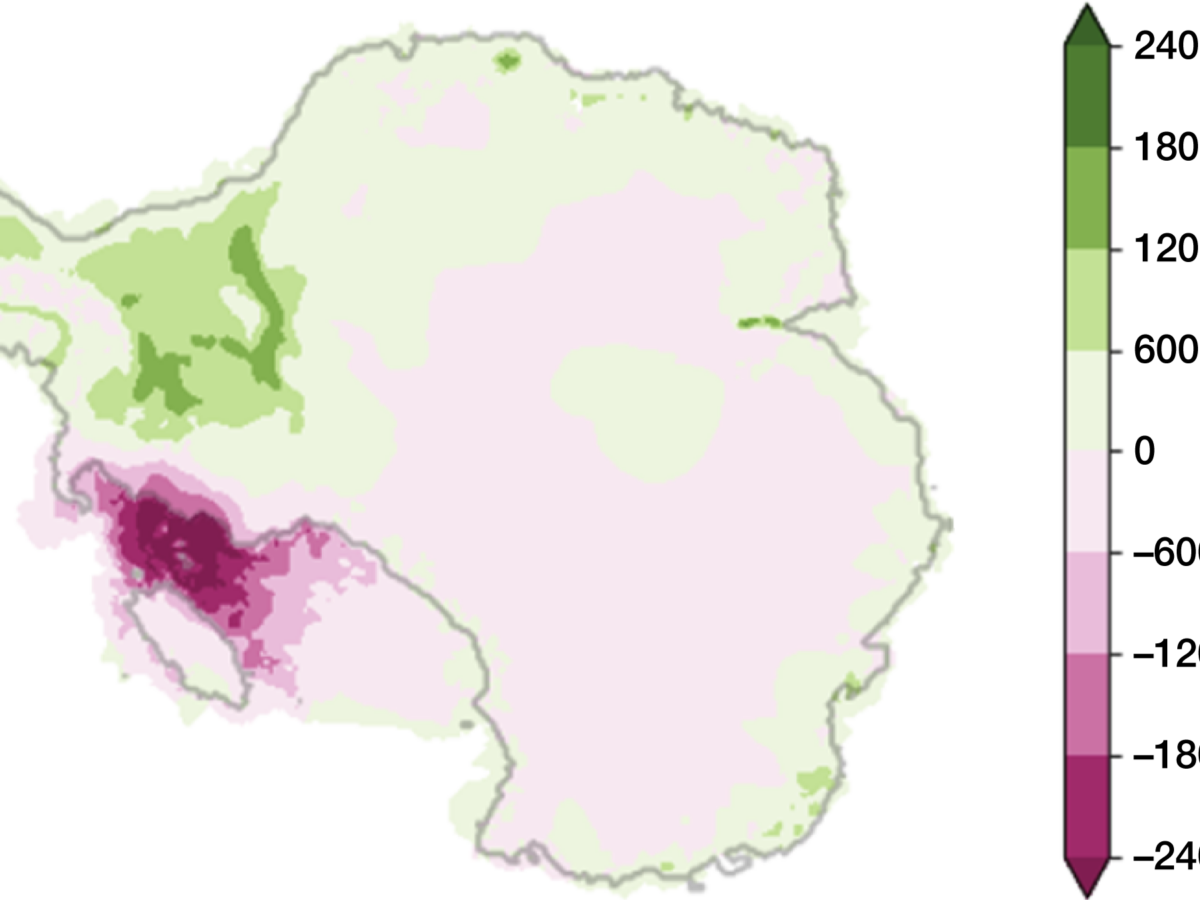
Map of Antarctica colored in shades of green and purple showing the changes in ice thickness
Posted inNews

Mantle Motion Matters for Mapping Modern (and Ancient) Ice

by Alka Tripathy-Lang 11 December 202411 December 2024

Mantle motions have major effects on topography and the distribution of ice sheets. The motions are key for researchers trying to properly parse past mantle movement.
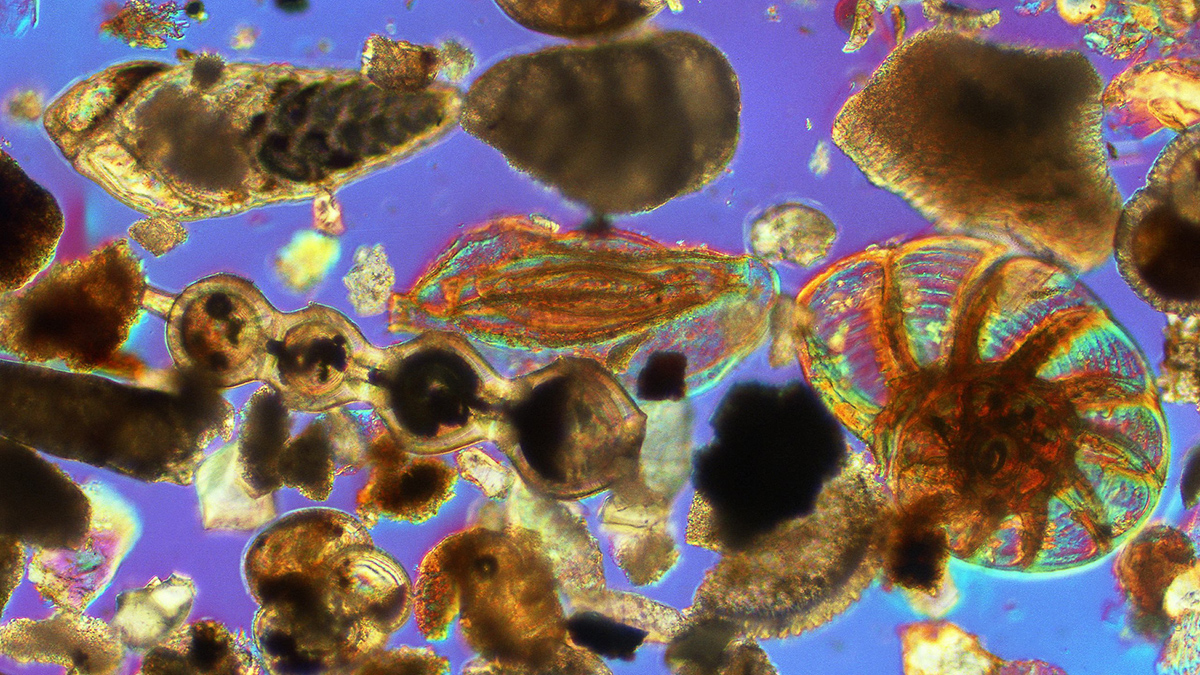
An image from under a microscope of luminous objects shaped like seashells. The background is a purplish blue color.
Posted inResearch Spotlights

Getting to the Bottom of Cenozoic Deep-Ocean Temperatures

Aaron Sidder, freelance science writer by Aaron Sidder 2 December 20242 December 2024

Reconstructing past ocean conditions with oxygen isotopes could provide more information about how Earth’s climate evolved over time, but methods for reconstructing these data can yield varying results.
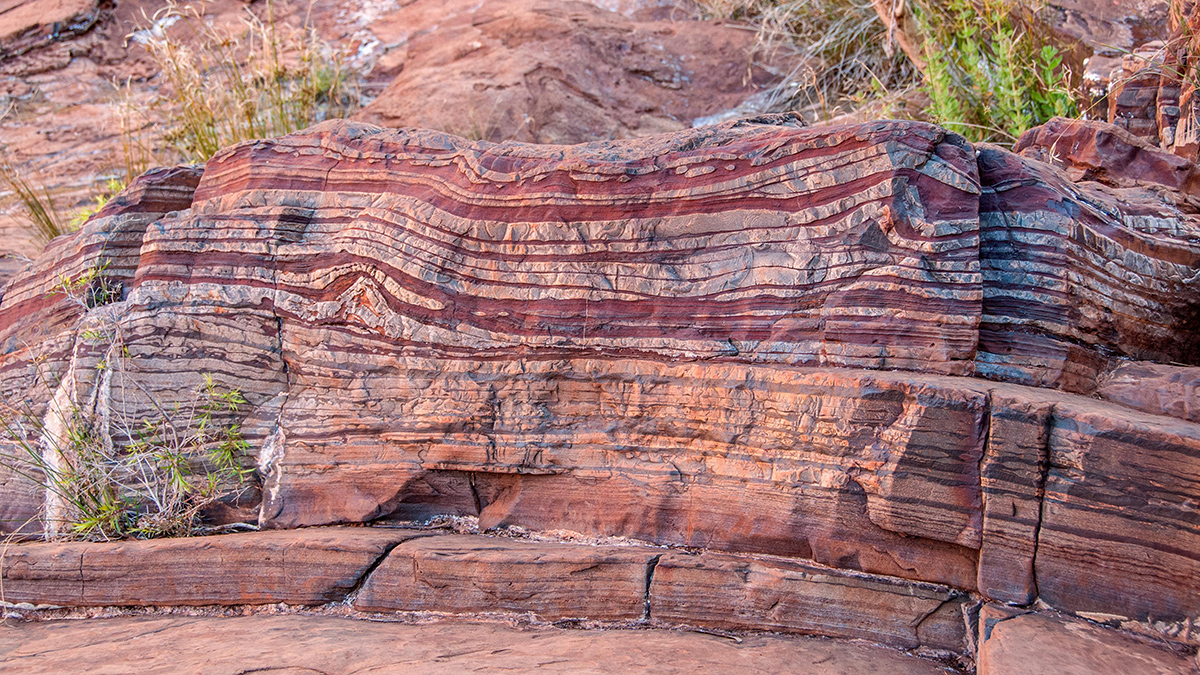
A cliff face with pink and red layers
Posted inNews

Bacteria Battled for Iron in Earth’s Early Oceans

by Caroline Hasler 15 November 202416 January 2025

Billions of years ago, iron-oxidizing microbes may have competed for dissolved iron in the ocean, with some strains producing toxic gases that smothered their rivals.
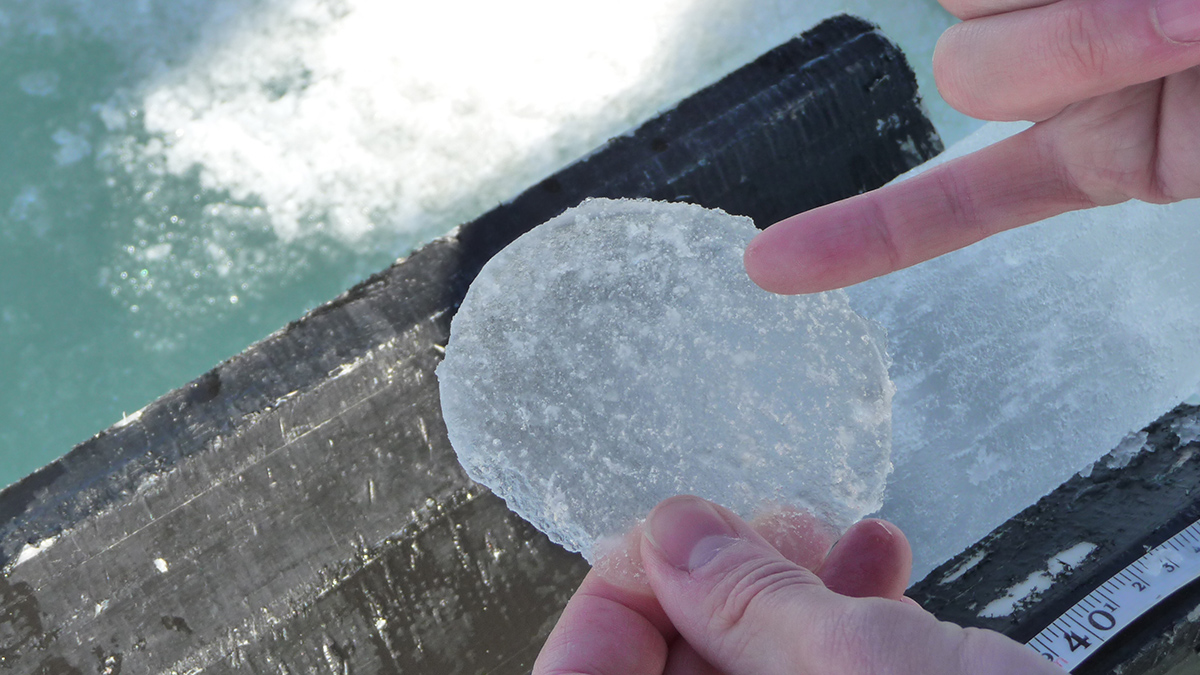
A hand holds a disc of ice between thumb and forefinger while the person’s other hand points at it with the little finger. On a surface below, a ruler can be seen.
Posted inNews

Centennial-Scale Jumps in CO2 Driven by Earth’s Tilt

Katherine Kornei, Science Writer by Katherine Kornei 8 November 20248 November 2024

Antarctic ice records uncovered seven previously unknown jumps in atmospheric carbon dioxide. These events may have been driven by changes in Earth’s tilt.

Artist’s interpretation of a river on Mars, stretching off into the distance, where there is a wall of ice. Red soil is on either side of the water.
Posted inResearch Spotlights

How an Ocean-Sized Lake May Have Formed on Ancient Mars

by Saima May Sidik 6 November 20246 November 2024

The catastrophic collapse of Mars’s atmosphere may have melted its polar ice cap, creating an ice-covered southern sea.

Layers of rock visible in a cliff in Nanliang, Shanxi, China.
Posted inNews

Mega El Niño May Have Led to Major Mass Extinction 252 Million Years Ago

by Rebecca Owen 11 October 20244 August 2025

The extreme climate conditions wrought by a decades-long ENSO pattern could be the culprit in the Great Dying, which wiped out nearly 90% of life on Earth.

An underwater picture of a scientist wearing red and black waterproof pants and boots standing in thigh-high water on an ancient underwater bridge.
Posted inNews

Underwater Bridge Suggests a Surprising Date for First Migration to Mallorca

by Elise Cutts 8 October 20249 October 2024

A controversial study suggests that humans settled on the Spanish island 1,000 years earlier than archaeologists believe.

Posts pagination

Newer posts 1 … 3 4 5 6 7 … 33 Older posts
Over a dark blue-green square appear the words Special Report: The State of the Science 1 Year On.

Features from AGU Publications

Research Spotlights

Volatile Organic Compounds Have Been Underestimated in the Carbon Cycle

16 September 202616 September 2026
Editors' Highlights

Reading Fault Stress from the Rhythm of Earthquakes

16 September 202615 September 2026
Editors' Vox

In Appreciation of AGU’s Outstanding Reviewers of 2025

14 September 202610 September 2026
Eos logo at left; AGU logo at right

About Eos
ENGAGE
Awards
Contact

Advertise
Submit
Career Center
Sitemap

© 2026 American Geophysical Union. All rights reserved Powered by Newspack