• About
  • Special Reports
  • Topics
    • Climate
    • Earth Science
    • Oceans
    • Space & Planets
    • Health & Ecosystems
    • Culture & Policy
    • Education & Careers
    • Opinions
  • Projects
    • Postcards From the Field
    • ENGAGE
    • Editors’ Highlights
    • Editors’ Vox
    • Eos en Español
    • Eos 简体中文版
    • Print Archive: 2015–2025
  • Policy Tracker
  • Blogs
    • Research & Developments
    • The Landslide Blog
  • Newsletter
  • Submit to Eos
  • AGU.org
  • Career Center
  • Join AGU
  • Give to AGU
  • About
  • Special Reports
  • Topics
    • Climate
    • Earth Science
    • Oceans
    • Space & Planets
    • Health & Ecosystems
    • Culture & Policy
    • Education & Careers
    • Opinions
  • Projects
    • Postcards From the Field
    • ENGAGE
    • Editors’ Highlights
    • Editors’ Vox
    • Eos en Español
    • Eos 简体中文版
    • Print Archive: 2015–2025
  • Policy Tracker
  • Blogs
    • Research & Developments
    • The Landslide Blog
  • Newsletter
  • Submit to Eos
Skip to content
  • AGU.org
  • Career Center
  • Join AGU
  • Give to AGU
Eos

Eos

Science News by AGU

Support Eos
Sign Up for Newsletter
  • About
  • Special Reports
  • Topics
    • Climate
    • Earth Science
    • Oceans
    • Space & Planets
    • Health & Ecosystems
    • Culture & Policy
    • Education & Careers
    • Opinions
  • Projects
    • Postcards From the Field
    • ENGAGE
    • Editors’ Highlights
    • Editors’ Vox
    • Eos en Español
    • Eos 简体中文版
    • Print Archive: 2015–2025
  • Policy Tracker
  • Blogs
    • Research & Developments
    • The Landslide Blog
  • Newsletter
  • Submit to Eos

Peru

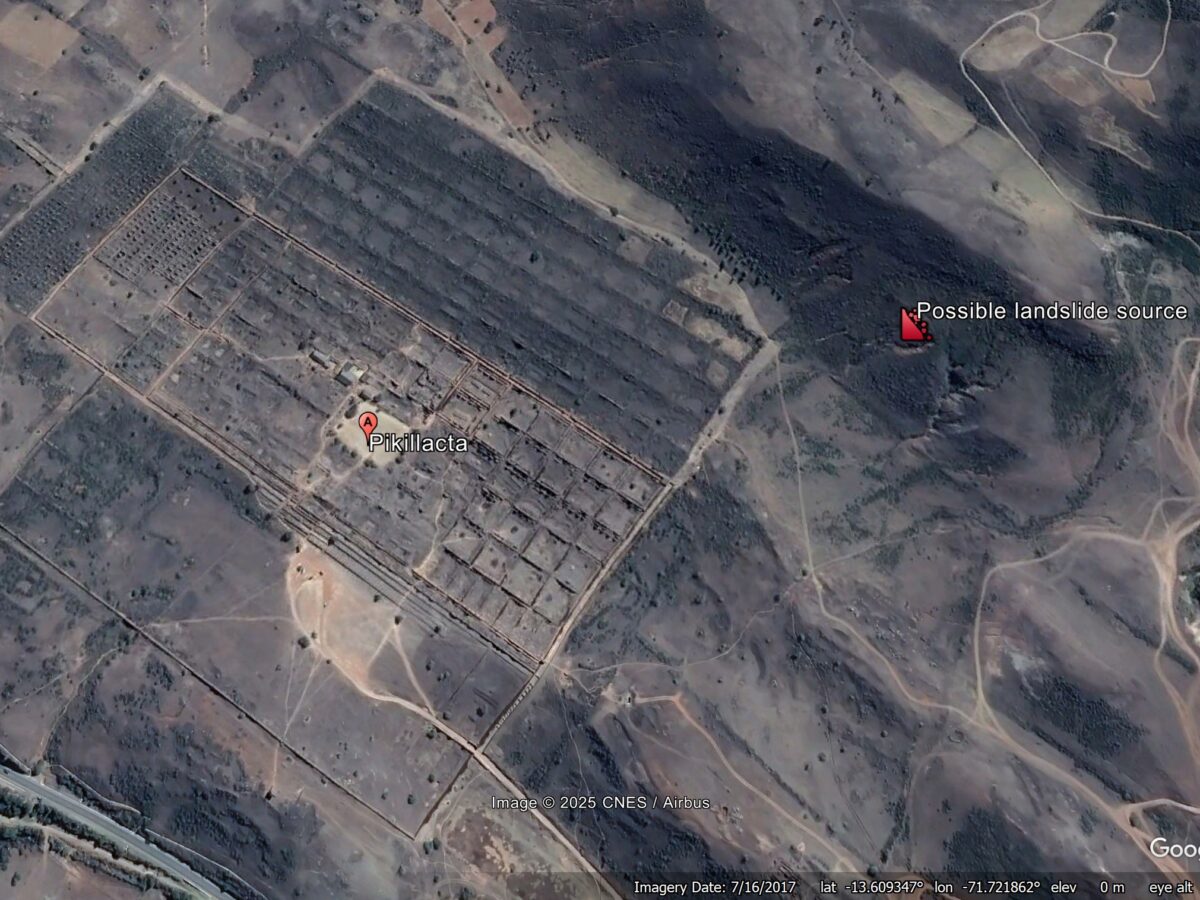
Google Earth image from 2017 showing Pikillaqta (note the different spelling on Google Earth), and the projected source of the debris flow.
Posted inThe Landslide Blog

Pikillaqta in Cusco: the role of an earthquake-induced debris flow in about 900 AD

by Dave Petley 10 November 202510 November 2025

The Landslide Blog is written by Dave Petley, who is widely recognized as a world leader in the study and management of landslides. According to Wikipedia, Pikillaqta is a large archaeological site located 20 km to the east of Cusco in Peru. Inhabited by the Wari people, it was abandoned at about 900 AD for […]

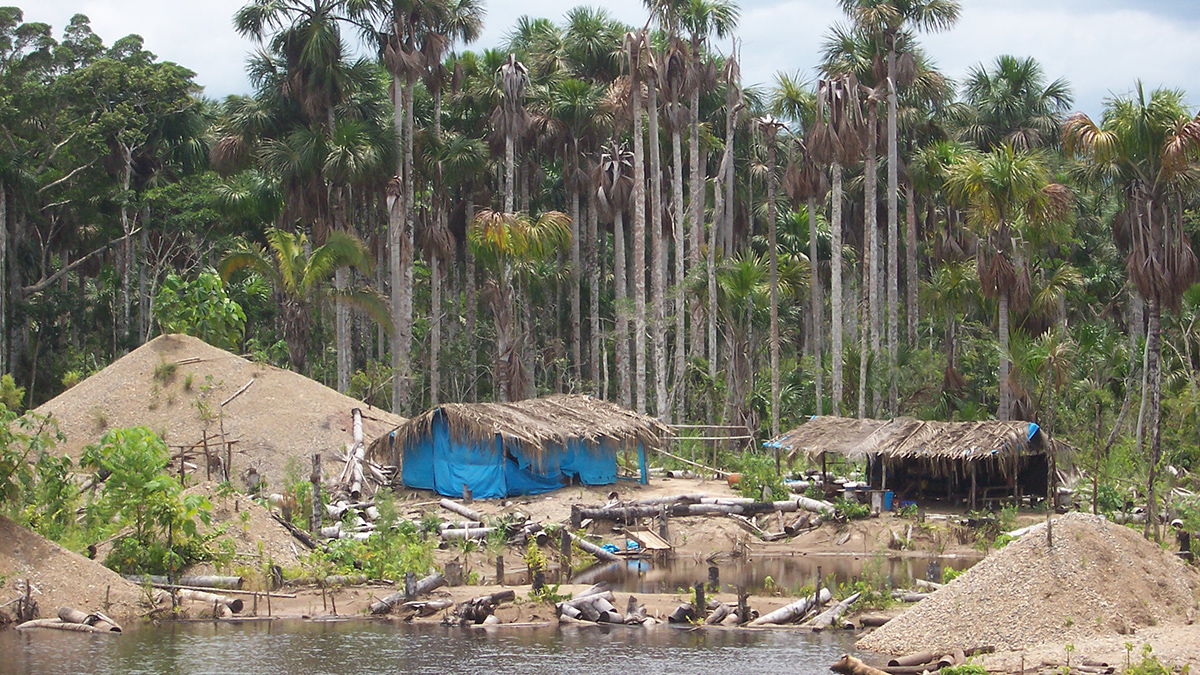
Tarp shacks with palm-frond roofs sit on the banks of ponds surrounded by palm logs and tall gravel piles. Palm trees are in the background.
Posted inNews

Artisanal Gold Mining Is Destroying Amazonian Peatlands

by Syris Valentine 20 May 202520 May 2025

A new analysis of archived satellite imagery has revealed that the growing presence of small-scale mining in the Peruvian Amazon is threatening carbon reserves and unique ecosystems.
Posted inThe Landslide Blog

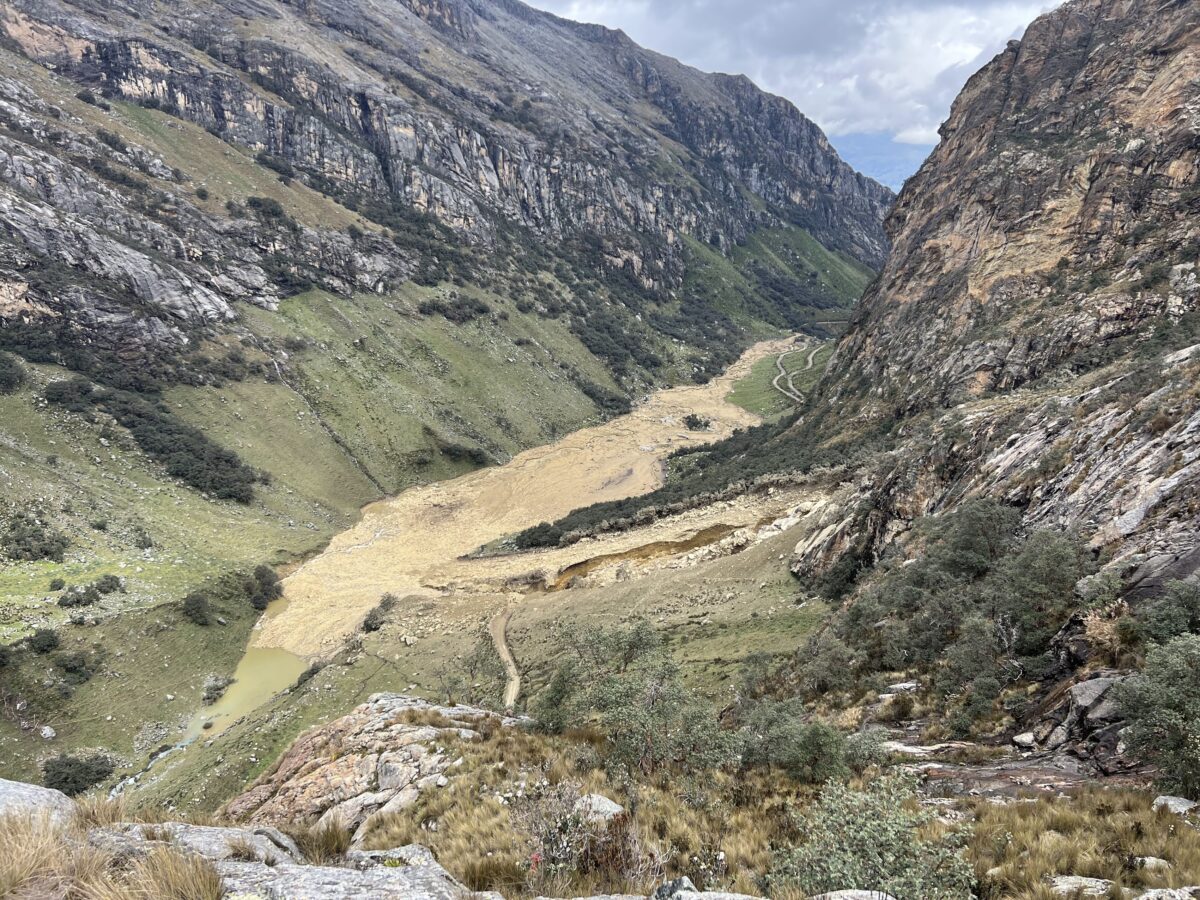
Images of the source of the 28 April 2025 landslide / GLOF at Vallunaraju in Peru

by Dave Petley 8 May 20258 May 2025

The Landslide Blog is written by Dave Petley, who is widely recognized as a world leader in the study and management of landslides. A few days ago I highlighted the severe landslide and GLOF that occurred on the flanks of Vallunaraju in Peru, on 28 April 2025, which caused substantial damage and at least two […]

Fotografía del volcán Pichu Pichu
Posted inNews

Los incendios forestales amenazan los suelos volcánicos de los Andes peruanos

by Sofia Moutinho 7 May 202522 May 2025

Los frágiles ecosistemas de las tierras altas mostraron baja resiliencia a los incendios, lo que los hace más vulnerables a la degradación a largo plazo.
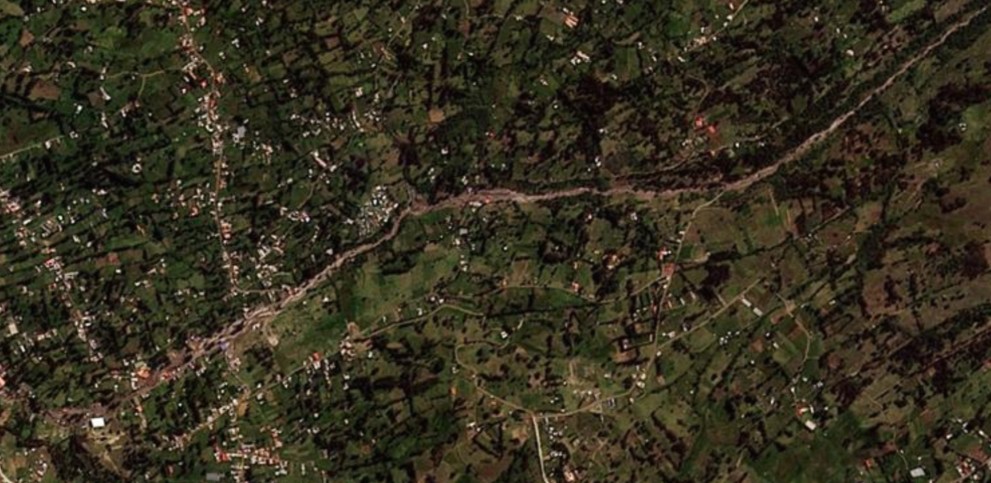
Planet Labs image of the downstream impacts of the 28 April 2025 Glacial Outburst Flood (GLOF) / landslide at Vallunaraju in Peru.
Posted inThe Landslide Blog

The 28 April 2025 Glacial Outburst Flood (GLOF) / landslide at Vallunaraju in Peru

by Dave Petley 2 May 20252 May 2025

The Landslide Blog is written by Dave Petley, who is widely recognized as a world leader in the study and management of landslides. On 28 April 2025, a major debris flow travelled down a channel from a major mountain, Vallunaraju, striking the communities lower down the slope. At least 100 houses were destroyed and two […]

Pichu Pichu dominates the landscape of the Peruvian Andes.
Posted inNews

Wildfires Pose a Threat to Volcanic Soils in the Peruvian Andes

by Sofia Moutinho 20 March 20257 May 2025

Fragile highland ecosystems showed low resilience to fire, which renders them more vulnerable to long-term degradation.
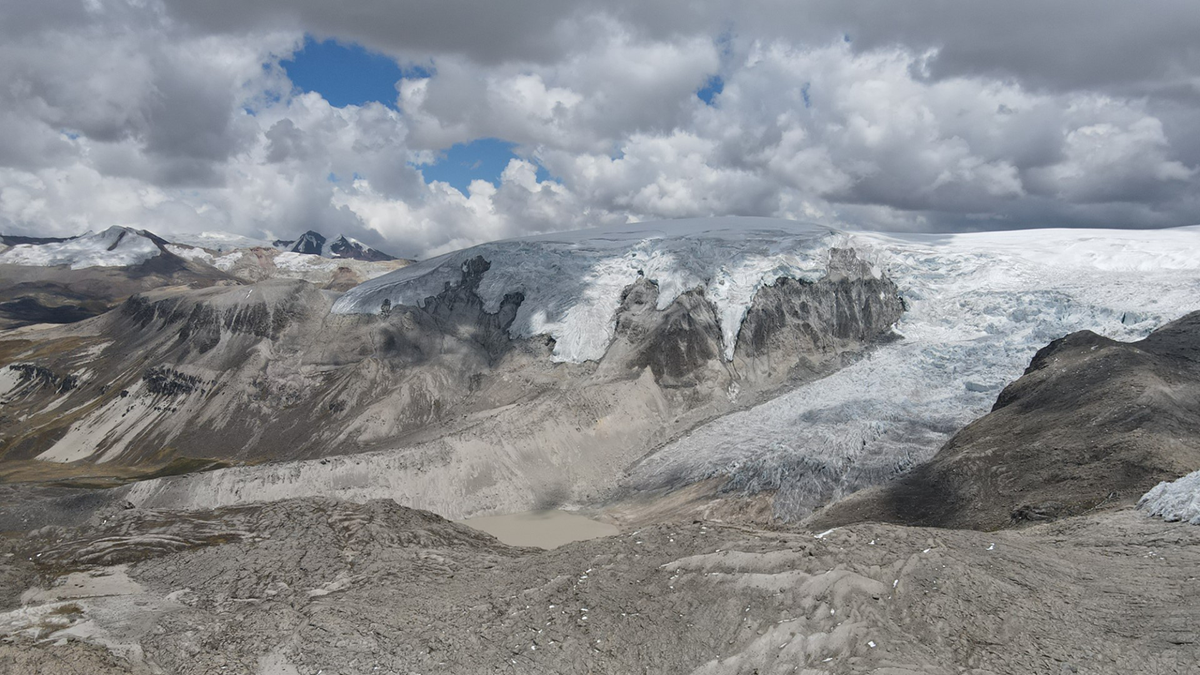
Photo of a glacier sitting on top of rock.
Posted inEditors' Highlights

Plants Reveal the History of Earth’s Largest Tropical Ice Cap

by Ann Rowan 16 January 20249 January 2024

Rooted plants buried by advancing outlet glaciers illustrate rapid changes in the extent of Quelccaya Ice Cap in Peru during the Holocene.

Llamas walking along a rocky landscape in front of a retreating glacier in Cordillera Blanca, northern Peru.
Posted inNews

How Llama Poop Is Helping an Andean Community Adapt to Melting Glaciers

by Sofia Moutinho 9 November 202317 November 2023

Reintroducing these animals can enrich barren soils and potentially reduce water contamination, a study shows.

Posted inNews

Ледники Арктики, вулкан в Перу и русский голод

by Santiago Flórez 20 September 202320 September 2023

Группа, изучающая российские ледники, нашла подтверждение тому, что извержение вулкана в южном Перу изменило климат планеты в начале 17го века.

Small, white zircon crystals of various shapes and sizes appear against a black background.
Posted inResearch Spotlights

Prospecting for Copper with Machine Learning and Zircons

Rachel Fritts, Science Writer by Rachel Fritts 23 February 202323 February 2023

Using artificial intelligence, researchers can now identify zircons derived from valuable copper deposits.

Posts pagination

1 2 3 4 Older posts
Over a dark blue-green square appear the words Special Report: The State of the Science 1 Year On.

Features from AGU Publications

Research Spotlights

Making a Map to Make a Difference

11 February 202611 February 2026
Editors' Highlights

Rocky Shore Erosion Shaped by Multi-Scale Tectonics

16 February 202613 February 2026
Editors' Vox

A Double-Edged Sword: The Global Oxychlorine Cycle on Mars

10 February 202610 February 2026
Eos logo at left; AGU logo at right

About Eos
ENGAGE
Awards
Contact

Advertise
Submit
Career Center
Sitemap

© 2026 American Geophysical Union. All rights reserved Powered by Newspack