

Workshop on Magnetotail Reconnection Onset and Dipolarization Fronts; Laurel, Maryland, 16–18 September 2015
plasmas

Posted inNews
Human Radio Transmissions Create Barrier to "Killer Electrons"

An interaction between radio waves and the Van Allen radiation belts creates a bubble around the Earth that high-energy electrons can't penetrate.

Posted inResearch Spotlights
What Makes Jupiter's Aurora Pulse?
The aurora crowning Jupiter's poles—the most powerful in the solar system—flares up when plasma is injected into its magnetic field.

Posted inResearch Spotlights
New Clues to Mysterious Hiss in Earth's Plasmasphere
An analysis of the electromagnetic "hiss" that surrounds Earth reveals it's not just static; there's a signal hidden within, which may help scientists uncover its source.
Posted inResearch Spotlights
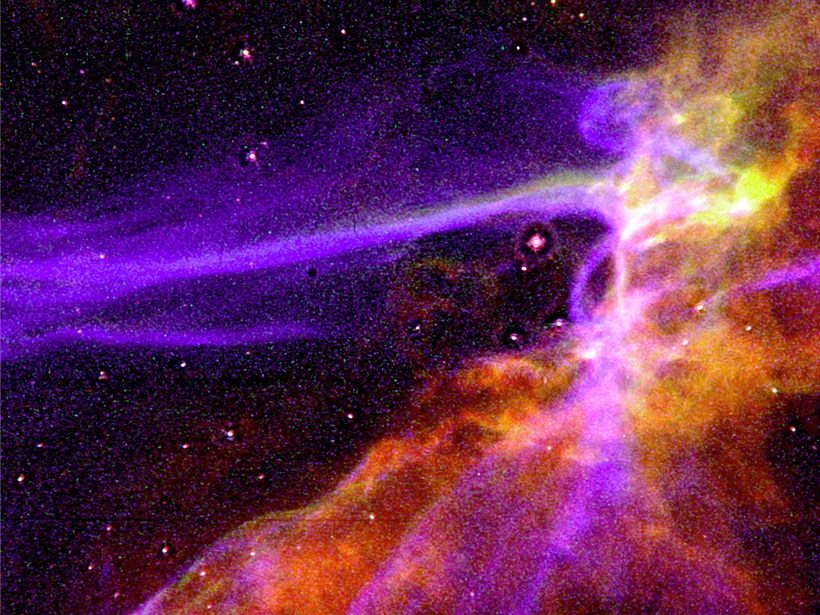
Magnetized Collisionless Shock Waves Measured in the Lab
Scientists create collisionless shock waves to better understand the phenomenon in nature.

Posted inResearch Spotlights
Spacecraft Records Rising-Tone Magnetosonic Waves
A rising tone in wave frequencies suggests a complicated, nonlinear series of interactions between electromagnetic sound waves and protons near the magnetic equator.

Posted inResearch Spotlights
Predicting Space Weather on a Satellite Superhighway
Scientists combined 82 satellite years of data to create a more comprehensive model of how plasma behaves in a region of Earth's magnetosphere with heavy spacecraft traffic.

Posted inResearch Spotlights
Satellite Data Yield Detailed Picture of the Lunar Wake
Researchers use satellite data to characterize the physical properties of the lunar wake and the processes that govern it.
Posted inResearch Spotlights
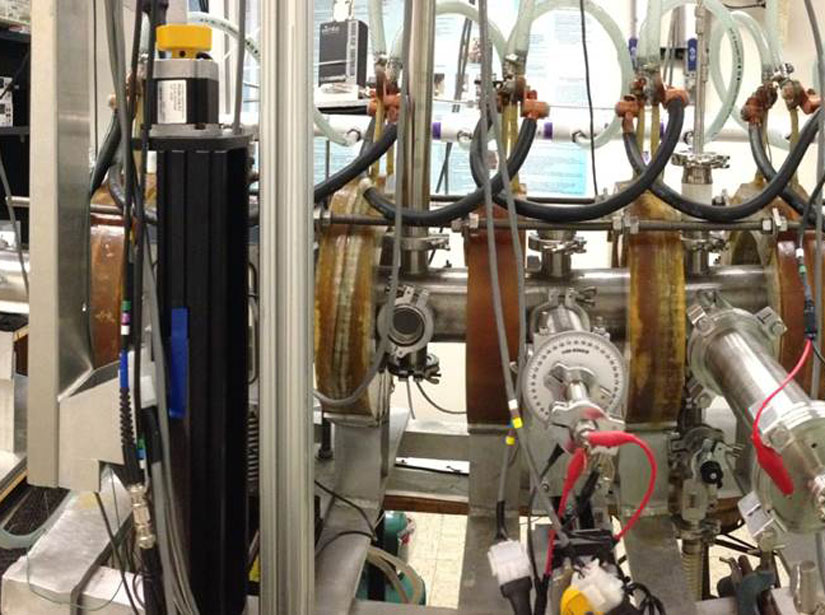
What Causes Broadband Electrostatic Noise in Space?
Factors that generate electrostatic noise involve how electric fields compress magnetized plasmas.
Posted inResearch Spotlights
Trapping Waves in Earth's Plasmasphere
Satellite observations explain why magnetosonic waves can be found in regions far from where they originate.