
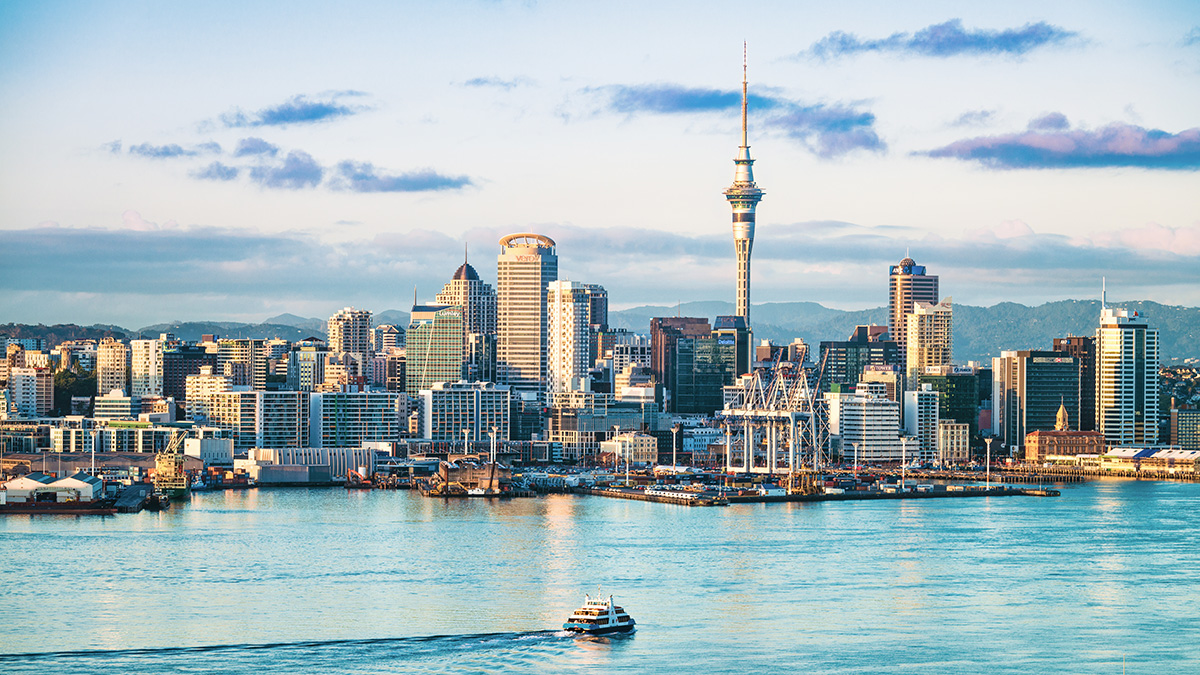
Plastic fills the air above Auckland, New Zealand.
plastics

Posted inFeatures
Fernando Temprano-Coleto: Going with the Flow
A career in fluid mechanics is both intellectually stimulating and well suited to solving environmental problems.
Posted inNews
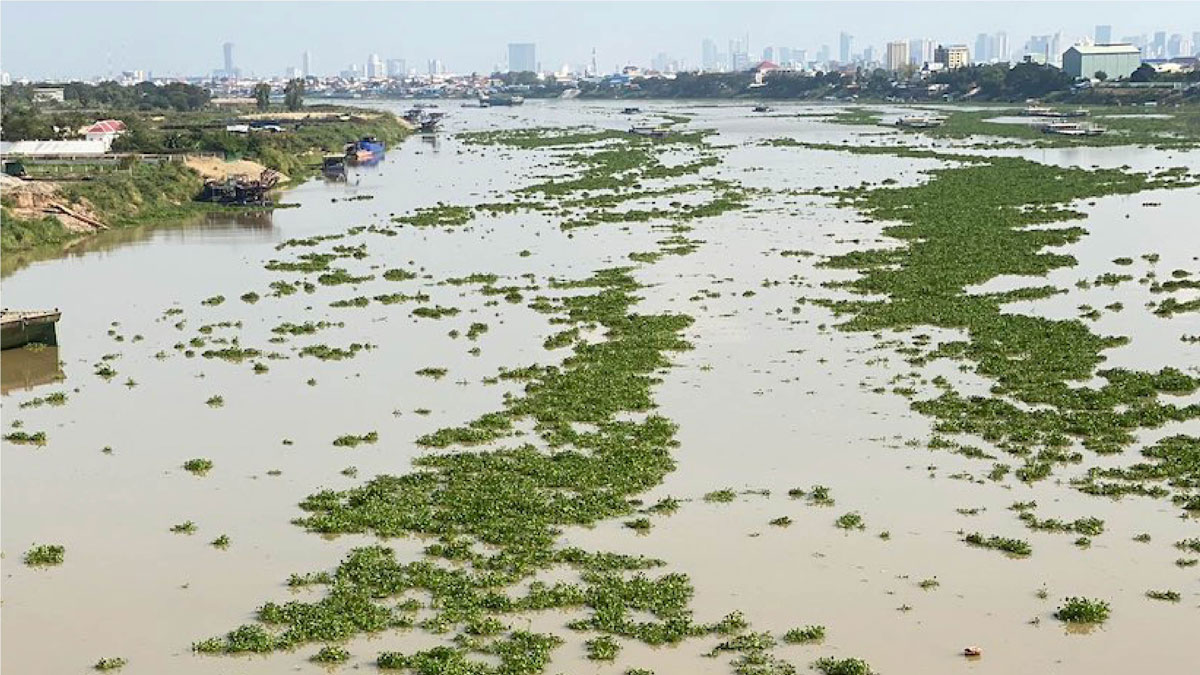
Remote Sensing Tracks Down “Plastic Plants” in Rivers
Researchers are using remote sensing to track floating mats of plastic trapped in water hyacinth plants.
Posted inNews
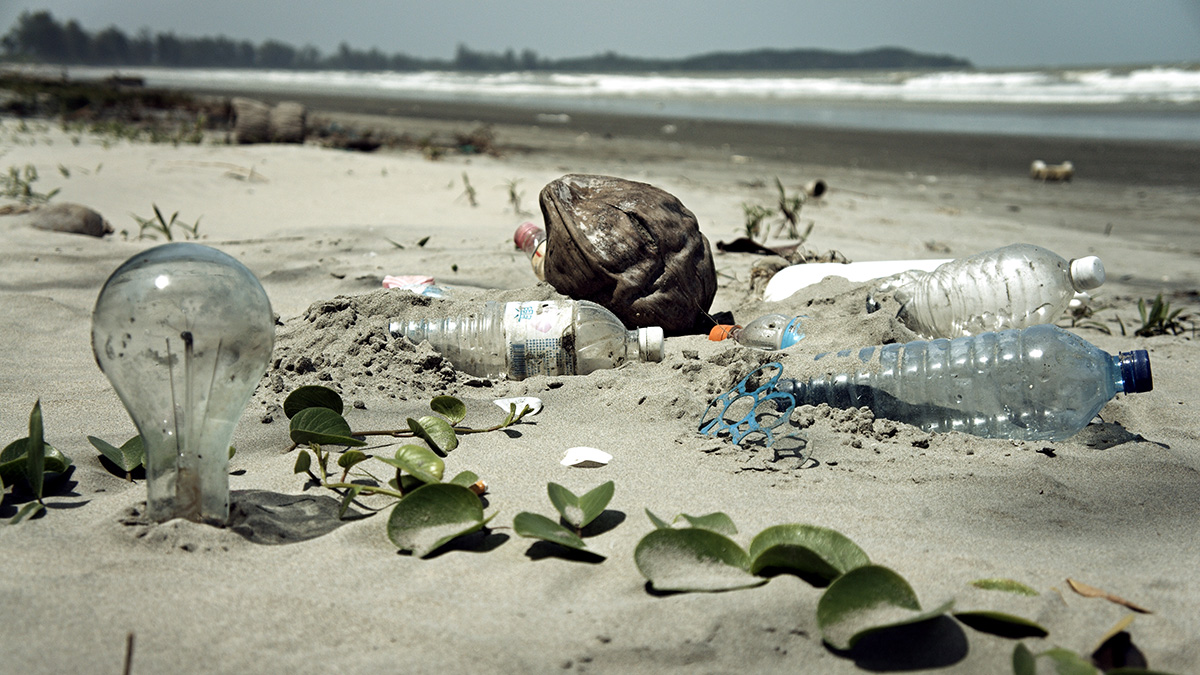
Microscopic Hitchhikers Found on Deep-Sea Plastic

Are bacteria hailing a ride on plastic 2,000 meters deep?
Posted inNews
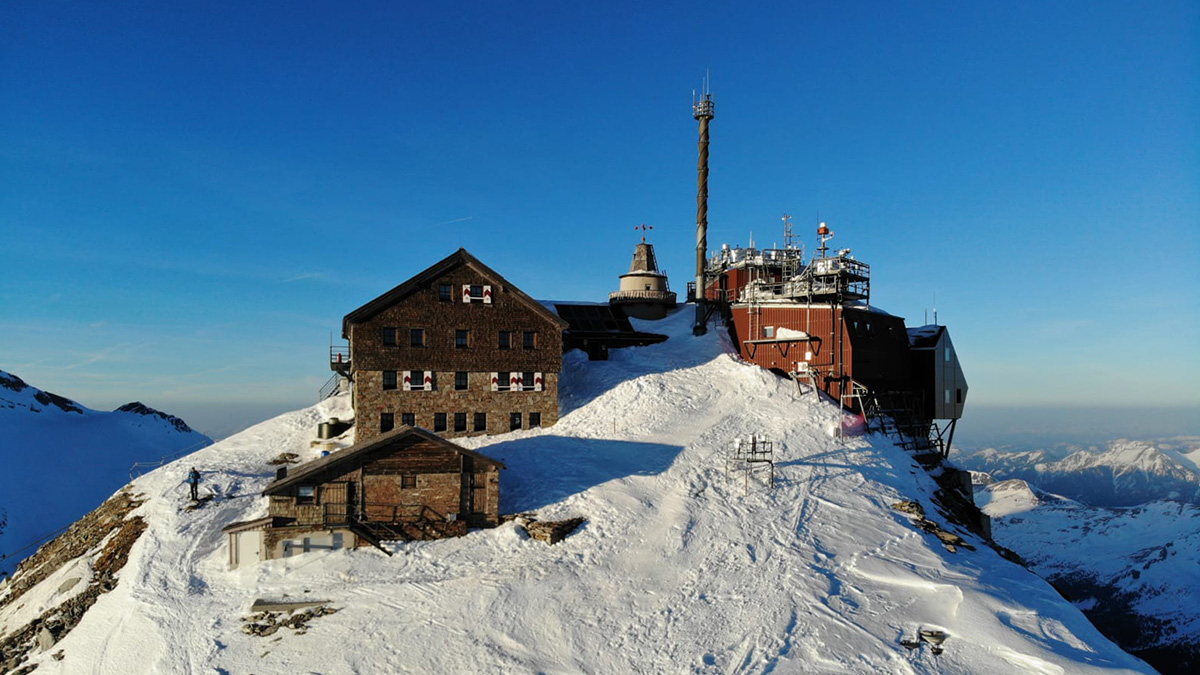
The Alps Are Dusted with Nanoplastics
A new study finds the lofted pollutants came from major European cities, but further study is required to fully understand the plastics’ transport and deposition processes.
Posted inNews
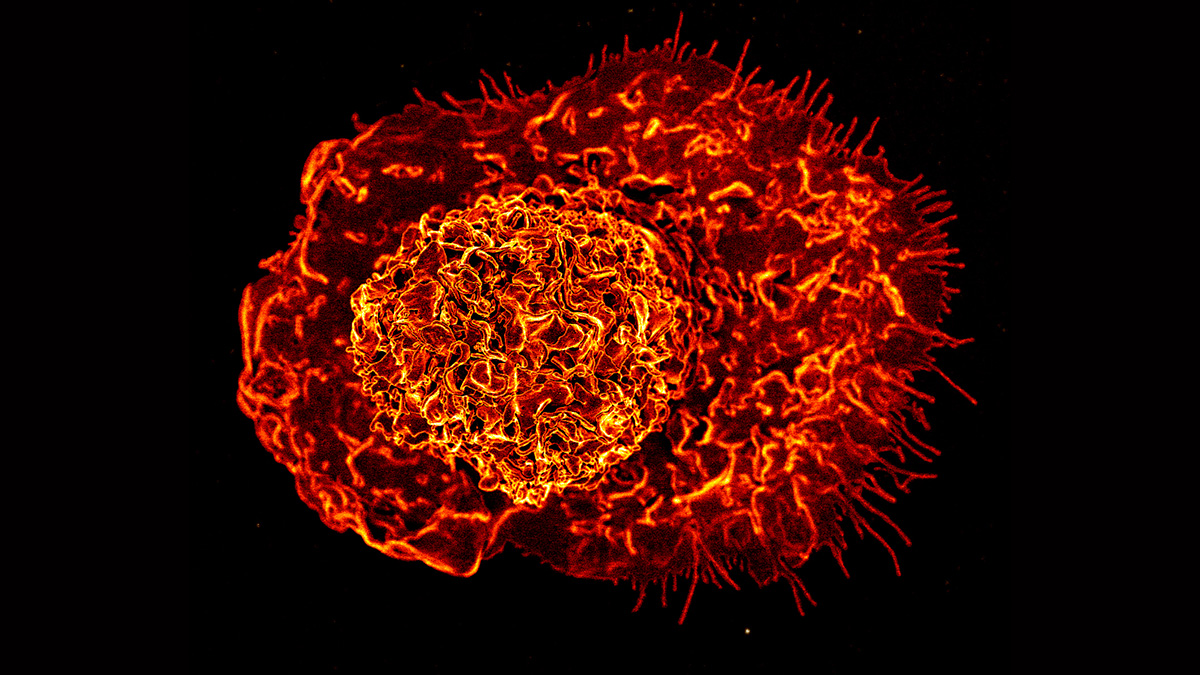
Microplastics Morph Cell Metabolism

Microplastics get into our bodies, potentially altering how certain cells convert sugar into energy, especially in the gut. Continued ingestion could cause chronic problems.
Posted inFeatures
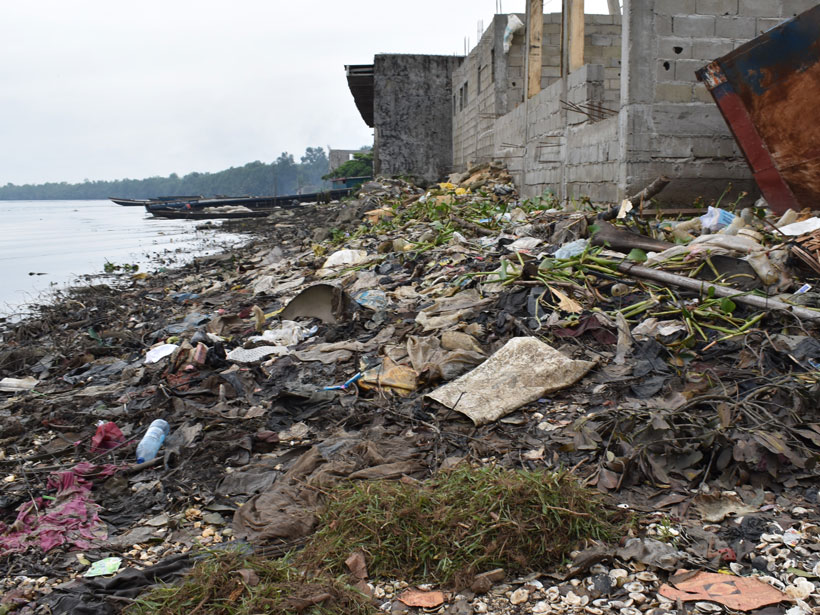
Cameroon’s Mangrove Forests Are Choking on Plastics
Rapid urbanization and insufficient waste management are threatening the environmentally and culturally vital Wouri Estuary. Solutions are needed to save these and other mangroves around the world.
Posted inOpinions
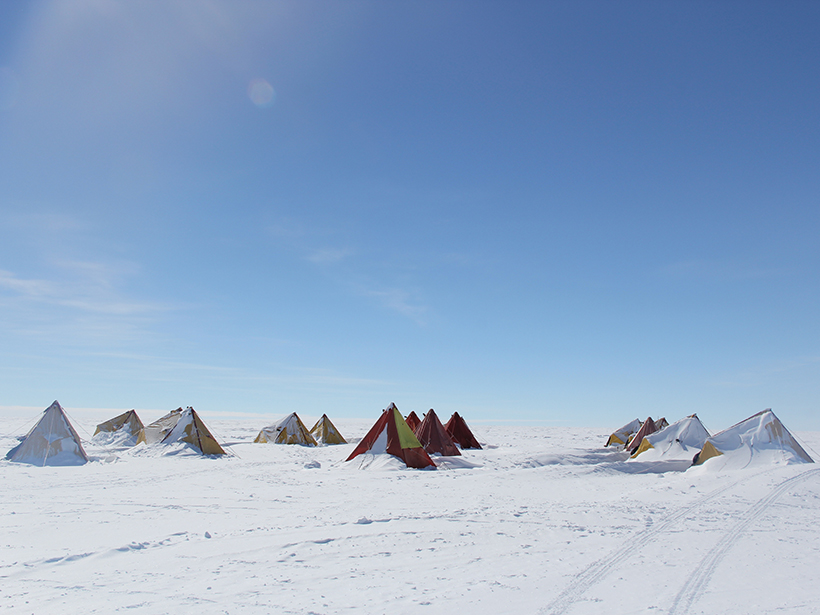
Microplastics’ Hidden Contribution to Snow Melting
Microplastic particles, present everywhere on the planet, may complicate assessments of black carbon’s role in the melting of snow and of its contributions to Earth’s radiative balance.

Posted inResearch Spotlights
Rastreando cómo se mueve el plástico en el océano costero

Investigadores utilizaron un tanque de olas para estudiar el movimiento de partículas de plástico de forma experimental y comprender el papel de la densidad de partículas en el comportamiento de deriva.

Posted inResearch Spotlights
Tracking How Plastic Moves in the Coastal Ocean
Researchers used a wave tank to study the movement of plastic particles experimentally and to understand the role of particle density in drift behavior.