• About
  • Sections
  • Topics
    • Climate
    • Earth Science
    • Oceans
    • Space & Planets
    • Health & Ecosystems
    • Culture & Policy
    • Education & Careers
    • Opinions
  • Projects
    • ENGAGE
    • Editors’ Highlights
    • Editors’ Vox
    • Eos en Español
    • Eos 简体中文版
    • Print Archive
  • Science Policy Tracker
  • Blogs
    • Research & Developments
    • The Landslide Blog
  • Newsletter
  • Submit to Eos
  • AGU.org
  • Career Center
  • Join AGU
  • Give to AGU
  • About
  • Sections
  • Topics
    • Climate
    • Earth Science
    • Oceans
    • Space & Planets
    • Health & Ecosystems
    • Culture & Policy
    • Education & Careers
    • Opinions
  • Projects
    • ENGAGE
    • Editors’ Highlights
    • Editors’ Vox
    • Eos en Español
    • Eos 简体中文版
    • Print Archive
  • Science Policy Tracker
  • Blogs
    • Research & Developments
    • The Landslide Blog
  • Newsletter
  • Submit to Eos
Skip to content
  • AGU.org
  • Career Center
  • Join AGU
  • Give to AGU
Eos

Eos

Science News by AGU

Support Eos
Sign Up for Newsletter
  • About
  • Sections
  • Topics
    • Climate
    • Earth Science
    • Oceans
    • Space & Planets
    • Health & Ecosystems
    • Culture & Policy
    • Education & Careers
    • Opinions
  • Projects
    • ENGAGE
    • Editors’ Highlights
    • Editors’ Vox
    • Eos en Español
    • Eos 简体中文版
    • Print Archive
  • Science Policy Tracker
  • Blogs
    • Research & Developments
    • The Landslide Blog
  • Newsletter
  • Submit to Eos

soils

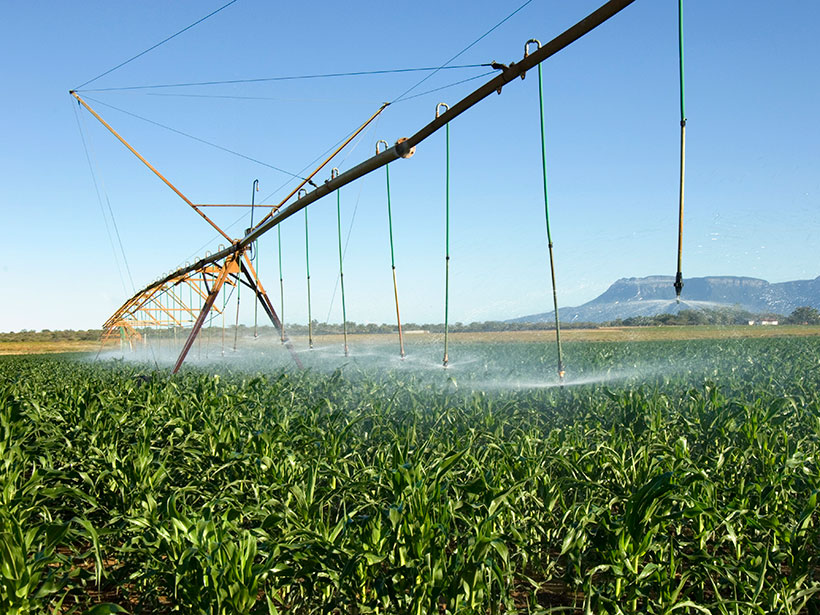
Irrigation machinery sprays water on the green vegetation of a mango farm in South Africa.
Posted inNews

Minireservoirs Could Save Farmers with Sandy Soils

Kate Wheeling, freelance science writer by Kate Wheeling 29 January 202031 October 2022

A recently revived subsurface water retention technology could conserve water and drastically increase crop yields in arid landscapes with sandy soils like sub-Saharan Africa.

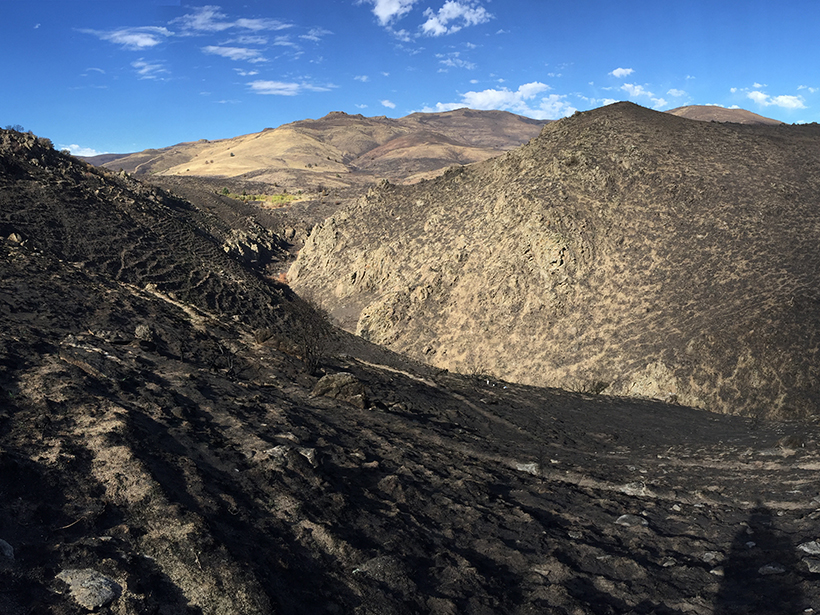
Controlled burn in a sagebrush ecosystem in Hart Mountain National Antelope Refuge in southeastern Oregon
Posted inScience Updates

Rating Fire Danger from the Ground Up

by M. R. Levi, E. S. Krueger, G. J. Snitker, T. Ochsner, M. L. Villarreal, E. H. Elias and D. E. Peck 17 December 201929 September 2021

Soil moisture information could improve assessments of wildfire probabilities and fuel conditions, resulting in better fire danger ratings.

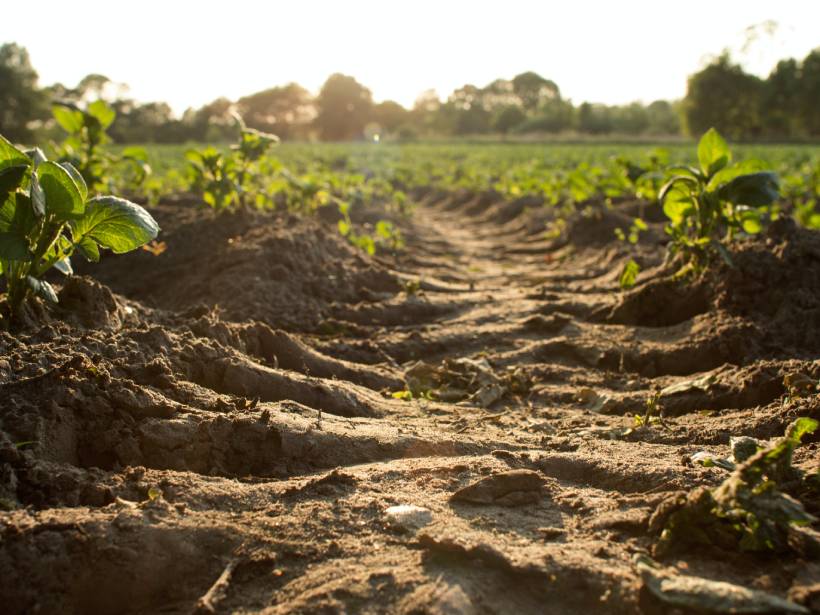
Image of eroded ground under a tilled, yellowing prairie landscape
Posted inNews

A Dirty Truth: Humans Began Accelerating Soil Erosion 4,000 Years Ago

Richard Sima, freelance science writer by Richard J. Sima 10 December 201915 November 2021

Recent research combining analysis of carbon dating, sediment accumulation rates, and pollen records from 632 lake beds worldwide finds deforestation tied to increased soil erosion.

Brightly colored soil layers and a yardstick or ruler
Posted inNews

Looking for Prehistoric Pollen? Check the Floodplains

Mara Johnson-Groh, Science Writer by Mara Johnson-Groh 3 December 20197 February 2023

A new methodology calculates the soil properties most likely to preserve pollen.

Grassy bog with a strip of exposed, muddy peat
Posted inNews

Peatlands Are Drying Out Across Europe

by Michael Allen 14 November 20191 April 2022

Peatlands are some of the world’s largest reservoirs of soil carbon, but new research finds that in Europe they are drying out, putting them at risk of turning from carbon sinks to carbon sources.

A person applies manure to an agricultural field in winter, with cattle in distance.
Posted inNews

Manure Happens: The Environmental Toll of Livestock Antibiotics

Laura Poppick, freelance science writer by L. Poppick 8 November 201915 October 2021

New findings suggest antibiotics in cow manure can alter soil microbial activity, with implications for soil fertility and carbon emissions.

A landscape view of a peatland in Estonia
Posted inNews

Resilient Peatlands Keep Carbon Bogged Down

Laura Poppick, freelance science writer by L. Poppick 8 October 201921 June 2023

Boreal peatlands contain some of the world’s largest reservoirs of soil carbon, and new research suggests some peatlands may hold on to that carbon even as the climate changes.

Aerial view over the Alaskan tundra showing patches of snow, ice, and bare land
Posted inResearch Spotlights

Methane-Releasing Tundra Soils Freezing Later Each Year

Sarah Stanley, Science Writer by Sarah Stanley 18 September 201911 August 2022

Scientists find links between delayed freezing of Alaskan soils and higher atmospheric methane concentrations during the cold season.

Puffy cumulus clouds with a background of blue sky
Posted inResearch Spotlights

Soil Moisture Drives Great Plains Cloud Formation

by E. Underwood 10 September 20198 November 2022

A new study shows that models that reproduce moisture on land are better at accurately recreating cumulus cloud behavior.

Photo of soil samples ready for laboratory sampling
Posted inEditors' Vox

Organic Gases Released and Taken Up by Soil Lack Quantification

by J. Tang, G. Schurgers and R. Rinnan 29 August 201922 December 2021

Soils both emit and take up different biogenic volatile organic compounds, altering the chemical composition of the atmosphere and influencing local, regional, and global climate.

Posts pagination

Newer posts 1 … 16 17 18 19 20 … 25 Older posts
A view of a bridge, with the New Orleans skyline visible in the distance between the bridge and the water. A purple tint, a teal curved line representing a river, and the text “#AGU25 coverage from Eos” overlie the photo.

Features from AGU Publications

Research Spotlights

An Ecosystem Never Forgets

19 December 202519 December 2025
Editors' Highlights

Frictional Properties of the Nankai Accretionary Prism

11 December 20259 December 2025
Editors' Vox

Hydrothermal Circulation and Its Impact on the Earth System

3 December 20253 December 2025
Eos logo at left; AGU logo at right

About Eos
ENGAGE
Awards
Contact

Advertise
Submit
Career Center
Sitemap

© 2025 American Geophysical Union. All rights reserved Powered by Newspack