

Scientists make a case for a more realistic treatment of icy planets’ structure in which ices and rocks are mixed instead of separated in layers.
Space & Planets

Posted inFeatures
The Young Earth Under the Cool Sun

How did our planet avoid being frozen solid during the early days of our solar system?
Posted inFeatures
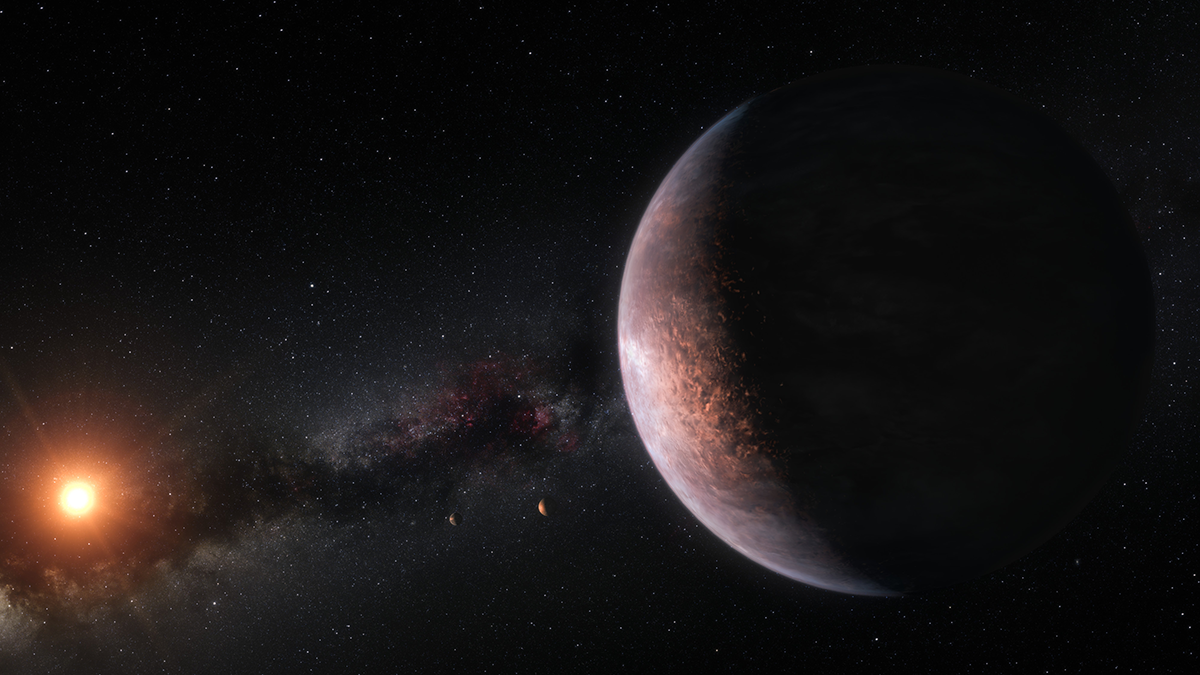
Tidally Locked and Loaded with Questions
Tidally locked planets always present the same face to their host stars. What does this mean for their potential to support life?
Posted inNews
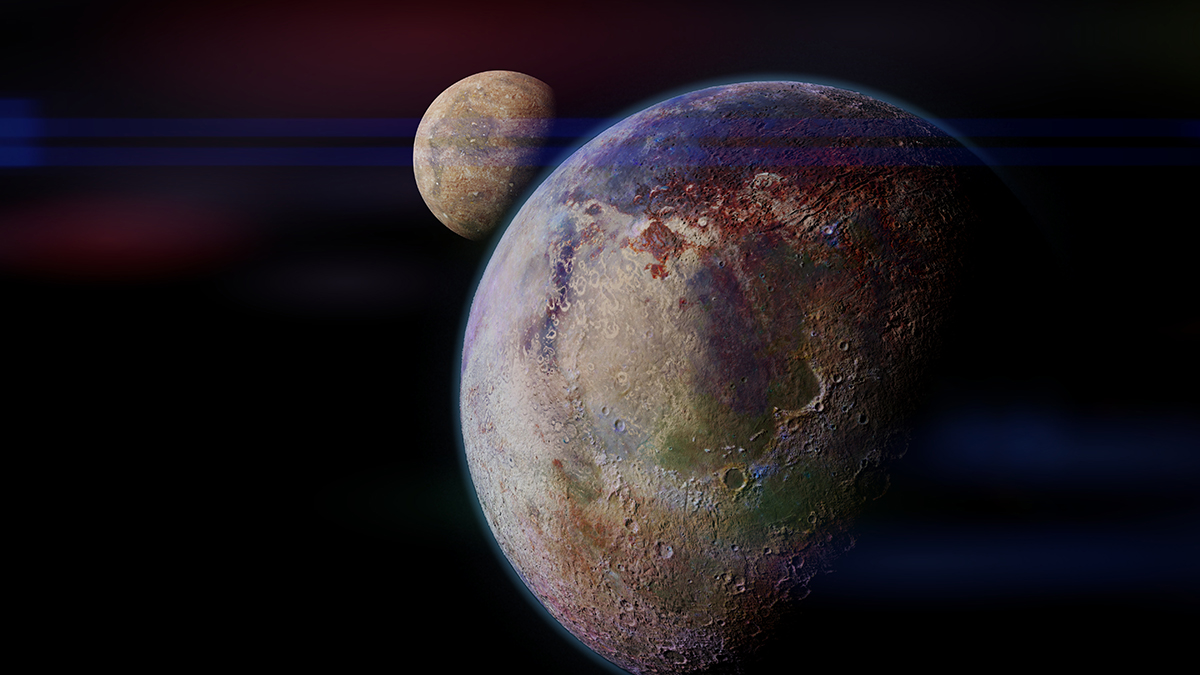
To Make a Big Moon, Start with a Small Planet
Why is our Moon so massive compared with Earth, and how might that configuration happen elsewhere?
Posted inResearch Spotlights
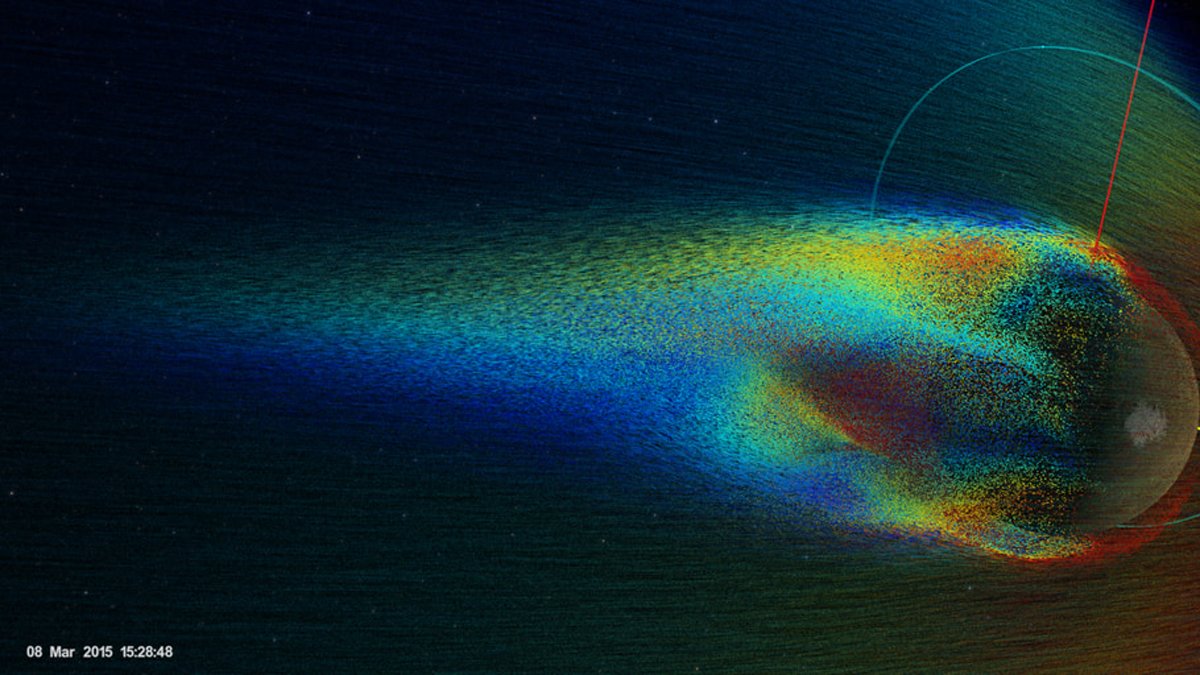
Measuring Carbon Ion Loss from the Martian Atmosphere
The flux, observed with NASA’s MAVEN spacecraft, is in line with models and 1–2 orders of magnitude lower than that of oxygen ions.
Posted inResearch Spotlights
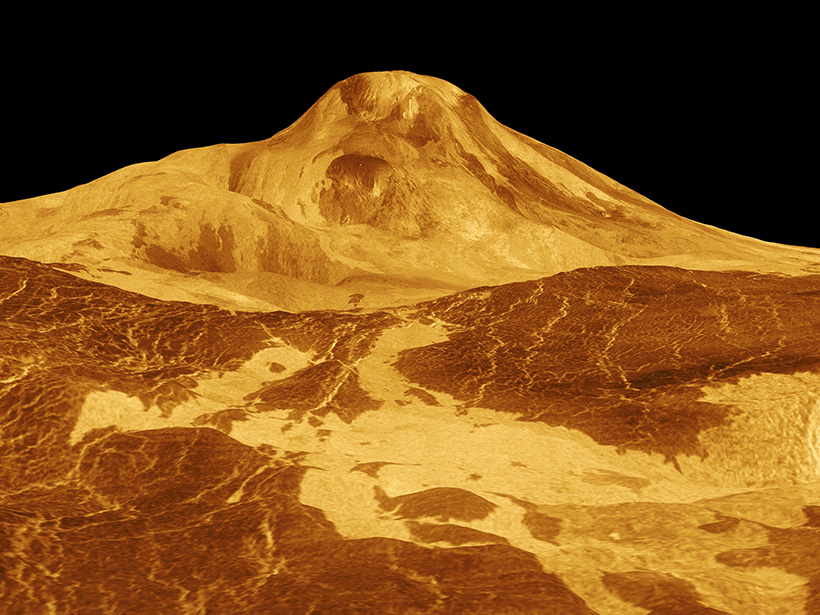
¿Es Venus volcánicamente activo? Nuevo enfoque podría proporcionar una respuesta

Una estrategia que combina la cartografía geológica con datos sobre cómo la superficie del planeta emite y absorbe la radiación de microondas podría potencialmente identificar flujos de lava recientes.
Posted inEditors' Vox
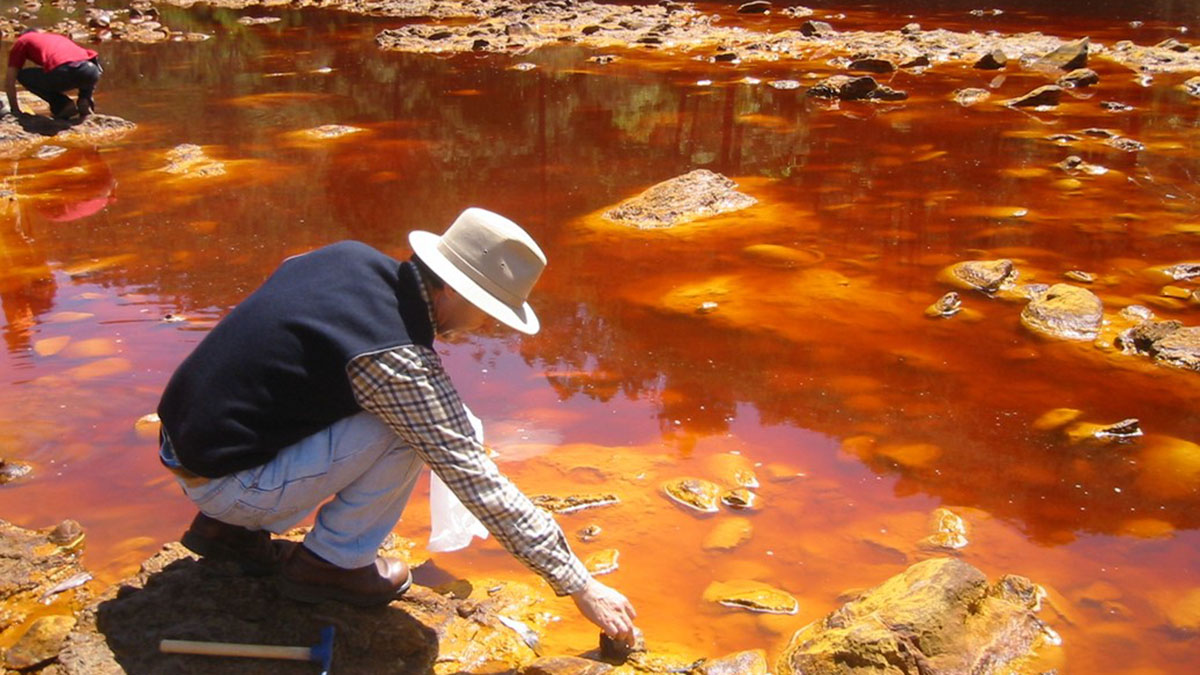
Using Hematite to Decipher Past Climates and Environments
The magnetic and color properties of the mineral hematite give clues to past environmental conditions and is being used for paleoclimatic reconstruction.

Posted inResearch Spotlights
Clues to Pluto’s History Lie in Its Faults

Studying geological features on Pluto’s surface can illuminate the ancient history of how the dwarf planet formed.
Posted inNews
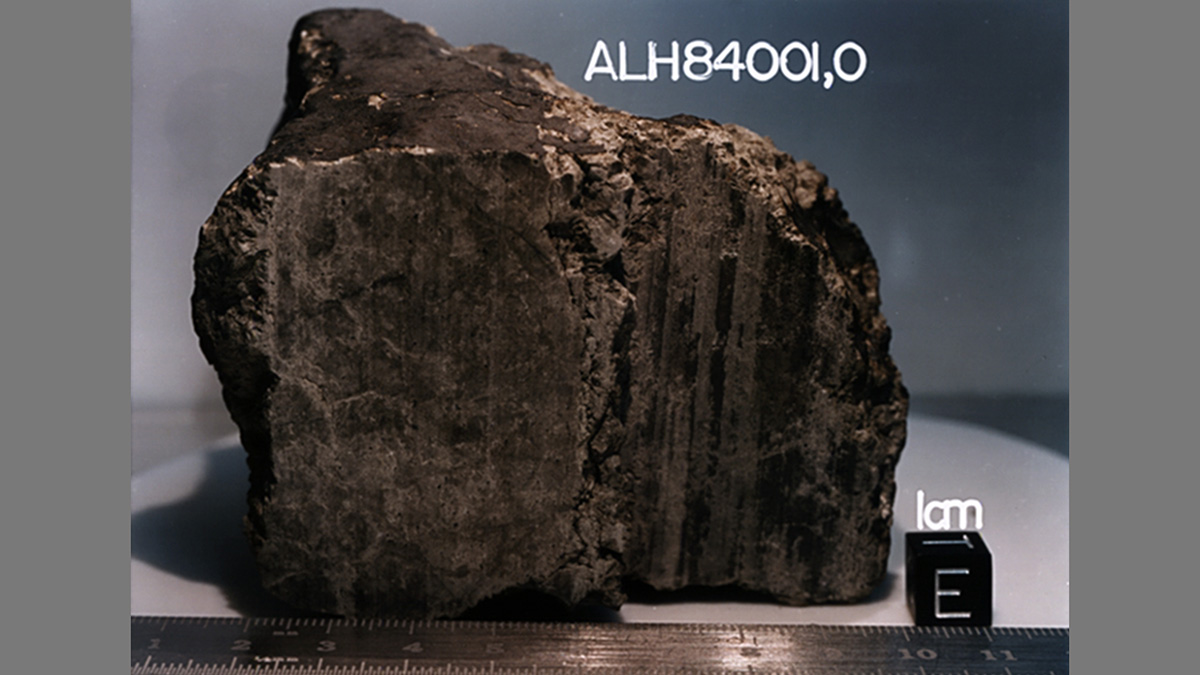
A New Explanation for Organics on a Mars Rock That Fell to Earth
Organic molecules on a Martian meteorite have fueled nearly 30 years of scientific debate. New evidence suggests they were formed by Martian processes, offering more support for a once habitable environment on the Red Planet.

Posted inEditors' Vox
Introducing the New Editor in Chief of Earth and Space Science
Find out about the person taking the helm of Earth and Space Science and her vision for the coming years.