• About
  • Sections
  • Topics
    • Climate
    • Earth Science
    • Oceans
    • Space & Planets
    • Health & Ecosystems
    • Culture & Policy
    • Education & Careers
    • Opinions
  • Projects
    • ENGAGE
    • Editors’ Highlights
    • Editors’ Vox
    • Eos en Español
    • Eos 简体中文版
    • Print Archive: 2015–2025
  • Science Policy Tracker
  • Blogs
    • Research & Developments
    • The Landslide Blog
  • Newsletter
  • Submit to Eos
  • AGU.org
  • Career Center
  • Join AGU
  • Give to AGU
  • About
  • Sections
  • Topics
    • Climate
    • Earth Science
    • Oceans
    • Space & Planets
    • Health & Ecosystems
    • Culture & Policy
    • Education & Careers
    • Opinions
  • Projects
    • ENGAGE
    • Editors’ Highlights
    • Editors’ Vox
    • Eos en Español
    • Eos 简体中文版
    • Print Archive: 2015–2025
  • Science Policy Tracker
  • Blogs
    • Research & Developments
    • The Landslide Blog
  • Newsletter
  • Submit to Eos
Skip to content
  • AGU.org
  • Career Center
  • Join AGU
  • Give to AGU
Eos

Eos

Science News by AGU

Support Eos
Sign Up for Newsletter
  • About
  • Sections
  • Topics
    • Climate
    • Earth Science
    • Oceans
    • Space & Planets
    • Health & Ecosystems
    • Culture & Policy
    • Education & Careers
    • Opinions
  • Projects
    • ENGAGE
    • Editors’ Highlights
    • Editors’ Vox
    • Eos en Español
    • Eos 简体中文版
    • Print Archive: 2015–2025
  • Science Policy Tracker
  • Blogs
    • Research & Developments
    • The Landslide Blog
  • Newsletter
  • Submit to Eos

Space Weather

Visit the journal.

Researchers use satellite data to calculate how fast the Nile Delta is sinking
Posted inResearch Spotlights

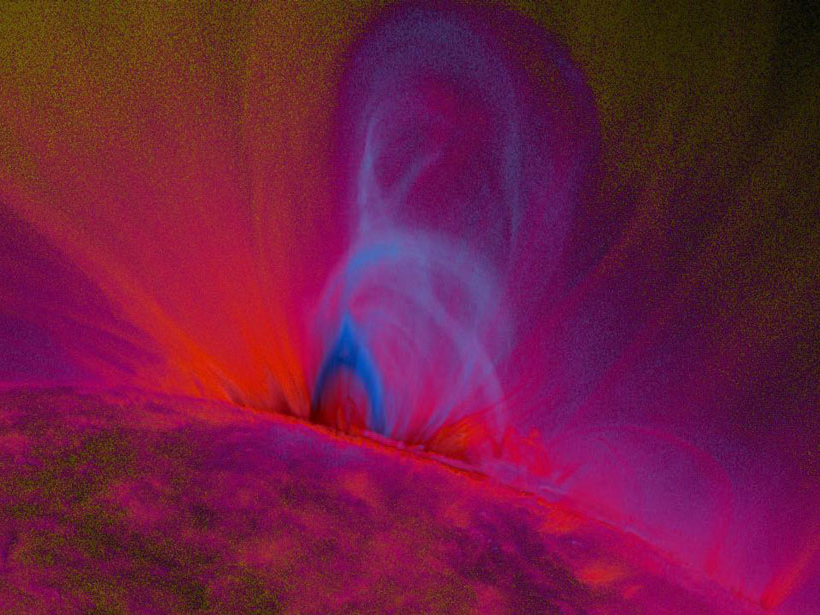
Capturing Structural Changes of Solar Blasts en Route to Earth

Sarah Stanley, Science Writer by Sarah Stanley 25 April 20184 May 2022

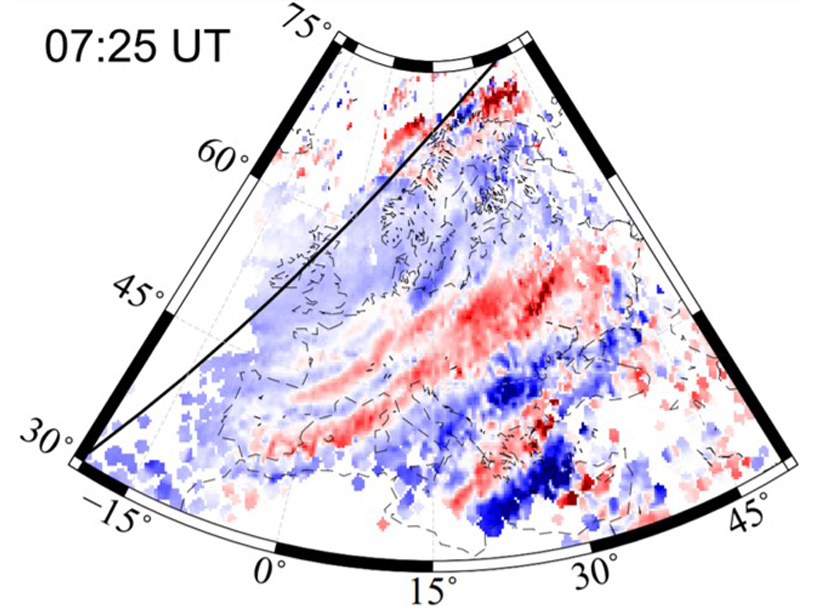
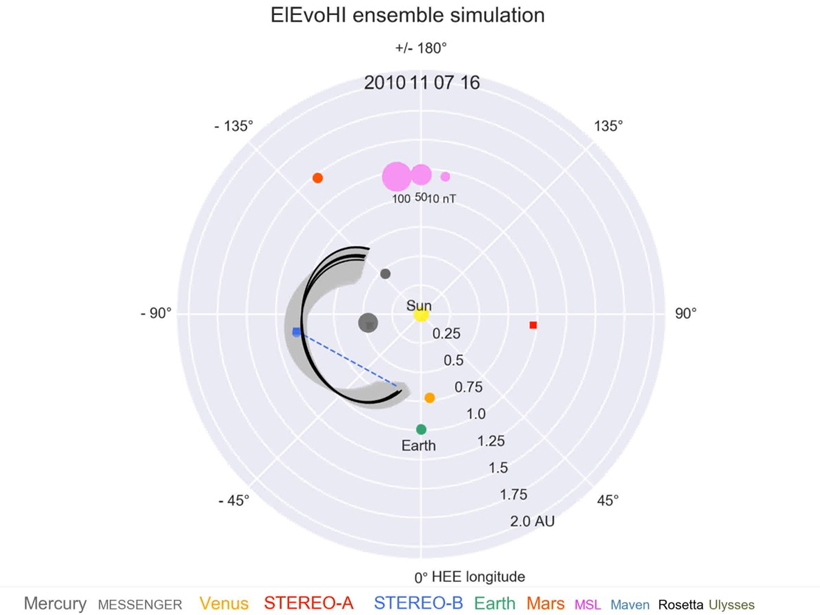
Comparison of magnetic field structures for 20 coronal mass ejections at eruption versus Earth arrival highlights the importance of tracking structural evolution to refine space weather predictions.
Posted inEditors' Highlights

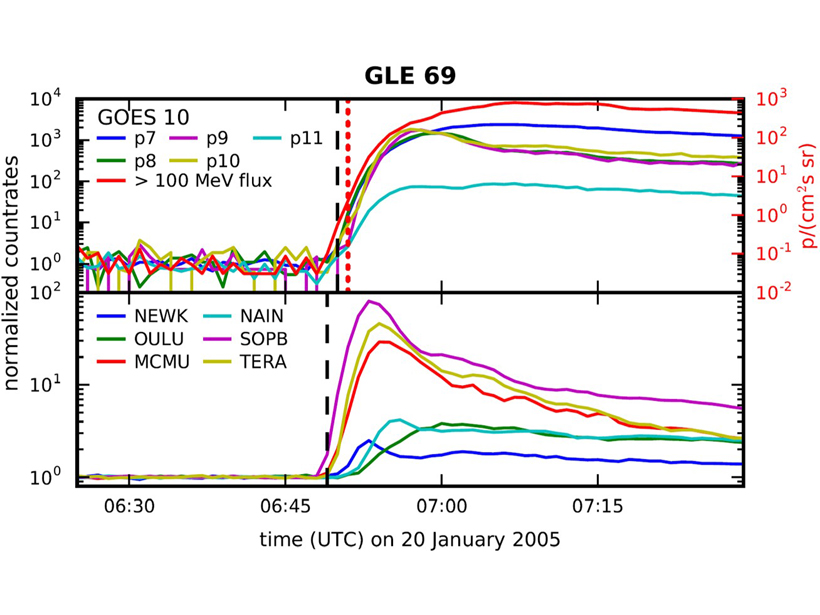
Catching the Oncoming Radiation Storm

by Michael A. Hapgood 13 April 201815 June 2022

Improved processing enables satellite-based radiation sensors to match ground-based sensors in providing prompt warnings of the onset of atmospheric radiation storms that can endanger civil aviation.

Posted inResearch Spotlights

Increasing Radiation Levels May Challenge Space Exploration

by David Shultz 5 April 201827 March 2023

New research shows that solar radiation levels are growing 10% faster than previously believed and that the radiation environment in space will worsen with time.
Posted inEditors' Highlights

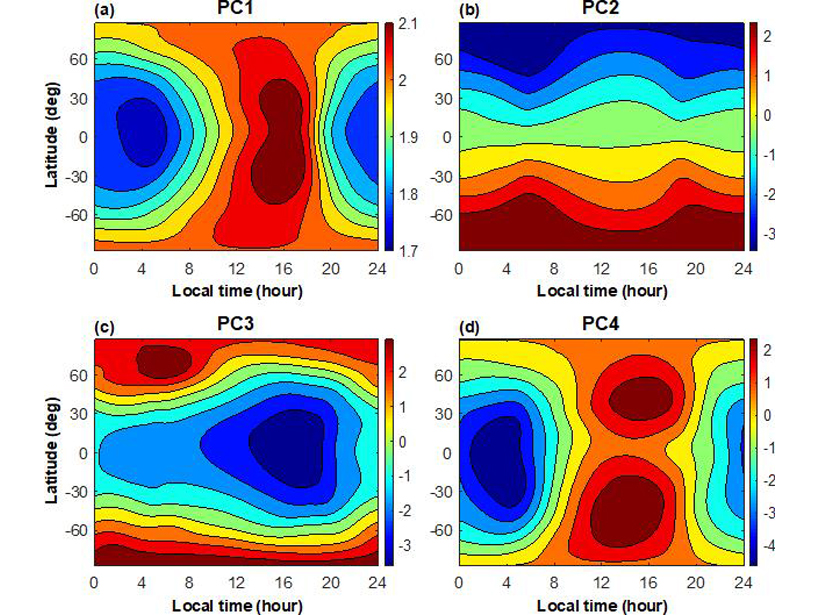
Improving Temperature Forecasts in the Upper Atmosphere

by D. J. Knipp 19 March 201810 February 2023

Scientists are blending output from multi-year model runs to improve temperature forecasts in regions where satellites experience “drag,” in the hopes of avoiding future spacecraft collisions.

Posted inEditors' Highlights

Space Weather: Exploiting Meteorology’s Toolkit

by Michael A. Hapgood 31 January 20184 May 2022

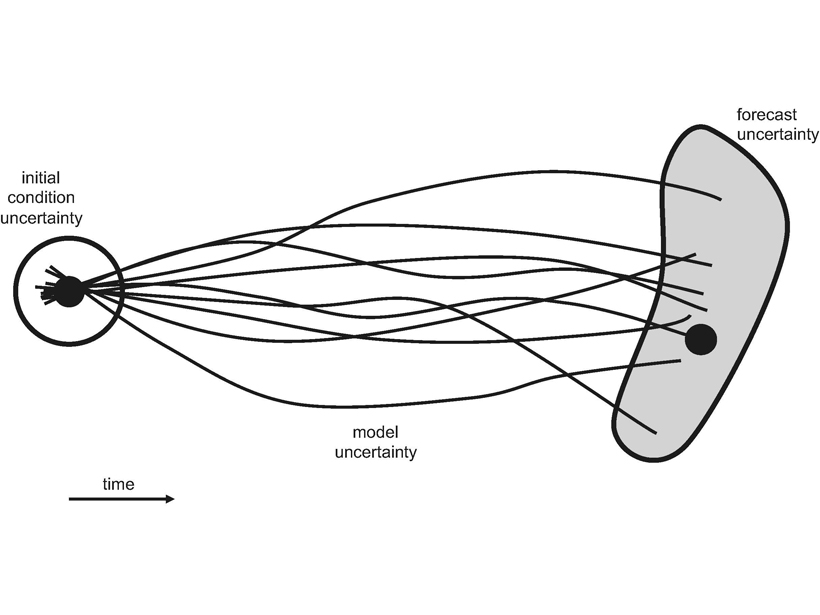
Space weather forecasting is benefiting, and can benefit much further, from concepts and tools already developed by the global meteorological community.

Researchers compile a 45-year map record of sunspots
Posted inResearch Spotlights

Preserving a 45-Year Record of Sunspots

by E. Underwood 17 January 201813 October 2022

Maps reveal how the Sun’s magnetic field evolves through solar cycles.

A new model of solar winds could improve predictions of space storms
Posted inResearch Spotlights

A Better Way to Predict Space Storms

by E. Underwood 13 December 201713 April 2022

A new model of solar winds could reduce false alarms.

Researchers trace the history of the U.S. government’s involvement in space weather research
Posted inResearch Spotlights

Federal Space Weather Research Could Improve Hazard Preparation

Sarah Stanley, Science Writer by Sarah Stanley 6 September 2017

Researchers outline the history of the U.S. government’s involvement in space weather research, from before World War II, through the Space Race, and beyond.

Posted inResearch Spotlights

Testing Models of Near-Space Electrical Currents

Leah Crane by L. Crane 18 July 201716 November 2021

Modeling Earth’s near-space environment and its electrical currents is challenging. A new study compares how four different models stack up against observations.

AGU journal covers, IEEE Explore logo
Posted inAGU News

Radio Science and Space Weather Now Available on IEEE Xplore

by Ja. Liu 9 March 201720 April 2023

Two AGU journals are poised to reach a broader audience.

Posts pagination

Newer posts 1 … 3 4 5 6 Older posts
A view of a bridge, with the New Orleans skyline visible in the distance between the bridge and the water. A purple tint, a teal curved line representing a river, and the text “#AGU25 coverage from Eos” overlie the photo.

Features from AGU Publications

Research Spotlights

An Ecosystem Never Forgets

19 December 202519 December 2025
Editors' Highlights

Frictional Properties of the Nankai Accretionary Prism

11 December 20259 December 2025
Editors' Vox

Hydrothermal Circulation and Its Impact on the Earth System

3 December 20253 December 2025
Eos logo at left; AGU logo at right

About Eos
ENGAGE
Awards
Contact

Advertise
Submit
Career Center
Sitemap

© 2025 American Geophysical Union. All rights reserved Powered by Newspack