
Heavy winter rainfall has triggered further movement at this infamous landslide site in California, causing damage to properties and infrastructure

The Portuguese Bend Landslide Complex in Rancho Palos Verdes in California frequently makes news headlines as phases of movement cause property damage. California has suffered a wet winter, which has driven a new phase of movement, although this is now starting to reduce once more. The long term challenges at the site remain.
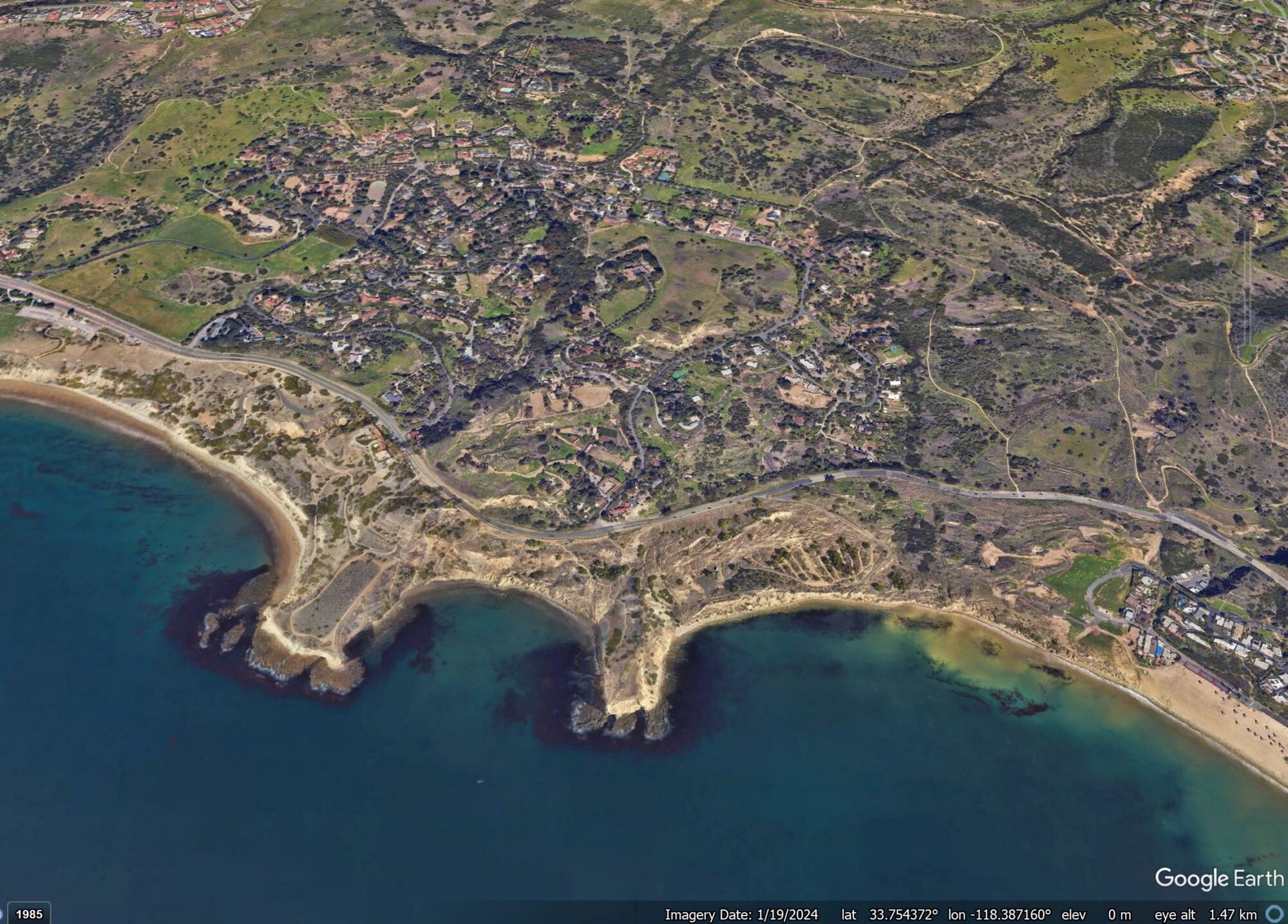
This is a Google Earth image of the Portuguese Bend landslide Complex:-
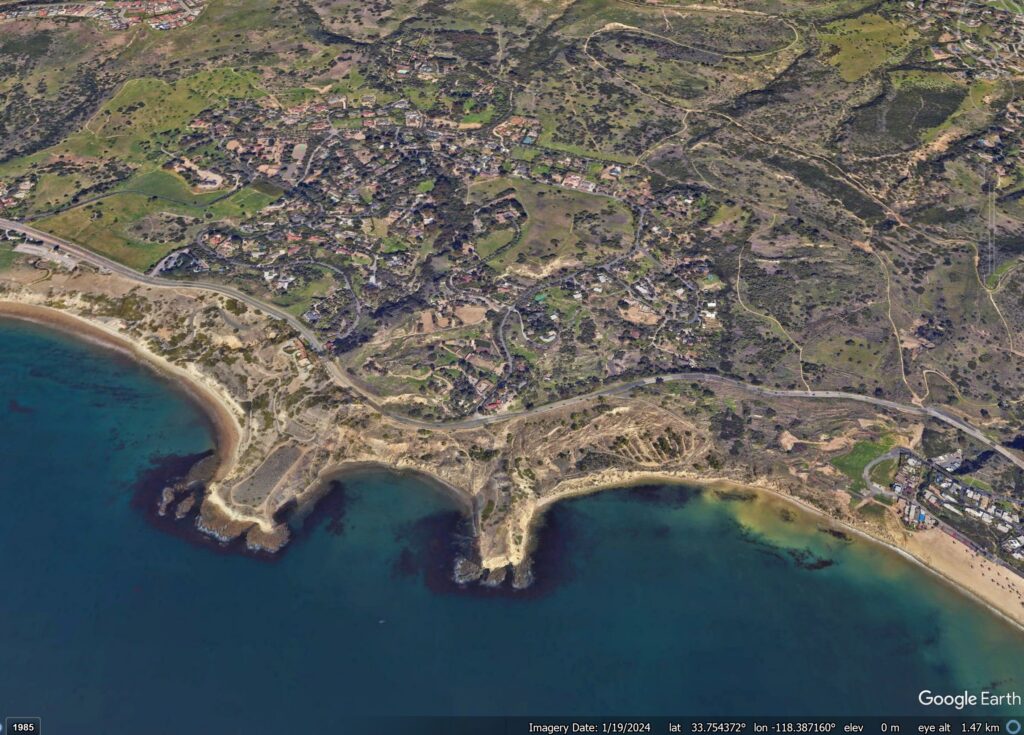
The landslide site is at [33.7409, -118.3692]. The municipal authority has a detailed web site providing information about the site, which includes monitoring reports. There is also a good Wikipedia page about Portuguese Bend.
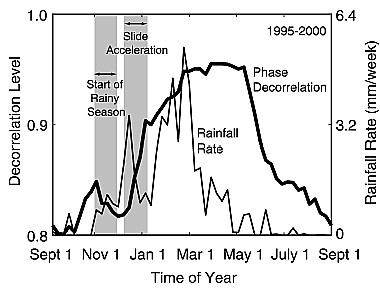
If you are interested in a more technical explanation of this landslide, take a look first at a paper about it that was published over 60 years ago (Merriam 1960), which provides a really good explanation of the site. A more up to date account is provided in an AGU published journal paper (Calabro et al. 2010). There is a particularly interesting graph in this paper that illustrates the movement pattern of the landslide in relation to seasonal rainfall, with displacement here being indicated by the level of decorrelation in the InSAR data:-
The most recent movement event has seen displacement rates that have exceeded 2.5 inches (c.60 mm) per week, although this has now declined. The result has been further extensive damage, as shown by this New York Times video:-
This drone footage, captured from before the most recent movement events, also gives a sense of scale of the issues associated with Rancho Palos Verdes:-
This landslide complex is imposing an immense burden on the local community. The City alone has committed US$64.4 million since October 2022. Dewatering is a key approach being used to try to slow the movement of the landslide, with an ongoing programme of property purchases for the worst affected locations.
References
Merriam, R. 1960. Portuguese Bend Landslide, Palos Verdes Hills, California. The Journal of Geology, 68 (2), 140-153.
Calabro, M.D. et al. 2010. An examination of seasonal deformation at the Portuguese Bend landslide, southern California, using radar interferometry. Journal of Geophysical Research – Earth Surface, 115, JF001314.