
An Iron Age burial mound in Norway has been reinterpreted as being a memorial for a catastrophic landslide during a period of climatic instability.
There is a very interesting article (Gustavsen 2026) in the European Journal of Archaeology that re-examines an Iron Age mound known as Raknehaugen (Rakni’s Mound) in Norway. This mound has, until now, been interpreted as being the burial site of the a high status Iron Age person. However, the new interpretation suggests that it might be a “communal, ritual response to a catastrophic landslide that took place in the wake of the AD 536 ‘Dust Veil’ climatic crisis.”
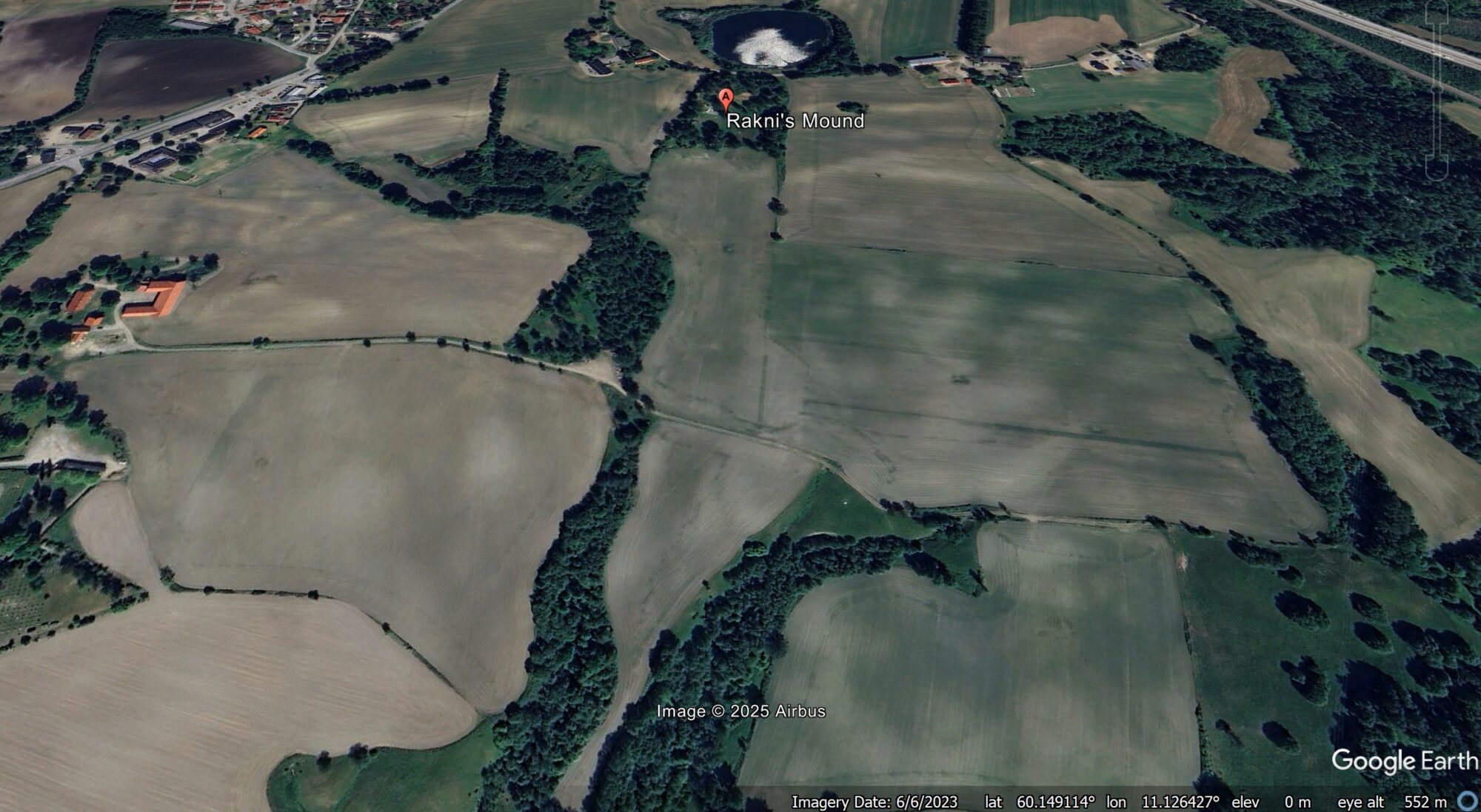
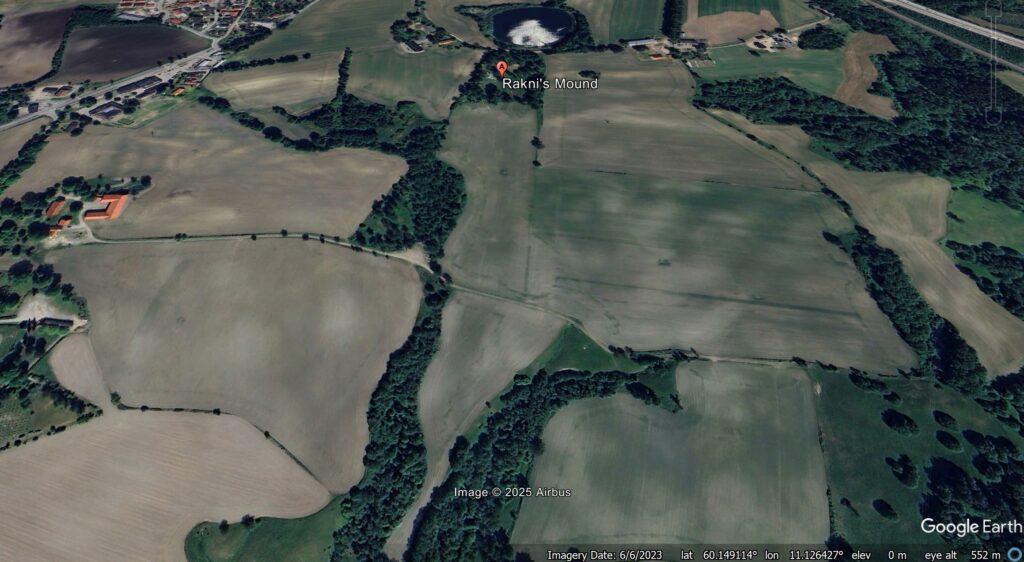
Raknehaugen is the largest prehistoric mound in Scandinavia. Wikipedia reports that it’s 77 metres in diameter and over 15 metres in height. The location is [60.1468, 11.1374], and the site is captured well in the Google Earth image below:-
Raknehaugen has been extensively excavated over the last century, but the results are perplexing. Very little evidence of human burials have been found, but the mound contains vast numbers (approximately 75,000) of stacked logs, the majority of which were felled in a single winter. This is a highly unusual structure for a European Iron Age mound.
Gustavsen (2026) proposes an alternative explanation for Raknehaugen. Using Lidar, the scar of an ancient quick clay landslide has been identified immediately downslope from the mound. In the image above, the rear scarp of this feature can be seen running across the image just below the mound. The Lidar image below, from Gustavsen (2026), also shows the landslide:-
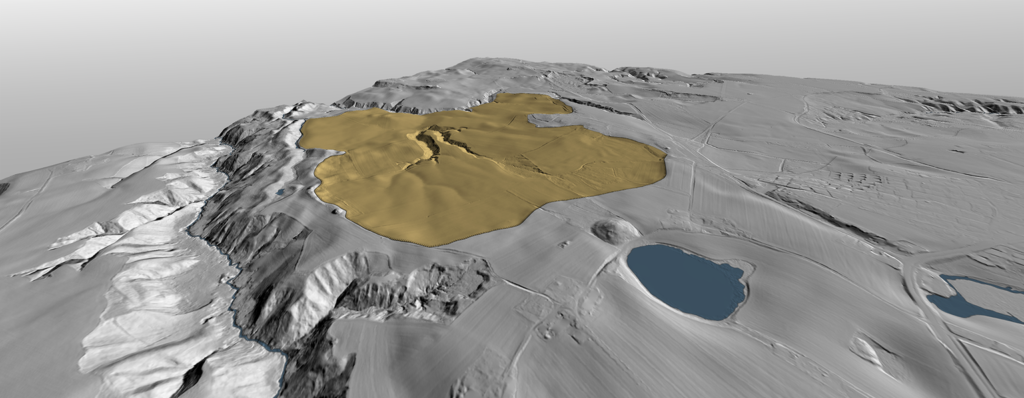
The mound can be clearly seen in this image, and the landslide scar is in brown.
Thus, Gustavsen (2026) suggests that the mound is a memorial to a catastrophic quick clay landslide. The author suggests Raknehaugen’s:
“…construction can be read as a response by the affected communities to what was perceived as an external threat, whereby this not only served as a means of restoring the physical landscape but also of re-establishing the sacred and social order. The materials incorporated in Raknehaugen may thus have served a propitiatory role or been an apotropaic device, acting as a protective barrier against malevolent forces or harmful spirits.”
The age of the mound is key. The sixth century saw a period of extreme climatic upheaval in Scandinavia, probably resulting from from a series of volcanic eruptions that “injected aerosols into the stratosphere, obscuring the sunlight and causing considerable cooling of the atmosphere.” The result was a period of crop failure, with resultant famine and disease. The general population declined.
The landslide could have been triggered directly by the increased precipitation, and/or changes in the landscape (e.g. deforestation, patterns of agriculture, excavation) could have been a cause or even the trigger. That landslide would have impacted a population already suffering great hardship.
Within archaeology, this paper highlights that the interpretation of Iron Age burial mounds may have been overly simplistic. Within the landslide community, it is a useful datapoint both in interpreting the history of catastrophic failures and in linking major landslides to climatic shifts.
Referencec
Gustavsen L. 2026. The Late Iron Age Mound Raknehaugen in Norway: A Ritual Response to the Sixth-Century Crisis. European Journal of Archaeology. Published online 2026:1-21. doi:10.1017/eaa.2025.10026