Research & Developments is a blog for brief updates that provide context for the flurry of news that impacts science and scientists today.
A yearly analysis of climate change’s progress and effects shows a “planet on the brink” of ecological breakdown and widespread crisis and suggests that only rapid climate mitigation can avoid the worst consequences.
“We felt an ethical responsibility to document this turning point clearly.”
“We felt an ethical responsibility to document this turning point clearly and to speak directly to humanity about where we stand,” wrote William Ripple, an ecologist at Oregon State University and coauthor of the new report, in an email. “What we’re seeing now are signs of systemic distress.”
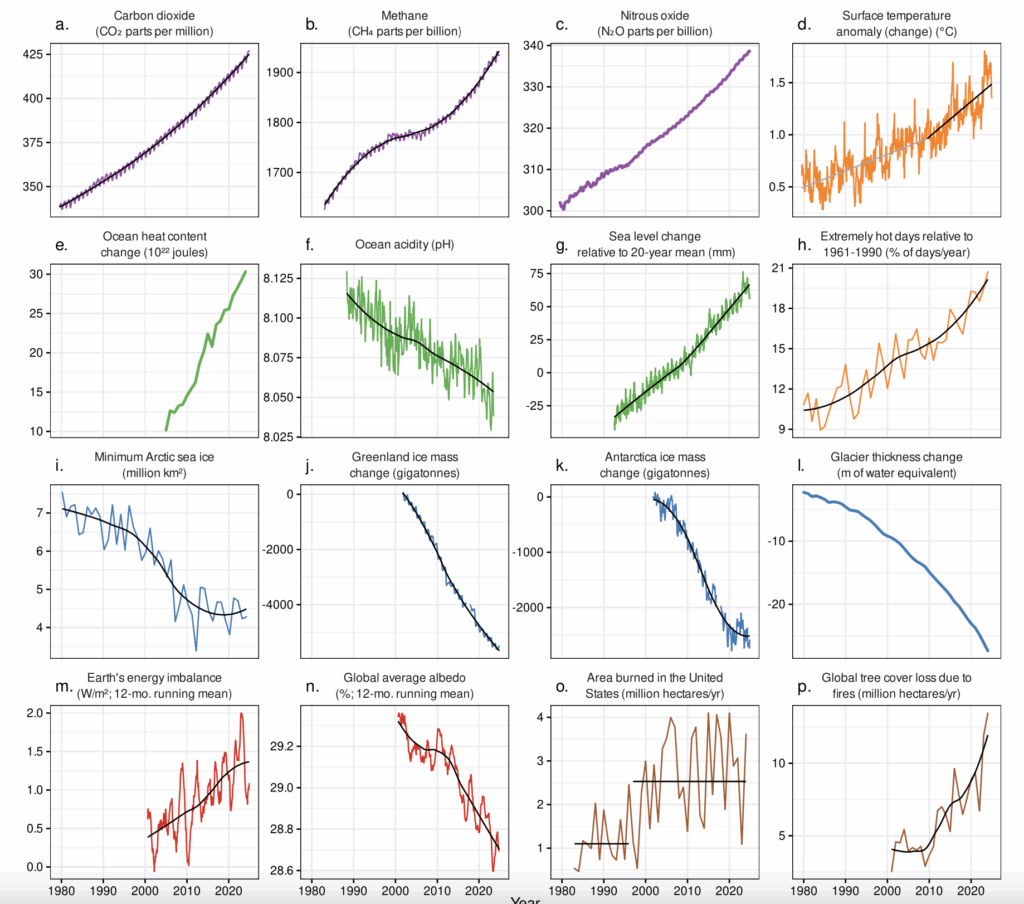
The sixth annual report, published in BioScience, analyzes global data on Earth’s atmosphere, oceans, energy, ecosystems, food systems, and more. Researchers identified our planet’s so-called vital signs, including ocean temperature, surface temperature, sea ice extent, and carbon pollution. Of the 34 vital signs, 22 were at record levels, indicating a highly stressed Earth system.
For example, 2024 surpassed 2023 as the hottest year on record. Ocean heat and wildfire-related tree cover loss are both at all-time highs. Deadly weather disasters surged in 2024 and 2025, with floods, wildfires, and typhoons killing hundreds in the U.S. alone. Atmospheric warming is showing signs of accelerating. Ice at the poles continues to melt, contributing to sea level rise. And the Atlantic Meridional Overturning Circulation, a global network of currents critical for circulating heat on Earth, is showing signs of weakening, which could trigger further climate disruptions.
“Without effective strategies, we will rapidly encounter escalating risks that threaten to overwhelm systems of peace, governance, and public and ecosystem health,” said Ripple in a press release. “In short, we’ll be on the fast track to climate-driven chaos, a dangerous trajectory for humanity.”
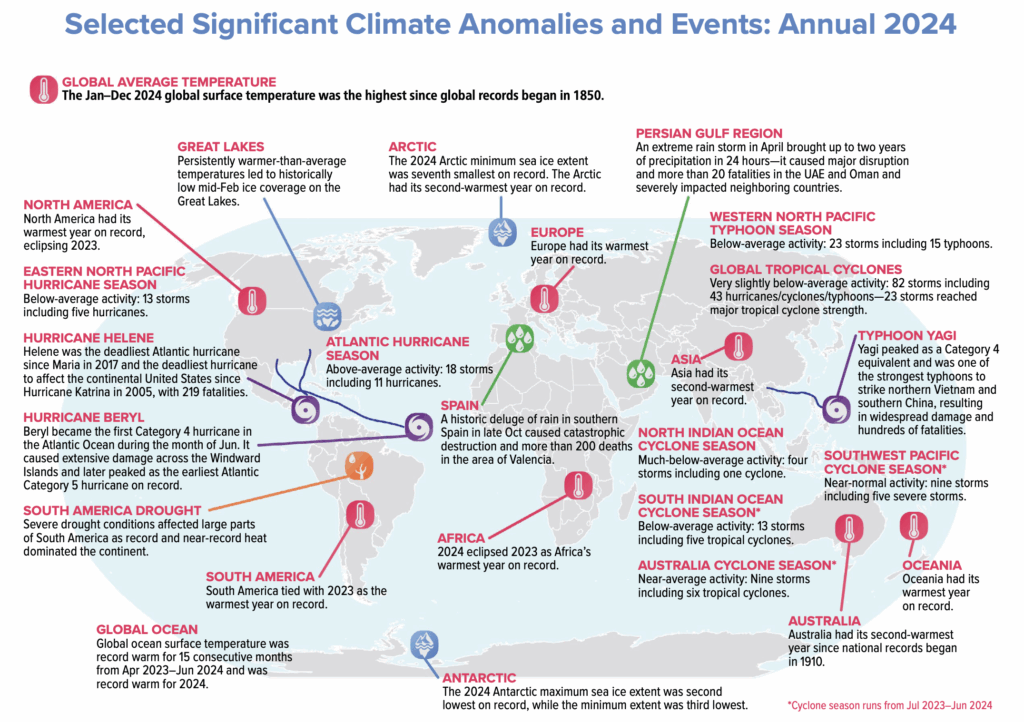
Another “State of the Climate” report was published in August. The Bulletin of the American Meteorological Society report, authored by more than 500 scientists, presented similar indicators of a stressed Earth system, including record-setting ice loss at the poles, unusually high global temperatures, and an increase in the frequency and severity of weather disasters and wildfires.
Climate & Consumption
The new report identifies resource consumption, especially meat and energy consumption, as a major driver of climate change and ecological harm.
“We can’t fix the climate by technology alone; we have to rethink the way we live.”
Global gross domestic product, or GDP, a measure of the goods and services produced in a given year, reached an all-time high in 2025 according to preliminary data. While such economic growth is often celebrated, it is also typically coupled with ecological degradation and increased emissions, the authors point out. Reducing consumption, especially among the world’s wealthiest individuals (who tend to consume more resources), is essential to managing the effects of climate change, they write.
“We need systemic change: rethinking what we value, shifting toward circular economies, and promoting well-being over endless growth,” Ripple wrote in an email. “We can’t fix the climate by technology alone; we have to rethink the way we live.”
Related
• Read the BioScience report: “The 2025 State of the Climate Report: A Planet on the Brink”
• Read the Bulletin of the American Meteorological Society report: “State of the Climate in 2024”
• New “State of the Climate Report” Delivers Sobering and Stunning Data
Though the use of solar- and wind-powered electricity is soaring, so is fossil fuel consumption. The State of the Climate authors emphasize that a rapid reduction of fossil fuel use is both necessary and possible, and that renewable energy sources have the potential to supply most global energy needs by 2050.
“We are in a planetary emergency, but we are not powerless,” Ripple wrote. “The science is clear, the mitigation strategies are known, and every fraction of a degree matters.”
—Grace van Deelen (@gvd.bsky.social), Staff Writer
These updates are made possible through information from the scientific community. Do you have a story about science or scientists? Send us a tip at [email protected].