Research & Developments is a blog for brief updates that provide context for the flurry of news that impacts science and scientists today.
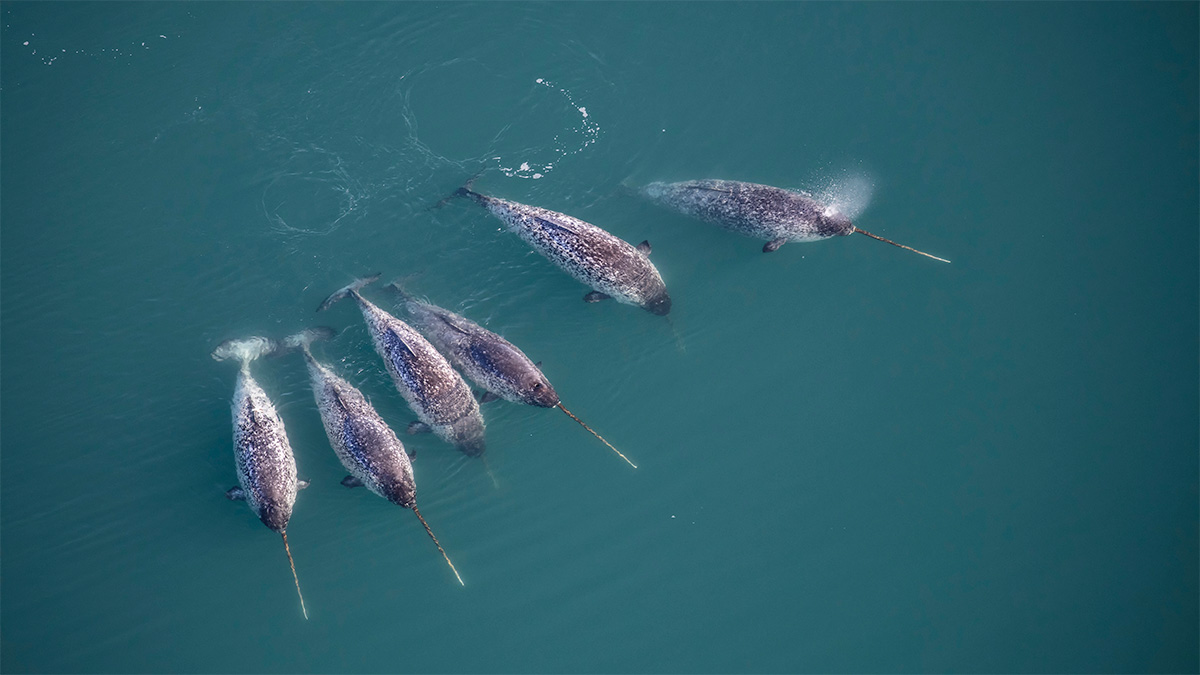
Scientists come in all shapes and sizes. Sometimes, that shape is a blubbery 1,000-kilogram whale with a 2-meter tusk.
In research published today in Science Advances, a team of (human) scientists describe their collaboration with six narwhals to track warming sea temperatures off the coast of East Greenland.
“Narwhals visit areas that are logistically difficult and expensive to reach with traditional methods, and they sample localities in winter that are usually only sampled in the ice-free summer months.”
The warming of these waters is part of a process called atlantification, or the influx of warm, salty water from lower latitudes into the Arctic. This research focused on Scorseby Sound, an area that spans about 10,000 square kilometers, where waters can reach depths exceeding 1,000 meters.
“There are very few oceanographic measurements from Scoresby Sound despite the fact that it is the world’s largest fjord system,” Mads Peter Heide-Jørgensen, a biologist at Pinngortitaleriffik/Greenland Institute of Natural Resources and lead author of the paper, told Eos via email. “Narwhals visit areas that are logistically difficult and expensive to reach with traditional methods, and they sample localities in winter that are usually only sampled in the ice-free summer months.”
The researchers outfitted the animals with satellite transmitters, which tracked temperature, salinity, and the depth of the whales’ dives. Data collection occurred each time a whale dove at least 50 meters below the water, with at least 15 minutes between dives. From August 2017 to July 2020, the six narwhals recorded data from a total of 2,060 dives.
“Narwhals have been used as ocean sampling platforms several times in the past because they are excellent samplers of remote ice-covered areas and deep depths. They make repeated dives in one area, sometimes to a mile below the surface, often over many months,” Kristin Laidre, a polar scientist at the University of Washington’s Polar Science Center, who was not involved in the study, explained in an email to Eos.
Though this isn’t the first time narwhals have participated in data collection, this experiment marks the first time that devices attached to narwhals were used to measure salinity.
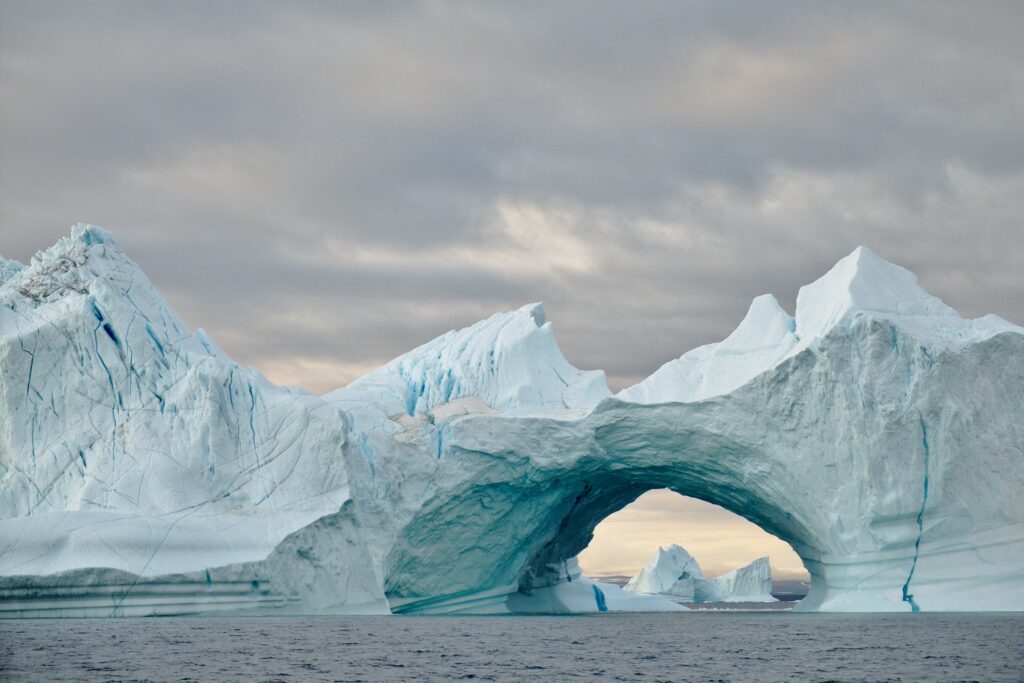
The researchers also used ships to gather data about the area. Using data from both sources, they found that, compared to glaciers terminating in shallow basins, glaciers terminating in deep basins tended to be surrounded by warmer waters, especially at depths of 200 to 500 meters. Most of the influx of Atlantic waters occurred at depths exceeding 150 meters.
The warm water is likely contributing to the melting of glaciers in the Nordvestfjord in Scoresby Sound, as well as those in the Nansen Fjord and the Kangerlussuaq Fjord farther south, the researchers report. Glaciers in shallow coastal areas are less affected by atlantification.
Heide-Jørgensen said that, though scientists were already aware from other studies that atlantification is occurring in East Greenland, it was surprising to see how much Atlantic water is influxing to areas that are 300 kilometers or farther from Greenland’s outer coast (ice-free headlands that face the open ocean as opposed to inner fjords).
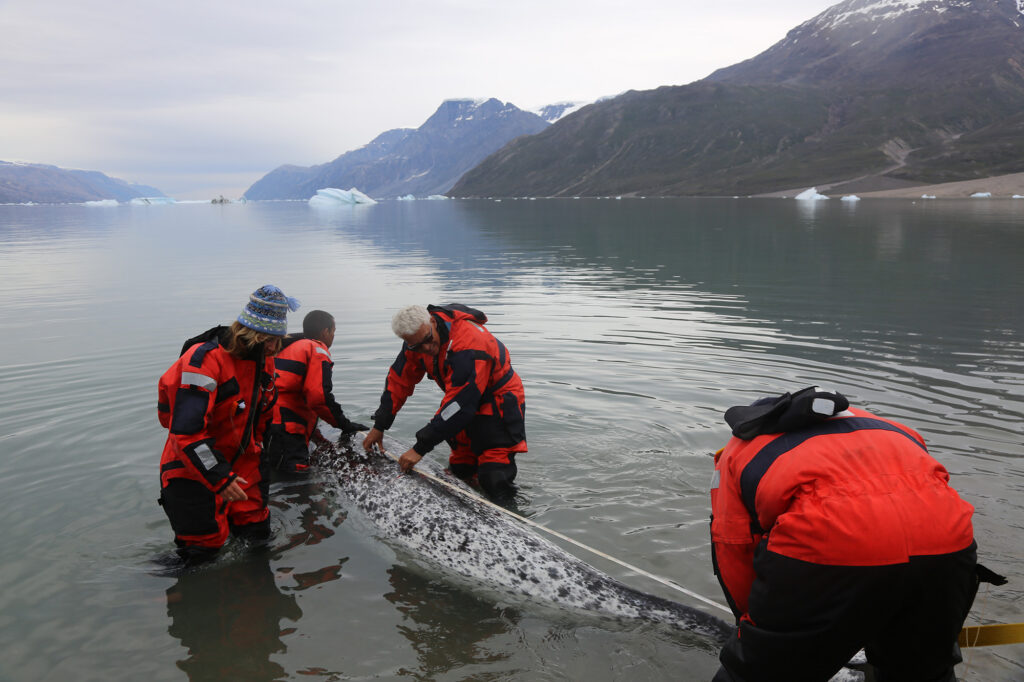
In the paper, the researchers describe how the work demonstrated not just new findings, but a methodological breakthrough, saying it illustrated how work with “unconventional collaborators can revolutionize oceanographic research.” The project was reviewed and approved by the Institutional Animal Care and Use Committee of the University of Copenhagen.
“Narwhals and other marine mammals routinely navigate the most remote corners of the polar seas, reaching sites like glacial fjords where human researchers struggle to collect data due to the presence of sea-ice and icebergs,” Ian Fenty, a climate scientist at NASA’s Jet Propulsion Laboratory, who was not involved in the work, wrote in an email to Eos. “Provided these animals are treated ethically, the information gathered from the instruments they carry will continue to be invaluable for improving our understanding of climate change.”
—Emily Gardner (@emfurd.bsky.social), Deputy Editor
These updates are made possible through information from the scientific community. Do you have a story about science or scientists? Send us a tip at [email protected].