Source: Earth’s Future
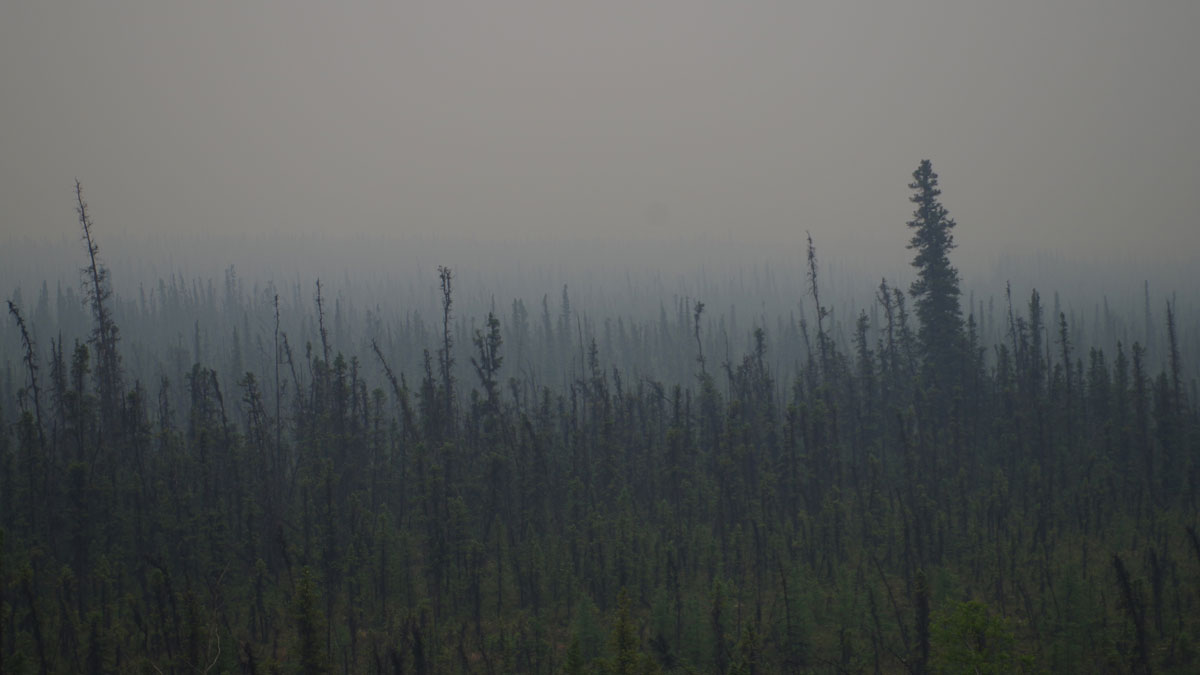
Climate change is altering patterns of wildfire activity in Alaska, making fires larger and more common in some areas with historically low fire activity. Wildfires can be difficult to predict because they are affected by intricate interplays between factors including climate, ecology, and weather. But a better idea of which fire pathways are more likely is important for future fire forecasting, adaptation, and management strategies.
Littell et al. use temperature and precipitation data from an ensemble of five climate models from the Coupled Model Intercomparison Project Phase 5 (CMIP5) to assess how fire activity in boreal Alaska may change in the 21st century. Feeding the data into the Alaska Frame‐Based Ecosystem Code (ALFRESCO) landscape model to assess changing fire-vegetation dynamics, they present a range of fire and vegetation composition scenarios based on both moderate and high levels of future greenhouse gas emissions.
Though significant variation exists between how individual models calculate increases in burn area, the authors show that the more likely outcome under climate change, regardless of emissions pathway, is for the median annual area burned by wildfire in Alaska to increase—by more than double under a high-emissions scenario. Areas that currently see less wildfire, such as the Alaskan Arctic and western Alaska, could see up to an eightfold increase in wildfire activity. In addition, ecosystems are likely to be increasingly dominated by deciduous tree cover as spruce species are pushed out by fire.
Uncertainty over the future of Alaskan wildfires remains. Lower levels of warming combined with increased summer precipitation could keep wildfire activity within historical bounds, and the future balance of less-flammable deciduous trees to more-flammable spruce will also likely affect fire activity. The authors note one significant limitation to their current results is that the ALFRESCO model was trained on historical fire-vegetation dynamics. Future dynamics, such as increased flammability of vegetation under novel climates, could be substantially different, changing the evolution of fire activity in the region.
Key takeaways for fire managers include the fact that diversity in the age, species makeup, and spatial coverage of vegetation could potentially reduce the likelihood of larger fires. Maintaining and creating this variability in wildfire fuel through suppression, controlled burns, fuel treatments, and other methods could therefore be a useful management strategy. (Earth’s Future, https://doi.org/10.1029/2026EF008324, 2026)
—Nathaniel Scharping (@nathanielscharp), Science Writer