Source: Community Science
Resources such as sea level rise viewers, heat maps, and flood prediction services are crucial tools in a changing climate. NASA Earth Observations (NASA EO) datasets provide important information on these and other natural hazards, but many communities who may benefit from these tools face barriers to accessing them.
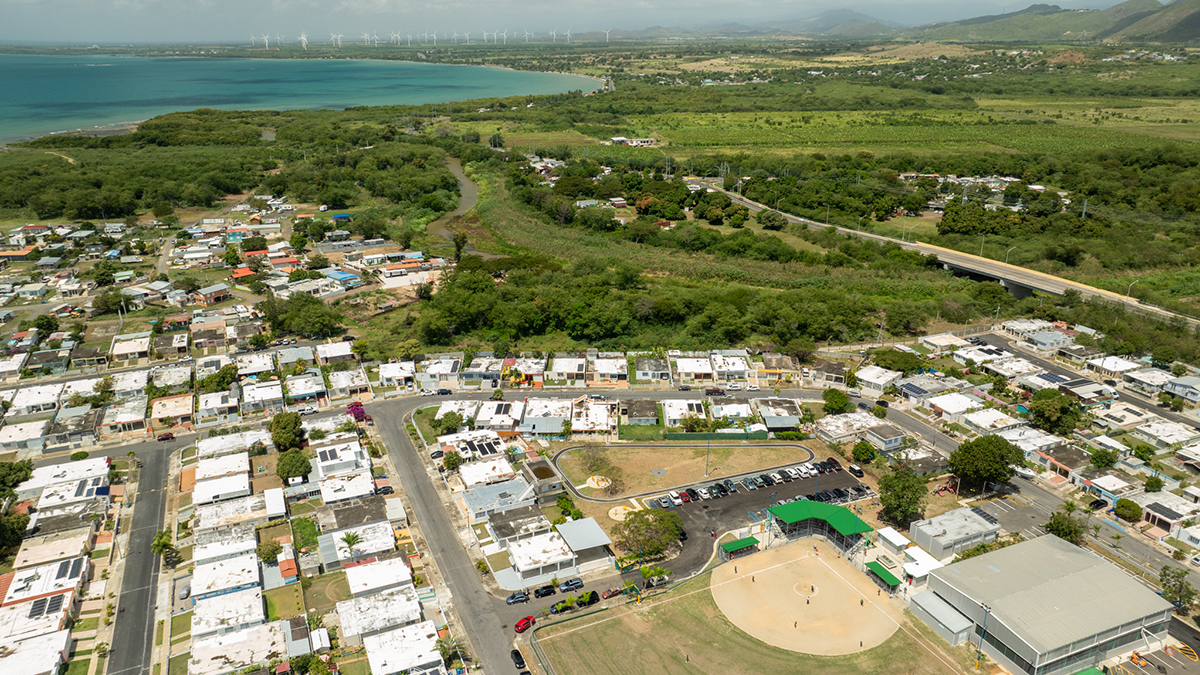
La Margarita, a community along Puerto Rico’s southern coast, faces hazards including flooding, storm exposure, crumbling infrastructure, and inadequate government investment. Residents of this historically underserved community contend with pollution from nearby power plants and an industrial sterilization facility. Hurricane Fiona exposed many of the region’s vulnerabilities in 2022, after 30 inches of rain destroyed homes in low-lying areas and left residents without basic services.
Raub et al. worked with La Margarita residents to learn about their environmental concerns and preferred solutions and to assess ways NASA EO datasets might be able to address those concerns in a three-phase project over 9 months.
In phase 1, one-on-one bilingual interviews with 16 local leaders and residents helped researchers determine participants’ environmental justice concerns as well as familiarity with EO tools and the possible barriers to using them. In phase 2, a NASA representative showed community members how EO tools could be used, such as to show patterns of power outages and to project rates of sea level rise. For phase 3, researchers created a bilingual English-Spanish report to summarize the study participants’ concerns and the available NASA EO resources. La Margarita community members were invited to provide feedback to ensure that the report accurately reflected their needs and concerns.
Key concerns that study participants identified were flooding (56%), land misuse from illegal development (63%), and air quality and accompanying health conditions (50%). Government inaction was participants’ biggest concern (69%). Participants initially had little awareness of the EO tools but felt that flood mapping and air quality monitoring systems would be useful, especially if they were paired with support for how to use the tools. Barriers to EO tools included spotty internet access, unfamiliarity with the technology, previous experiences with unhelpful authorities, and the language barrier.
Study participants did not want solutions imposed on them by outside experts—they wanted collaboration with researchers and agencies who would listen to their concerns and work toward community-led decisionmaking. The study authors suggest that environmental justice means more than providing data: Building trusting relationships between scientists, communities, and agencies like NASA can ensure that important tools reach and are used by the people who need them most, the authors say. (Community Science, https://doi.org/10.1029/2025CSJ000157, 2026)
—Rebecca Owen (@beccapox.bsky.social), Science Writer