
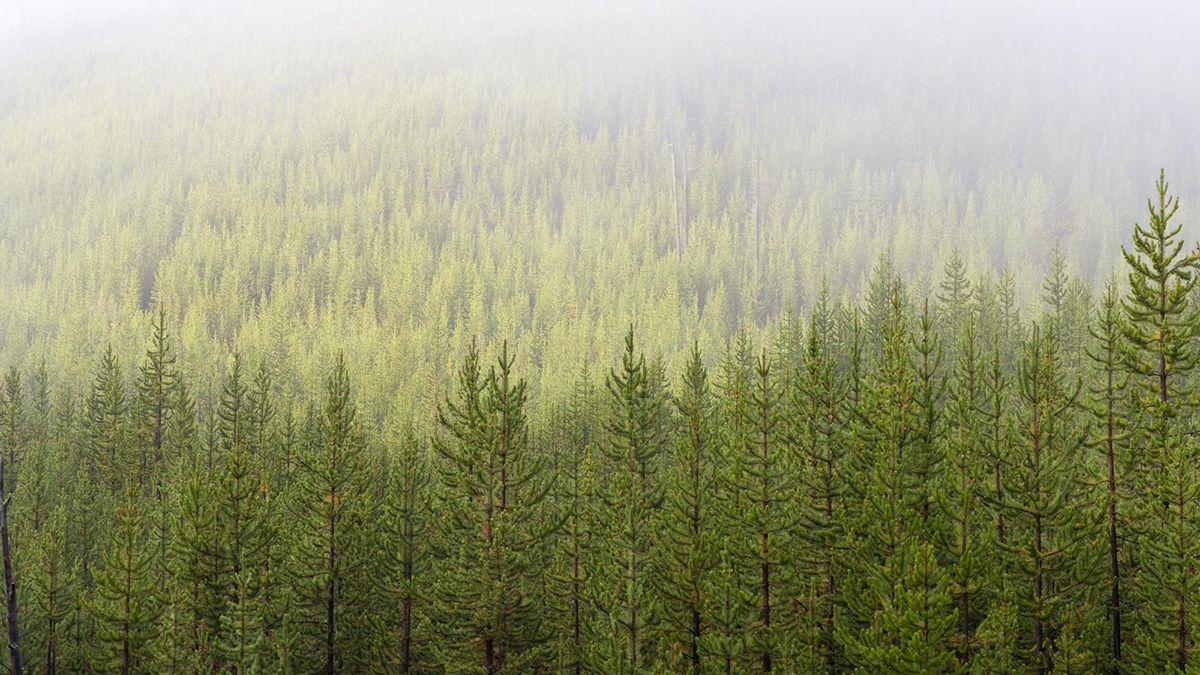

Climate change–driven drought is making wildfires larger and more frequent. A new analysis of nearly 3,500 recent wildfires in the western United States and Canada showed that when a fire spreads swiftly, it will burn a larger area and more of that area will be severely burned.
What’s more, the faster a fire spreads, the greater will be the distance between severely burned trees and living seeds that could regrow them is. This distance suggests that forests might not grow back the same after a fast, severe wildfire, opening the door for significant and unpredictable ecosystem changes.
“We are experiencing in many settings fire regimes that are completely outside of the box as to what those forests evolved with and are adapted to,” said Jonathan Coop, an ecologist at Western Colorado University in Gunnison and lead researcher on the project. “This is the context in which we are observing postfire ecosystem trajectories that are leading in very different directions than a return to the prefire forest type.”
New Fire Regimes
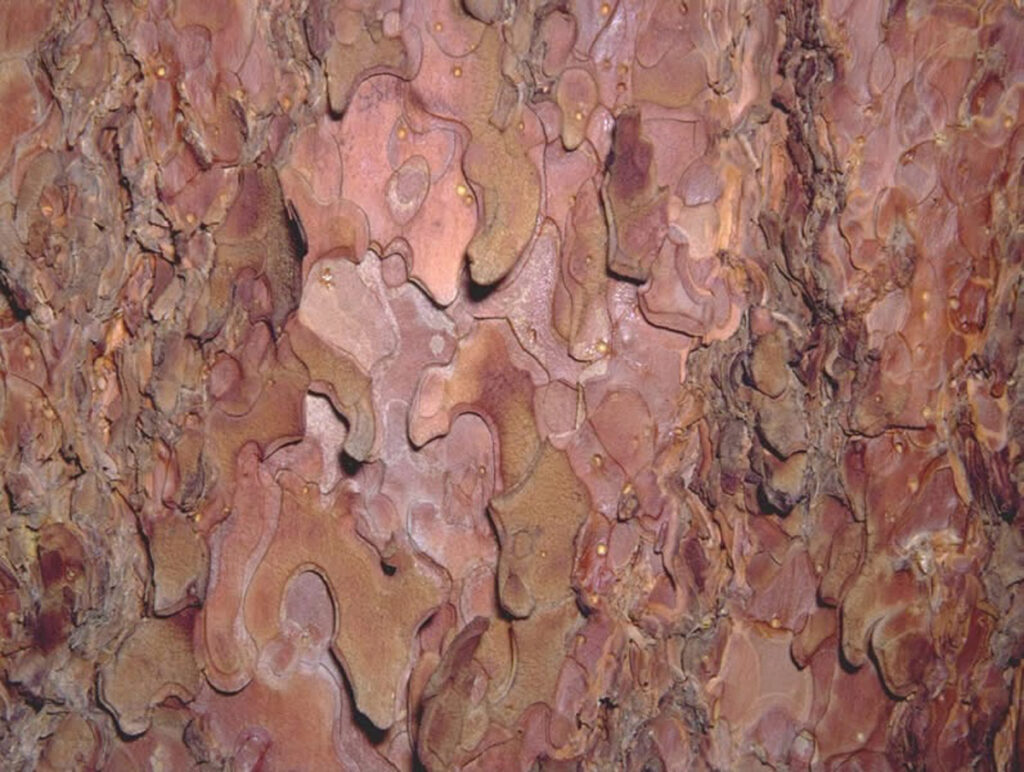
Some forests have evolved over time to expect regular wildfires of particular strength. Black spruces and lodgepole pines depend on fires to open serotinous cones and release seeds, and ponderosa pines have a thick bark that helps them survive surface fires.
But climate warming and drought have been worsening fire conditions across the globe. Forests that have adapted to wildfires of a particular severity and frequency might not be able to keep up with harsher and more frequent fires. And wildfires are also becoming more common in forests that haven’t historically experienced many.
“Conditions are becoming more flammable.”
“Conditions are becoming more flammable,” Coop said. “There are very clear trends of increasing fire season length, drier fuels, conditions that allow more fires to burn in any given year, [as well as allowing] fires to burn bigger and faster in any given year as things warm up and dry out.”
As wildfire regimes shift, it’s important to understand how forests grow back—or don’t—and account for the downstream ecological impacts of fires.
“In northern Canada, a big patch of high-severity fire in a jack pine forest is likely to recover exactly towards a jack pine forest again,” Coop explained. “In other settings, like in the southwestern U.S. in a mixed conifer forest that’s really well adapted to surface fire, this kind of large patch is unusual, and it’s less likely to be able to recover back towards what it was.”
Faster, Bigger, Stronger
The researchers gathered satellite data on about 3,500 wildfires that occurred between 2012 and 2023 in conifer forests in Canada and the western United States, a total of 43 million hectares (106 million acres) of burned area. They measured each fire’s daily growth rate and compared it with the fire’s total spread, burn severity, and postfire landscape resilience.
The team found that faster-growing fires burned more area, were more severe on average, and had a higher fraction of severely burned area. Over the 11 years captured by the data, more than a third of the area (11.2 million hectares, or 28 million acres) burned at high severity. The fastest fires severely burned about 50% of the affected area, while the slowest fires severely burned about 25% of the area.
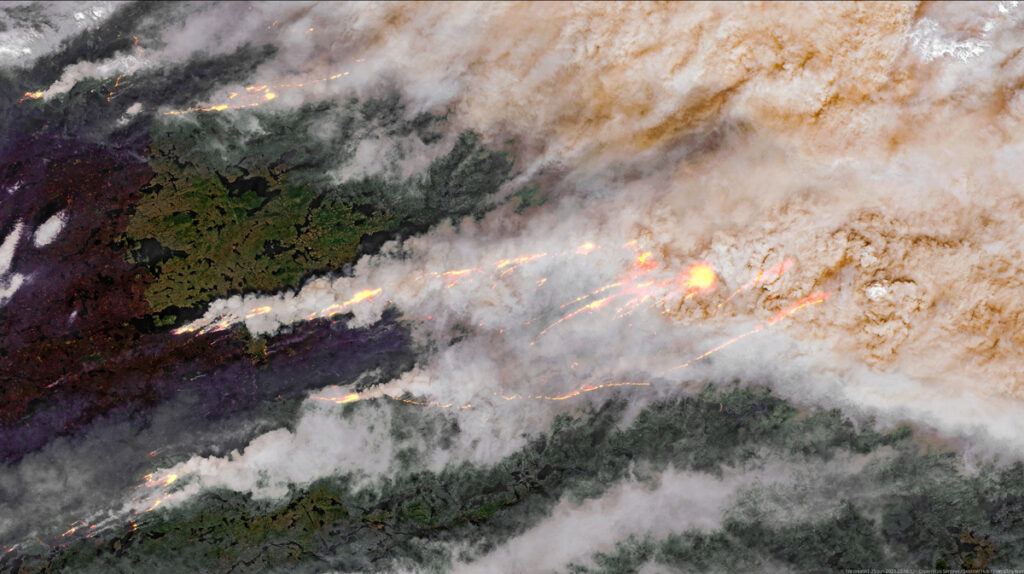
“Not only do these fires burn more area, but they also burn that area more severely,” Coop said. “And as we continue to move into a warmer, drier, more fire-conducive future, we can anticipate more of these kinds of events occurring with increasing frequency.”
These results were published in Science Advances in August.
“While the links between fire severity, area burned, and forest recovery [are] well understood, this research shows that the rare days of rapid fire spread are those with the most outsized impacts on our forests,” said Nathan Kiel, an ecologist at the State University of New York in Syracuse. Kiel was not involved with this research.
Nathan Gill, a landscape ecologist at Texas Tech University in Lubbock who also was not involved with this research, said that “the study was well designed and that the evidence connecting fire spread rate, burned area, and fire severity is compelling.”
“I wouldn’t say that is a totally surprising idea, rather, it is a logical one, and now we can have confidence in saying it’s true across much of the forested regions of North America,” Gill added.
The Struggle for Seeds
The forests included in this study span 11 ecological zones, and Kiel was surprised to see that the relationship between fire speed and severity was consistent across ecoregions. “The spatial coverage is impressive.… While the strength of the relationship varies, extreme wildfire spread supersedes this regional variability to consistently create large patches of severe wildfire,” he said.
Coop and his team also found that after faster fires, seed sources were farther away from severely burned areas than after slower fires. Because faster fires severely burn more area, burned trees may struggle to find nearby sources of healthy, living tree seeds to repopulate. That makes severely burned forests vulnerable to other plants—maybe other forest species, maybe another ecosystem entirely—taking root and taking over.
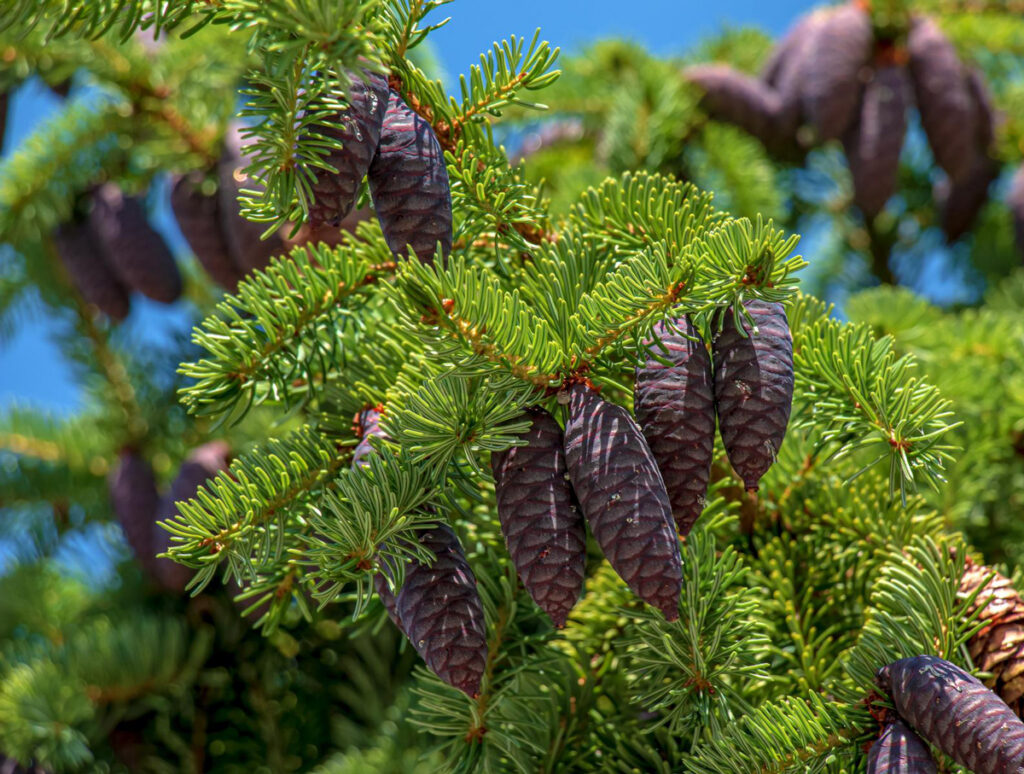
“This could also affect forests with adaptations to severe fire,” Kiel said, “like those dominated by trees with serotinous cones that are opened by fire and disperse seeds within the burned area. If two or more fires occur in quick succession, initial forest recovery following the first fire could be stymied by subsequent fires, particularly if they are large and severe.”
Monica Turner, an ecologist at the University of Wisconsin–Madison who was not involved with the new study, said that “because they are so consequential, days of fast fire spread are often memorialized by name,” like “Black Saturday” on 20 August 1988 in Yellowstone and “Black Saturday” on 7 February 2009 in Victoria, Australia.
“Such fires are dangerous to life and property and largely uncontrollable,” Turner added. “As fire activity continues to increase, it is important for forest managers to anticipate that days of extreme fire spread are also likely to increase and that forest recovery pathways are uncertain.”
“When we see that a wildfire burns with a very high rate of spread, that should alert us to the fact that the area will likely have severe effects from the fire,” Gill said. “This might help managers and restoration ecologists plan where to concentrate reforestation efforts or be mindful of post-fire erosion.”
—Kimberly M. S. Cartier (@astrokimcartier.bsky.social), Staff Writer