Research & Developments is a blog for brief updates that provide context for the flurry of news that impacts science and scientists today.
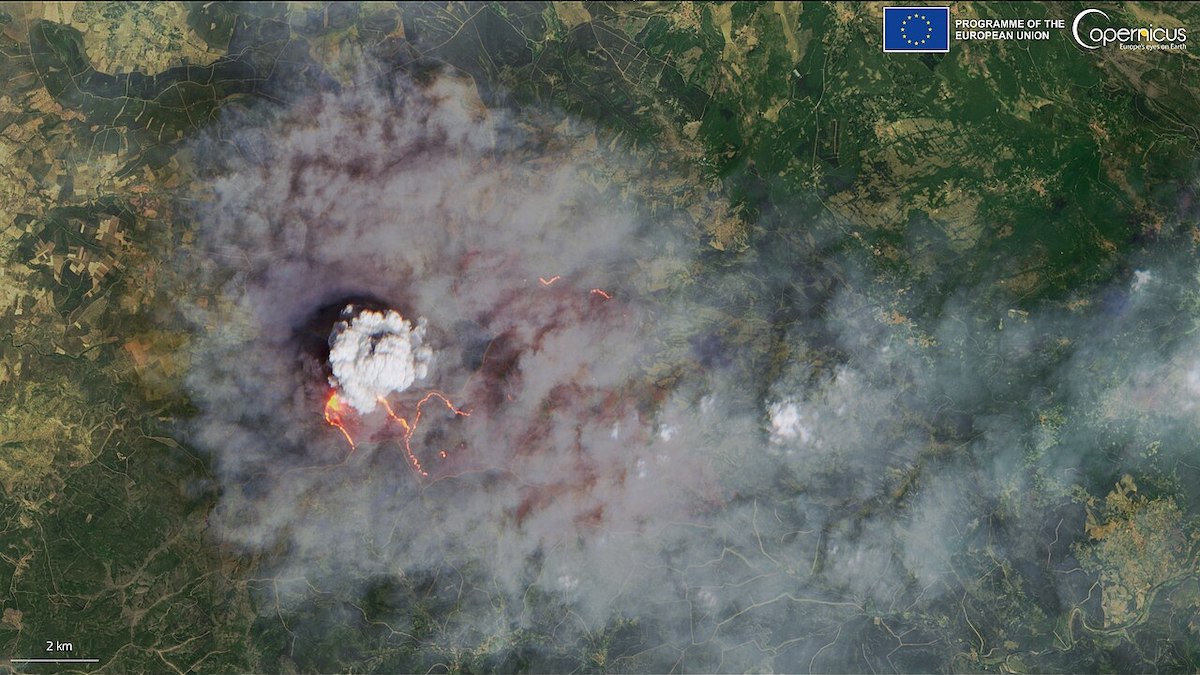
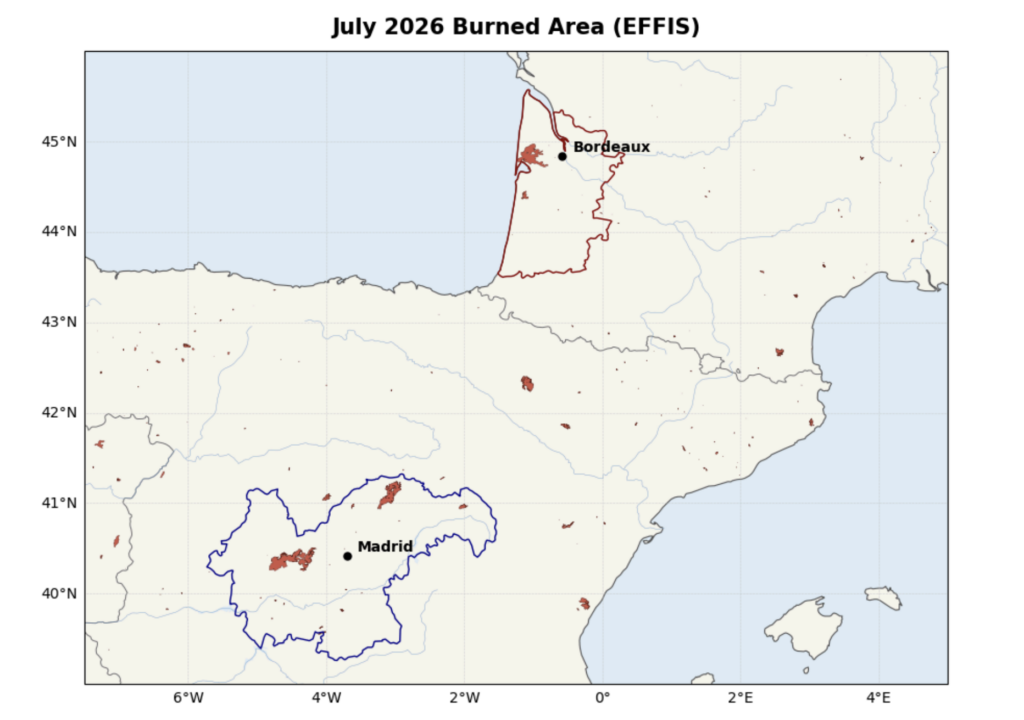
Over the past 2 weeks, large wildfires in southwestern France and central Spain have burned 255,000 hectares, displaced hundreds of thousands of people, and created extremely poor air quality even hundreds of kilometers away. Though firefighters have now contained the major fires, a forecasted heat wave and windy weather threaten to worsen the situation.
Climate change played a role in creating the conditions for these fires to burn and spread, a new analysis has found.
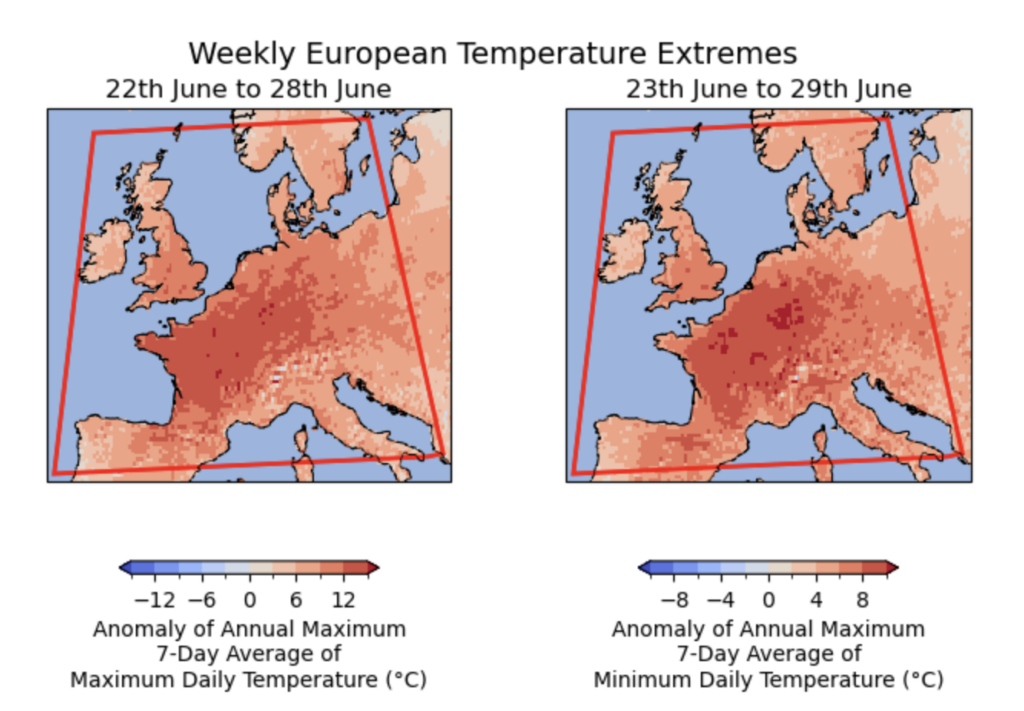
The analysis, from World Weather Attribution, indicates that climate change made France and Spain’s fire-prone conditions much more likely: at least twice as likely in southwestern France and at least 20 times as likely in central Spain. Extreme heat and a widespread drought in Western Europe, both linked to climate change, created “tinderbox conditions,” the authors write.
“What we’re seeing in France and Spain isn’t just bad luck, it is a clear sign of the escalating impacts of anthropogenic warming,” said Clair Barnes, a climate scientist at Imperial College London and one of the authors of the analysis, in a press release.
“We’ve seen repeatedly how climate change increases hot, dry, flammable conditions that are extremely conducive to wildfires. What’s unique about this case is that it’s still early in the season – and with another heatwave looming, these findings are extremely scary,” she said.
Attribution studies typically compare weather and climate observations from the real world with a simulated, theoretical world in which the climate has not warmed. Through this method, scientists can get an idea of how likely a certain event would have been without climate change.
World Weather Attribution, an international climate science partnership, said the researchers’ analysis used a “super-rapid” protocol that analyzed historical weather observations. Researchers compared this year’s fire weather conditions to the maximum fire weather conditions recorded in previous summers and simulations of conditions in a pre-industrial climate (a world without substantial anthropogenic climate change).
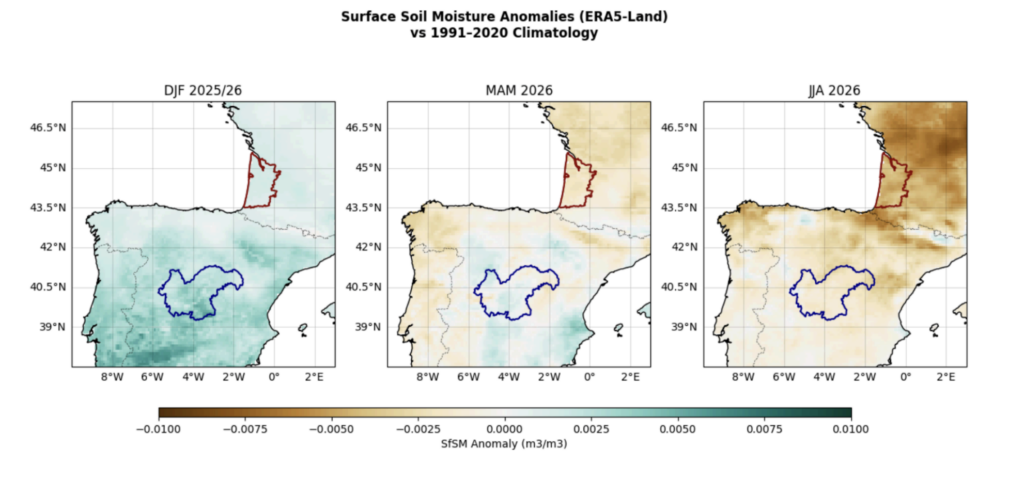
Researchers determined that in France, drought-affected man-made pine woodlands created particularly suitable fuel for wildfires to spread rapidly. In Spain, a wet winter caused a spike in plant growth. When severe drought and high temperatures followed in spring and summer, a large volume of biomass became highly flammable fuel. This so-called “weather whiplash” is becoming “an increasingly important driver of wildfire risk in western Europe,” the authors write.
Two previous attribution analyses by World Weather Attribution this summer found that Europe’s June heatwave and summer drought were both made more likely by climate change. A similar June heatwave would have been about 3.5°C (6.3°F) degrees cooler in 1976, for example, according to their analysis.
“While this observation-based attribution study is well-designed and relies on established scientific literature,” the “super-rapid” protocol is limited in two ways, wrote Danielle Touma, a climate scientist at the University of Texas at Austin who was not involved in the study, in an email.
First, it’s difficult to assess the role of internal climate variability (natural fluctuations in the climate unrelated to climate change) without climate modeling, and second, it’s hard to assess the impact of increased carbon dioxide emissions on plant growth that could fuel fires. Still, “the methods that they use are well established for climate change-induced increases to temperatures and evaporative demand, which can lead to droughts,” she wrote.
Confidence in attributing events to climate change is highest for extreme temperature events, followed by precipitation events and drought. Scientists have relatively lower confidence in attributing wildfires to climate change due to the many drivers of fires. However, the science surrounding attribution studies has greatly improved over the past decade, according to a recent report from the National Academies of Science, Engineering, and Medicine.
“These mega-fires show how fast climate-driven extreme heat and dry landscapes can turn wildfires into devastating national disasters,” said Simon Stiell, executive secretary of the United Nations Framework Convention on Climate Change, in a press release.
“Humanity continuing to burn colossal amounts of coal, oil and gas is baking our planet, making these conditions more dangerous, and these megafires more deadly and destructive. But the solutions are equally clear: All countries must move faster from fossil fuels to renewables and protect people from worsening climate impacts, from wildfires, to megastorms and floods, to droughts hitting food production,” he said.
—Grace van Deelen (@gvd.bsky.social), Staff Writer
These updates are made possible through information from the scientific community. Do you have a story about science or scientists? Send us a tip at [email protected].