
Economists and climate scientists have warned for years that global warming is disrupting trade routes worldwide. Droughts have curbed ship transit through the Panama Canal. Heat waves along the Rhine River have led to low water levels and restrictions on cargo loads. In the Arctic, new shipping routes are opening as the ice continues to melt.
A study published in Communications Earth & Environment showed that this relationship is neither new nor simple. A multidisciplinary team used core sediments to investigate how trade prospered in Central Asia between 600 and 1100 CE, despite arid conditions. Their findings challenge the common assumption that civilizations mostly flourish during rainy, humid periods, and could carry implications for the future of trade in a warming world.
The Paradox
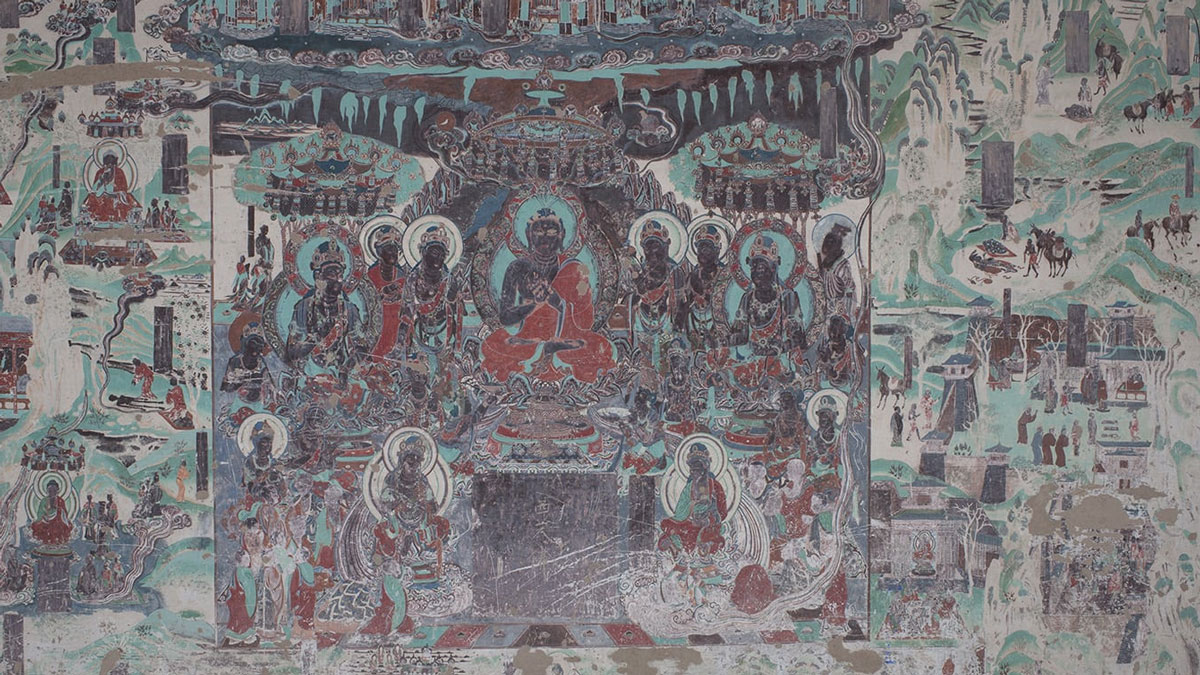
For more than a thousand years, goods like silk, tea, and jade were transported and exchanged along many routes between East Asia and the Mediterranean. Though the term “Silk Road” dates back only to the 19th century, it is commonly used to describe the long-distance networks of cultural and economic exchange across Eurasia, between roughly 130 BCE and the middle of the 15th century.
Historical records provide evidence that in Central Asia, the peak prosperity of the Silk Road during China’s Tang Dynasty (618–907 CE) coincided with periods of consistent droughts and reduced rainfall. “The paradox is both scientifically intriguing and historically significant,” wrote Ruijin Chen, a biologist from Wuyi University in Guangdong, China, who specializes in plant genetics and is lead author of the study, in an email to Eos.
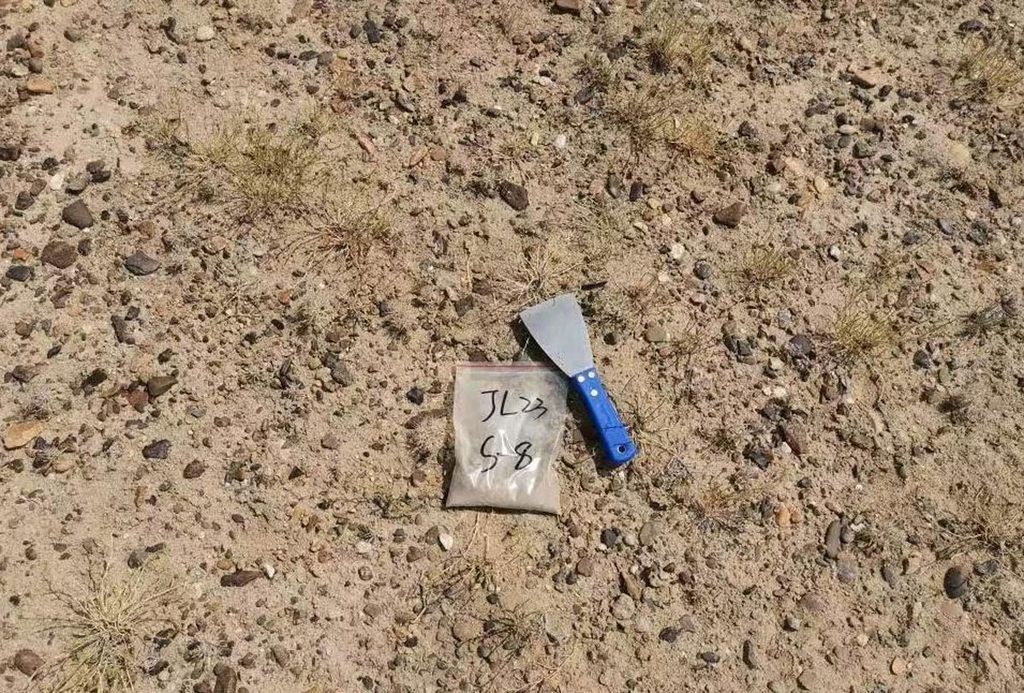
In 2018, a team led by Chen traveled to Jili Lake in the Junggar Basin, northern Xinjiang, China, to collect sediment cores and better understand the seeming paradox of paleoclimate records of arid conditions coinciding with historical evidence of prosperous trade. The multidisciplinary group—including a geographer, a chemist, a paleontologist, a climate scientist, and a hydrologist—returned in the summer of 2023 to collect modern sediments and water samples, which were used to calibrate the relationship between fossilized biomarkers and water depth. The team used both sets of samples to reconstruct the geological and climate history of the lake through the centuries. In a lab at Lanzhou University in Gansu, China, they used biomarkers called isoprenoidal glycerol dialkyl glycerol tetraethers (isoGDGTs), which are remains of single-celled organisms called archaea, to determine changes in the lake’s expansion and depth over the past 5,200 years.
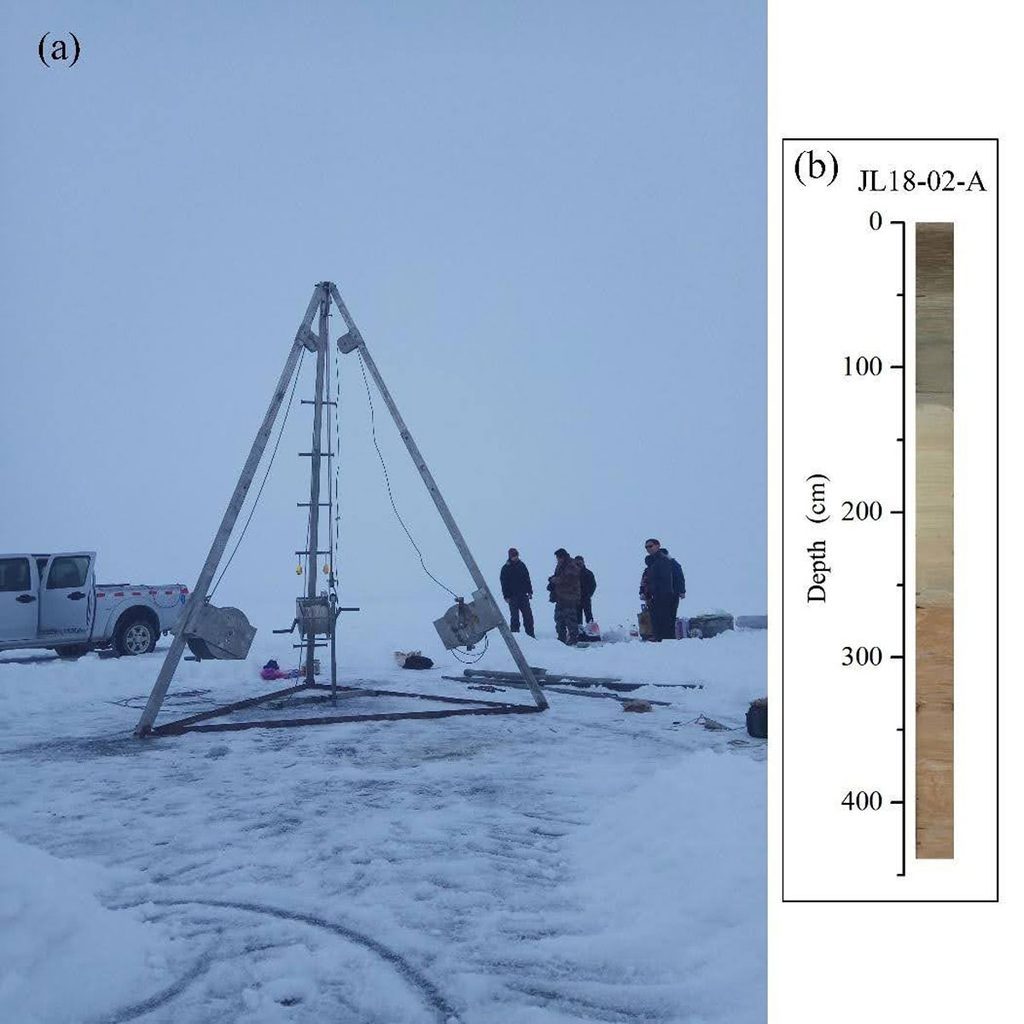
The researchers found that during warm, dry periods, Jili Lake grew; at its peak around 850 CE, water levels rose 20 meters and the lake’s area expanded by about 80%. During cooler periods (350–500 and 1200–1550 CE) and despite the wetter climate, the lake levels came down, dropping to about 5 meters below current conditions. The speed and magnitude of the water change surprised them. “The lake rose by approximately 20 meters in about 250 years, and then declined by a similar magnitude,” Chen said.
The team concluded that changes in rain and humidity did not lead to changes in the water availability around the basin of Jili Lake. Rather, snow and glacier meltwater from the surrounding Altai, Tian Shan, and Kunlun mountains played a more significant role in the size of the lake and basin.
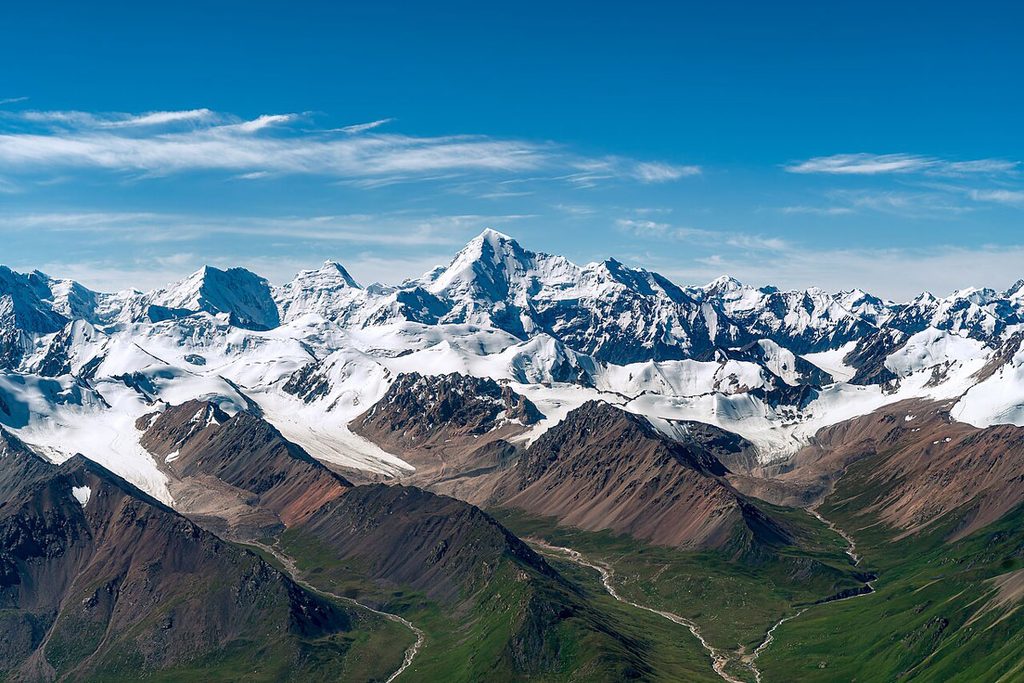
As more water melted, the lake and basin expanded, and oasis hubs, like the city of Hami, became ideal for trade networks. In the future, the team plans to collaborate with historians and archaeologists to explore the interactions between humans and the environment in arid regions like these sites along the Silk Road.
Climate Change and Economic Trade
Economists like Fabio G. Santeramo of the University of Foggia in Italy argue that anthropogenic warming will continue to change food production and trade across the globe. “Through trade, we are going to see a practical implication of climate change,” Santeramo said.
“The scenario in which some parts of the globe become warmer while others become colder is not only plausible. It is something we are already observing.”
Santeramo is not a historian and said he can’t judge how changes in climate and meltwater may have affected the Silk Road, but he argued that the opening of new trade routes or the collapsing of old networks is enough to “change an entire society.” A warmer climate can present benefits for trade, such as a lake expansion in Central Asia during an arid period or new trade routes in the Arctic today, he explained. But it can also come with drawbacks, including for agricultural products such as wine. Warmer temperatures have moved vineyards to northern regions such as the United Kingdom and even New Jersey, to the detriment of traditional wine-growing regions such as France, Spain, and Italy, he explained.
For Santeramo, the matching of historical evidence to geological records and economic analyses are useful; they provide a tool to help scientists and economists study the effects of climate change on trade. The more we know about the past, he suggested, the better we can prepare to adapt to a warmer future. “The scenario in which some parts of the globe become warmer while others become colder is not only plausible,” said Santeramo. “It is something we are already observing.”
“The Silk Road case ultimately shows that meltwater-dependent societies are highly vulnerable to sustained warming and underscores the importance of adaptive strategies.”
“Our research offers a cautionary lesson,” wrote Jianhui Chen, a geographer and paleoclimatologist from Lanzhou University who participated in the research on Jili Lake, in an email to Eos. The researchers found evidence that during the warm period that started around the year 600, meltwater supply increased. After its peak, around the year 850, water levels started to drop despite no changes in the climate. This suggests there is a limit to how much meltwater from snow and glaciers can provide a buffer before drought-related depletion affects a region. During the Tang Dynasty, trading posts dependent on meltwater became vulnerable to depletion and changes in climate. When, in the 17th century, the next warm period expanded the lake again, global trade had shifted to the seas.
Chen said that thanks to global warming, similar conditions exist in glaciers across the Andes, the western United States, and the North Indian Plain. These conditions could put millions of people at the same risk that Central Asia faced around 1,000 years ago, when temporary surpluses of meltwater shifted to persistent water deficits. “The Silk Road case ultimately shows that meltwater-dependent societies are highly vulnerable to sustained warming and underscores the importance of adaptive strategies,” Chen said.
—Santiago Flórez (@rflorezsantiago), Science Writer