
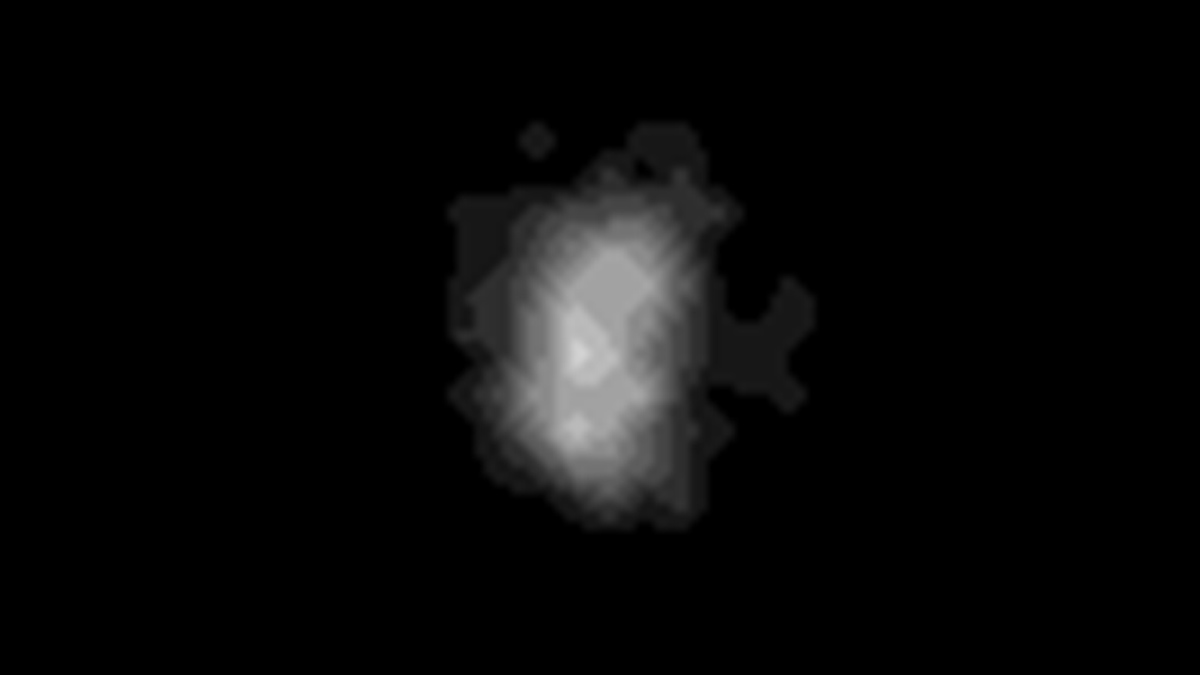
Even among the oddball moons of Neptune, Nereid is an oddball. It follows a long elliptical orbit, with its most distant point nearly 7 times farther than its closest approach. And while Nereid is small, it’s still notably larger and presumably more massive than all but two of Neptune’s 15 other known moons.
Unfortunately, learning more about Nereid and the rest of the Neptunian system has been challenging because Neptune is a very long way from Earth. Voyager 2 is the only spacecraft to have ever visited it, in a rapid flyby in 1989.
Despite the difficulty, researchers have been reasonably sure that Neptune’s outer moons—the set including Nereid—were all captured after the planet formed, which explains their wild and variable orbits. However, a new set of infrared observations using the James Webb Space Telescope (JWST) hints that Nereid, at least, might be weird because it’s home.
In a recent article published in Science Advances, California Institute of Technology astronomer Matthew Belyakov and his collaborators argued that Nereid’s surface composition doesn’t match expectations of a captured moon, meaning it was likely born in Neptune’s orbit after all.
“Neptune probably once had a system of moons that looked like those of Uranus, Saturn, or Jupiter,” Belyakov said, with Nereid being part of that system. Then everything changed when Neptune captured the large Pluto-like moon Triton, which almost certainly originated as an icy world known as a Kuiper Belt object (KBO).
“The outer solar system is like a crime scene.”
“When Triton gets captured, that disrupts the original system,” said Belyakov. According to current understanding, Triton was big enough to scatter or destroy every original Neptunian moon, leaving only other captured moons and the icy inner ring moons (which are themselves the result of violent collisions in the early solar system).
But Nereid never fully fit into that picture: Its orbit is closer in than other captured moons and extremely eccentric.
The new JWST spectrum reinforces that oddness and led Belyakov and his collaborators to their conclusion.
“This wonderful spectrum of Nereid shows that [it] has a lot of water ice, and that is its dominant spectral signature,” he said. More than that, it lacks organic compounds seen in ice-rich KBOs and captured moons like Saturn’s Phoebe. “Something makes it different than Phoebe and the other Kuiper Belt objects of the same size and tells us Nereid is not like them.”
In the model Belyakov developed with his colleagues, Nereid is a Neptune original. The capture of Triton knocked it out of its first orbit into the elongated path it has now.
“The outer solar system is like a crime scene,” said Meg Schwamb, a planetary scientist at Queen’s University Belfast. Researchers have to collect forensic clues and piece together plausible narratives for what happened billions of years ago. And better yet, Nereid as OG moon is a testable hypothesis. “I think this is an intriguing little theory [with] a lot of good arguments for why it might be right. The nice thing is JWST is just starting to scrape the surface of understanding icy bodies in the solar system.”
A Moon Most Irregular
The technical terminology planetary scientists use for moons separates them into “regular” and “irregular” on the basis of their history. Regular satellites (like Jupiter’s large moons Io, Europa, Ganymede, and Callisto) follow tight, nearly circular orbits in the same direction their planets rotate. Irregular satellites like Phoebe mostly follow much wider, eccentric paths and sometimes, like Triton, orbit in retrograde: the opposite direction their home world rotates. According to scientists’ understanding, these characteristics indicate that regular satellites formed from the same primordial disk as the planet, while irregular satellites were captured after formation.
Jupiter, Saturn, and Uranus possess regular moons but also shepherd a set of irregular satellites and, as a result, look a lot like their own miniature solar systems. By contrast, nearly all of Neptune’s satellites are tiny and follow eccentric orbits, with the exception of Triton, which orbits in retrograde extremely close to the planet.
Nereid falls somewhere in between. Its orbit is smaller than typical irregular satellites while still being strongly elliptical, but size estimates indicate it’s more massive than all other Neptunian moons put together (again, excluding Triton on both counts). The JWST spectrum shows Nereid is less like Phoebe or a KBO and more like Saturn’s potato-shaped moon Hyperion or Uranus’s Miranda—but not spectrally identical to either. Belyakov noted that Nereid has some spectral similarities to Pluto’s largest moon, Charon, which could ultimately undermine his hypothesis.
“I think that Occam’s razor points us to the regular satellite story,” he said, in terms of the dynamical challenges of getting a Charon-like KBO into Neptune’s orbit.
Schwamb, whose expertise includes the formation of planetary systems, pointed out that future observations will also help settle the question, thanks to the Vera C. Rubin Observatory. “We know 4,000 Kuiper Belt objects today, we’re going to know about 33,000 in the next few years,” she said. “Many of these should be bright enough to—fingers crossed!—be able to do JWST-type surface studies.”
If no other KBO looks like Nereid or maybe if many do, that result could determine whether the oddball moon is a captured stray or a Neptune original.
—Matthew R. Francis (@BowlerHatScience.org), Science Writer