• About
  • Special Reports
  • Topics
    • Climate
    • Earth Science
    • Oceans
    • Space & Planets
    • Health & Ecosystems
    • Culture & Policy
    • Education & Careers
    • Opinions
  • Projects
    • Postcards From the Field
    • ENGAGE
    • Editors’ Highlights
    • Editors’ Vox
    • Eos en Español
    • Eos 简体中文版
    • Print Archive: 2015–2025
  • Policy Tracker
  • Blogs
    • Research & Developments
    • The Landslide Blog
  • Newsletter
  • Submit to Eos
  • AGU.org
  • Career Center
  • Join AGU
  • Give to AGU
  • About
  • Special Reports
  • Topics
    • Climate
    • Earth Science
    • Oceans
    • Space & Planets
    • Health & Ecosystems
    • Culture & Policy
    • Education & Careers
    • Opinions
  • Projects
    • Postcards From the Field
    • ENGAGE
    • Editors’ Highlights
    • Editors’ Vox
    • Eos en Español
    • Eos 简体中文版
    • Print Archive: 2015–2025
  • Policy Tracker
  • Blogs
    • Research & Developments
    • The Landslide Blog
  • Newsletter
  • Submit to Eos
Skip to content
  • AGU.org
  • Career Center
  • Join AGU
  • Give to AGU
Eos

Eos

Science News by AGU

Support Eos
Sign Up for Newsletter
  • About
  • Special Reports
  • Topics
    • Climate
    • Earth Science
    • Oceans
    • Space & Planets
    • Health & Ecosystems
    • Culture & Policy
    • Education & Careers
    • Opinions
  • Projects
    • Postcards From the Field
    • ENGAGE
    • Editors’ Highlights
    • Editors’ Vox
    • Eos en Español
    • Eos 简体中文版
    • Print Archive: 2015–2025
  • Policy Tracker
  • Blogs
    • Research & Developments
    • The Landslide Blog
  • Newsletter
  • Submit to Eos

Editors’ Highlights

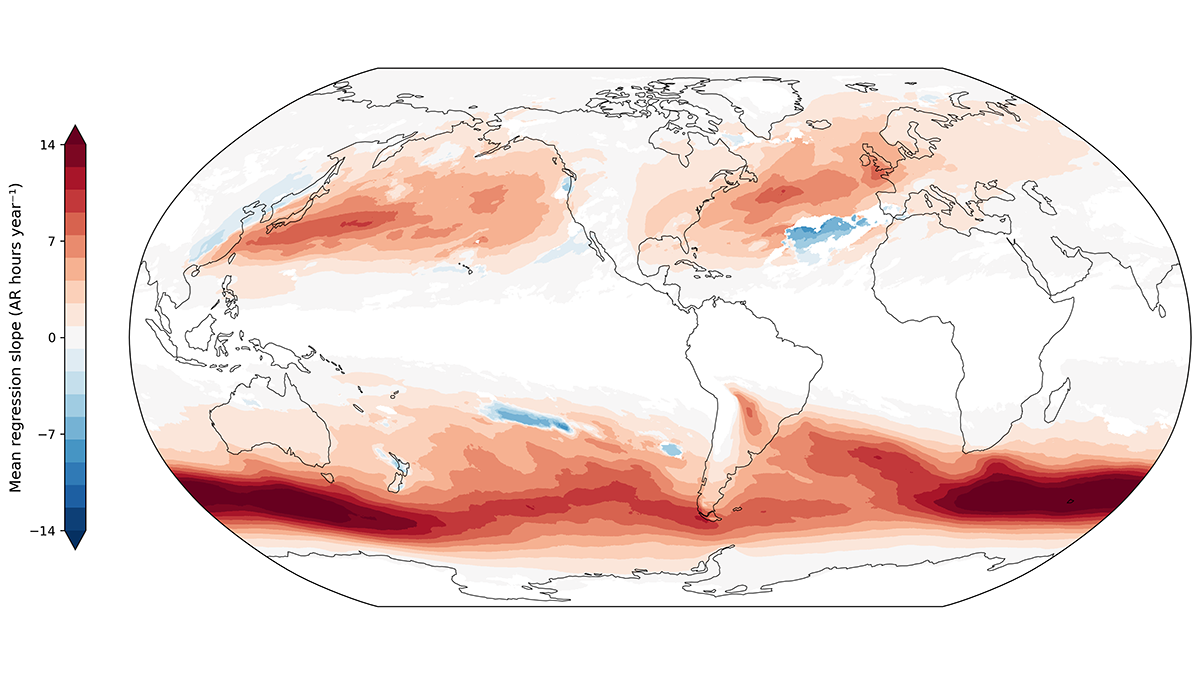
2 graphs from the paper.
Posted inEditors' Highlights

How Flexible Enhanced Geothermal Systems Control Their Own Seismicity

by David Dempsey 7 August 20255 August 2025

A new study maps how microseismicity waxes and wanes with pressure in enhanced geothermal systems, offering a template for managing quakes in future heat-mining projects.

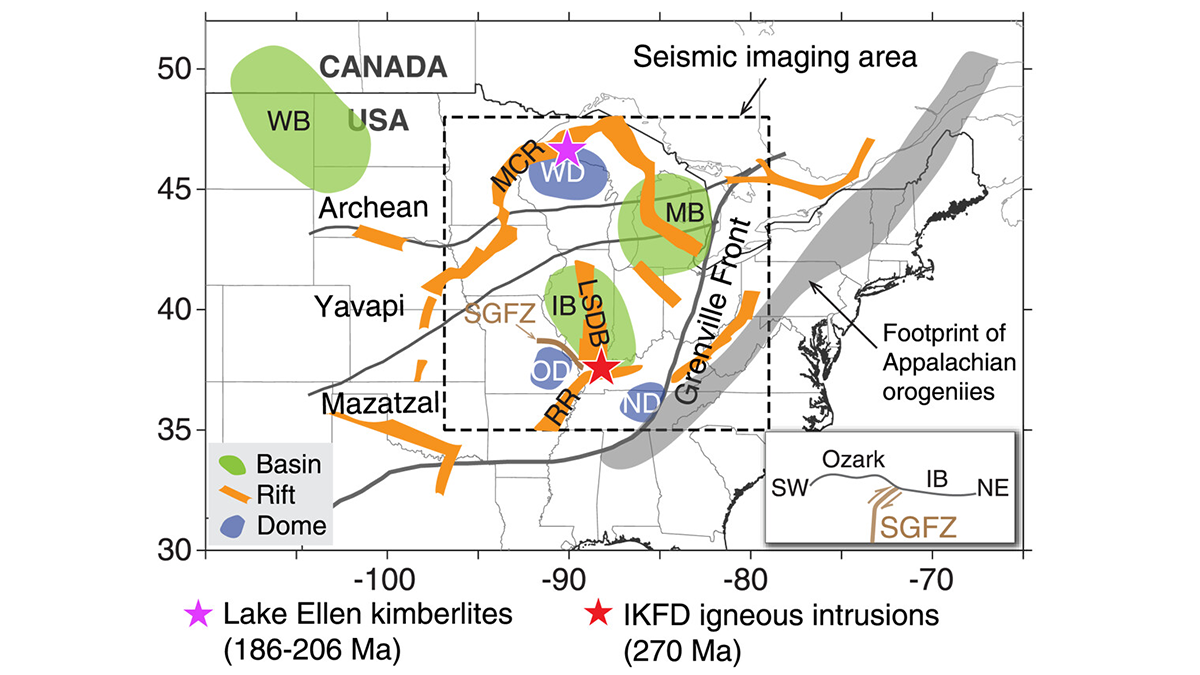
2 maps from the study.
Posted inEditors' Highlights

Nearly 94 Million Boulders Mapped on the Moon Using Deep Learning

by Jean-Pierre Williams 6 August 20255 August 2025

Scientists used a deep learning algorithm to map the size and location of nearly 94 million boulders on the lunar surface, highlighting differences in boulder densities and size distributions.

Posted inEditors' Highlights

Balancing Comparability and Specificity in Sustainability Indicators

by Xin Zhang 5 August 20254 August 2025

A new study shows how engaging national stakeholders in Austria helps adapt global sustainability indicators to better reflect regional agricultural priorities, especially social and economic aspects.

Diagram from the study.
Posted inEditors' Highlights

The State of Stress in the Nankai Subduction Zone

by Alexandre Schubnel 4 August 202531 July 2025

The Nankai subduction zone, in southern Japan, has hosted several large magnitude 8+ earthquakes during the last three hundred years. But, how stressed is it right now? 

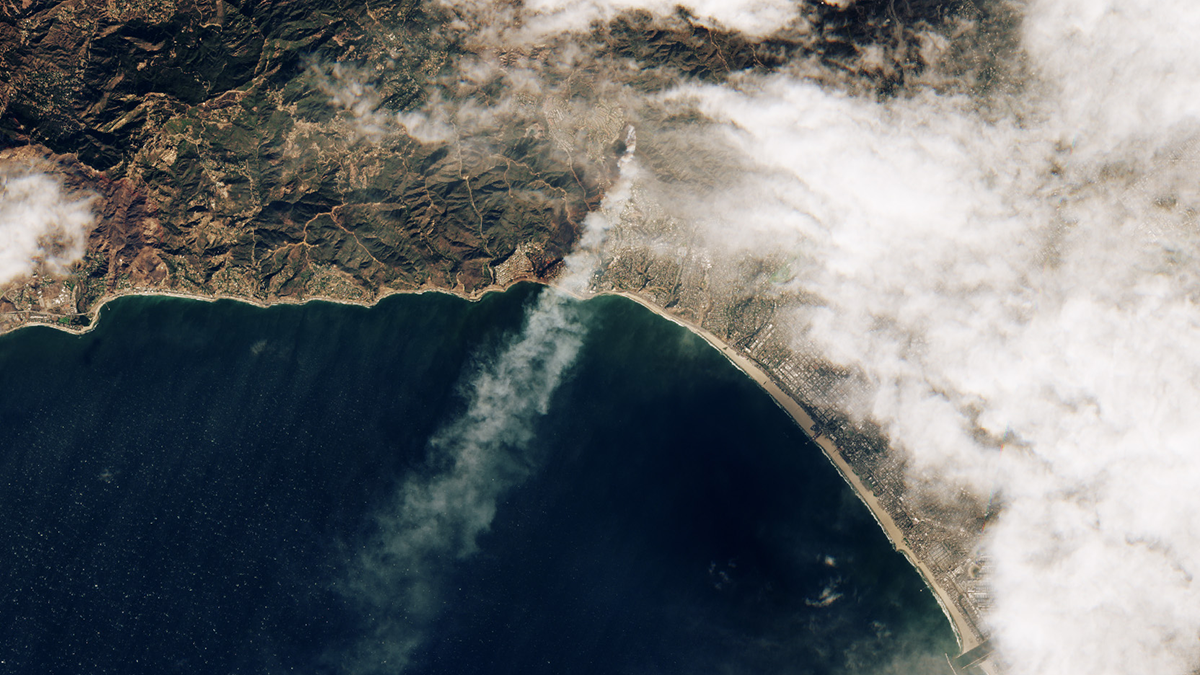
Satellite photo of features on Europa.
Posted inEditors' Highlights

What Goes Up Must Come Down: Movement of Water in Europa’s Crust

by Kelsi Singer 31 July 202531 July 2025

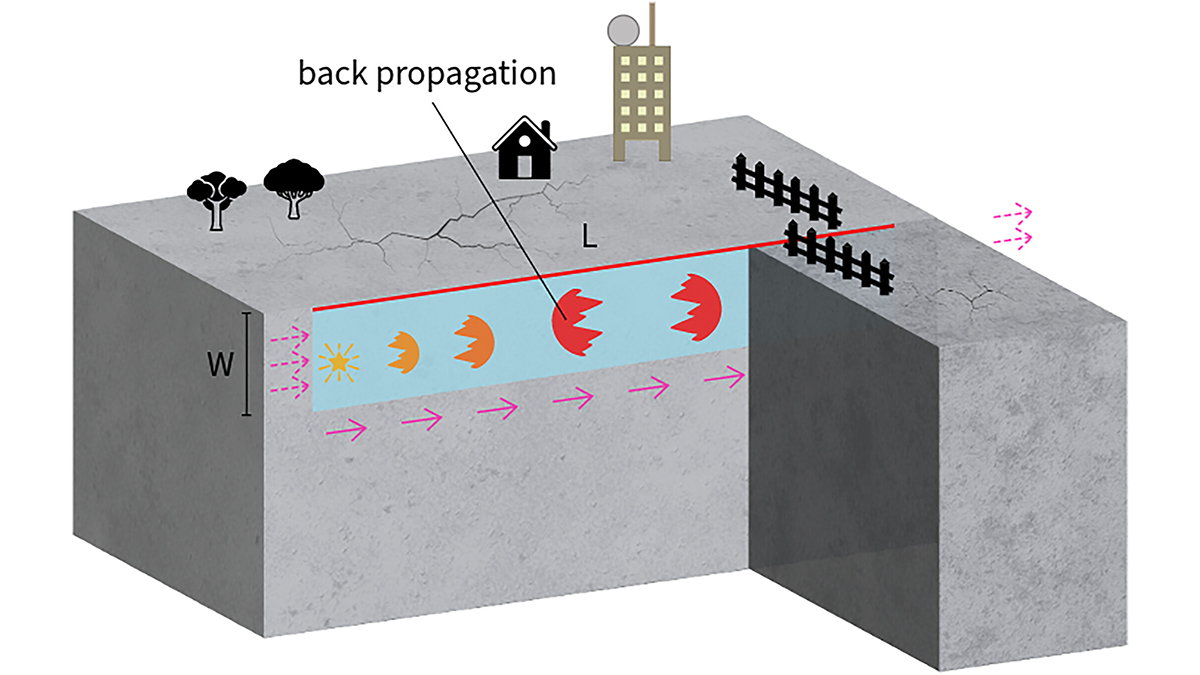
Using Earth’s glaciers as an analog, a new study explores the possibility of downward propagation of fractures and melt in Europa’s icy crust.

Map from the study
Posted inEditors' Highlights

Three Magmatic Pulses Helped Rifting Transform into Seafloor Spreading

by Clinton P. Conrad 30 July 202530 July 2025

A new geochronology of Mesozoic magmatism along the eastern margin of North America shows that continental breakup involved three distinct pulses of magmatism that localized extensional deformation.

Photo of a corn field.
Posted inEditors' Highlights

Why Crop Yield Decreases at High Temperatures

by Alberto Montanari 29 July 202529 July 2025

Scientists find that water stress drives the connection between surface temperature and crop yield loss, providing information to help improve predictions of agricultural productivity under climate change.

Map from the study.
Posted inEditors' Highlights

A Volcanic Boom Puts the Squeeze on Remote Confined Aquifers

by Douglas R. Schmitt 28 July 202523 July 2025

A new study shows that ground water levels responded to forcing by barometric pressure pulses from the 2022 Hunga Tonga-Hunga Ha’apai Volcanic Eruption.

Figure from the article.
Posted inEditors' Highlights

Mapping the Whereabouts of Continents

by Fabio A. Capitanio 24 July 202512 December 2025

A new method integrates Interferometric Synthetic Aperture Radar (InSAR) with conventional ground geodetic networks, taking us closer to high-resolution mapping of plate motions.

A plume of material erupting from the Sun.
Posted inEditors' Highlights

Why Subsequent ICMEs are More Geoeffective

by Michael Balikhin 23 July 202523 July 2025

A new study demonstrates how an interplanetary coronal mass ejection (ICME) clears the path for following transients and explains why subsequent ICMEs are more geoeffective.

Posts pagination

Newer posts 1 … 8 9 10 11 12 … 112 Older posts
Over a dark blue-green square appear the words Special Report: The State of the Science 1 Year On.

Features from AGU Publications

Research Spotlights

Sea Turtles, Shrinking Beaches, and Rising Seas

16 March 202616 March 2026
Editors' Highlights

Trees Shed Their Leaves to Adapt to Droughts

20 March 202620 March 2026
Editors' Vox

Rates of Mineral Dissolution from the Flask to Enhanced Weathering

20 March 202619 March 2026
Eos logo at left; AGU logo at right

About Eos
ENGAGE
Awards
Contact

Advertise
Submit
Career Center
Sitemap

© 2026 American Geophysical Union. All rights reserved Powered by Newspack