

Every day meteors burn up in the atmosphere with highly predictable results, reflecting radio waves that could be used to calibrate antennas.
Editors’ Highlights
Posted inEditors' Highlights
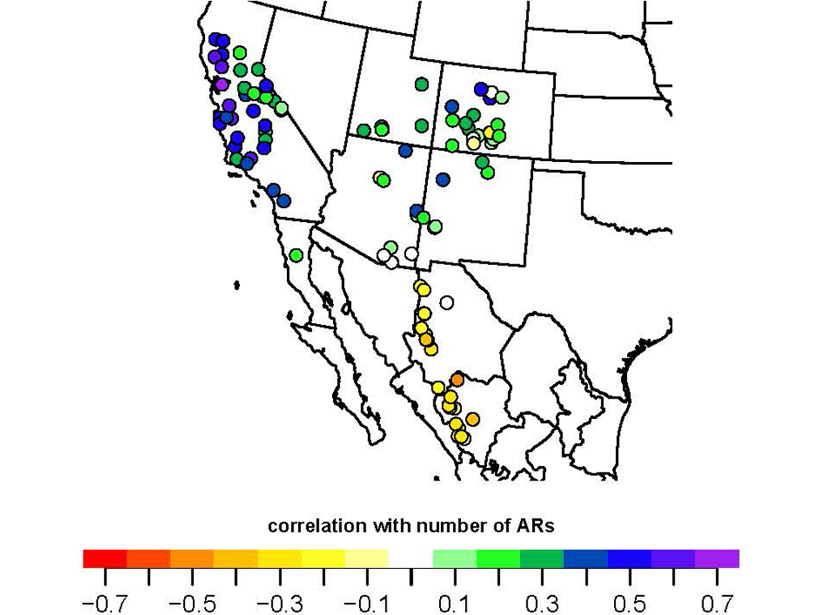
500 Years of Atmospheric River Landfalls in Southwestern USA
A network of tree-ring chronologies has been used to develop the first reconstruction of atmospheric river landfalls on the US Pacific Coast over the last 500 years.

Posted inEditors' Highlights
Innovative Way to Detect Space Weather Impact on Power Grids
Very low frequency radio, a well-proven tool for solar-terrestrial studies, proves to be adept at detecting the stresses that space weather imposes on the transformers at the heart of power grids.
Posted inEditors' Highlights
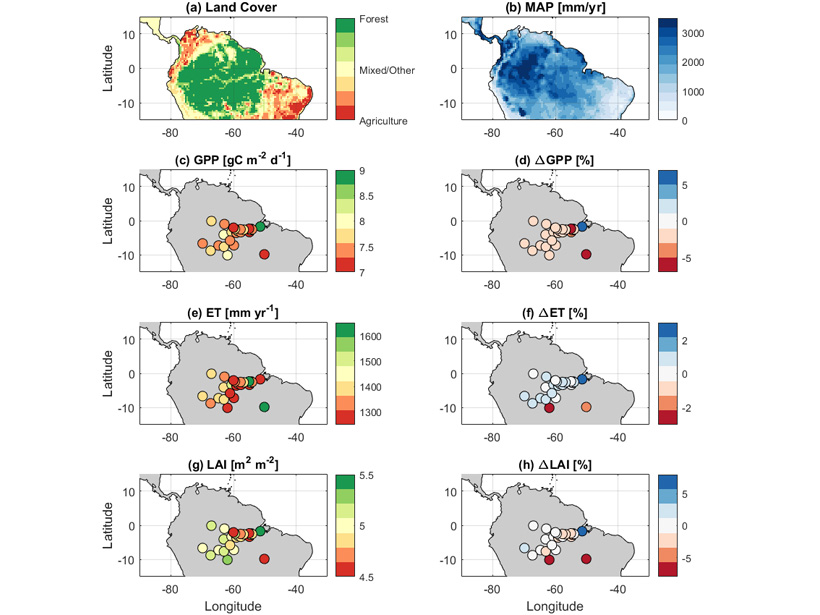
Seasonal Leaf Production Is Key Control on Amazon Carbon Balance
Characterizing leaf phenology in process-based models reconciles both “dry season green-up” and drought controls on Amazonian carbon balance.

Posted inEditors' Highlights
Basement Structure Mapped by Phase Autocorrelations of Noise
Cross-correlations of ambient seismic noise are combined with well log data to image shallow crustal basement features in the Ebro Basin in Spain.
Posted inEditors' Highlights
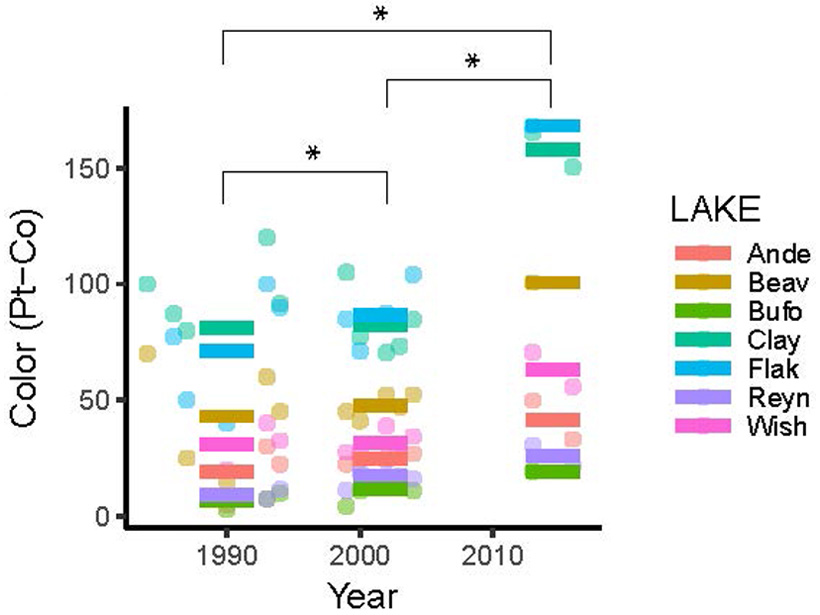
Nutrients May Change Flavor of “Meadow Tea” in Lakes
Lakes in the US and Europe have been getting more tea-colored over the past 30 years, and this “browning” trend may increase nutrient levels and affect lake water quality.
Posted inEditors' Highlights
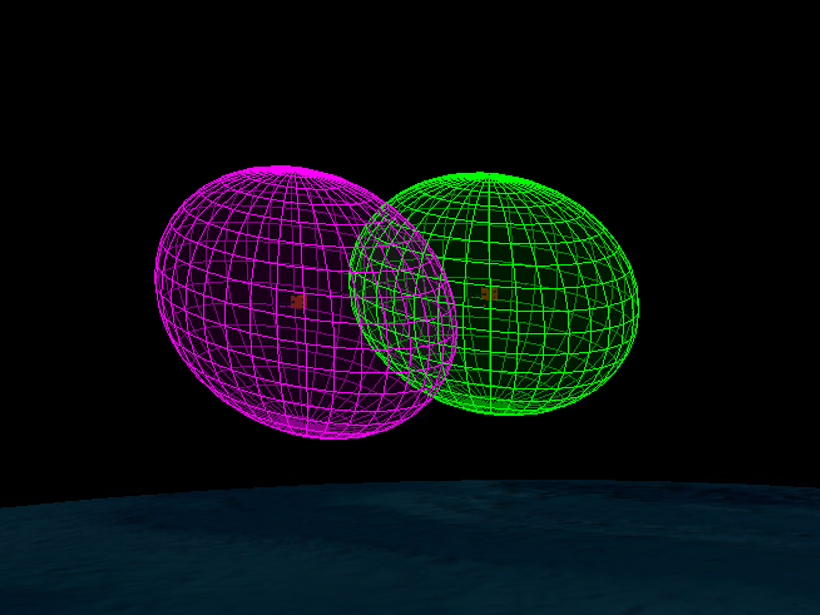
Predicting and Avoiding Collisions in Space
Solar wind drivers affecting the satellite environment have about a one hour predictive horizon, but solar wind speed periodicities and ensemble modeling can extend the forecast interval.
Posted inEditors' Highlights
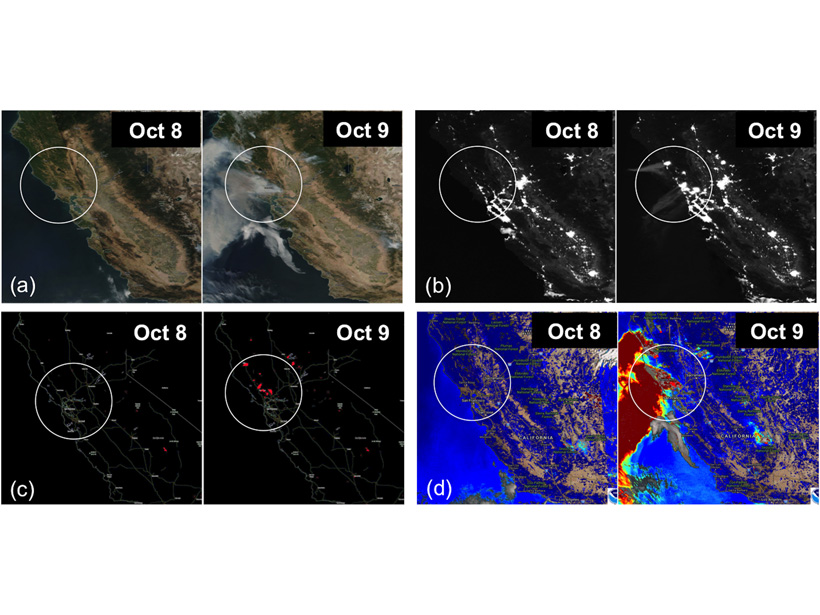
New Strategies to Protect People from Smoke During Wildfires
Satellite measurements coupled with inexpensive air quality monitors could help protect humans from smoke particulates during wildfire events.
Posted inEditors' Highlights
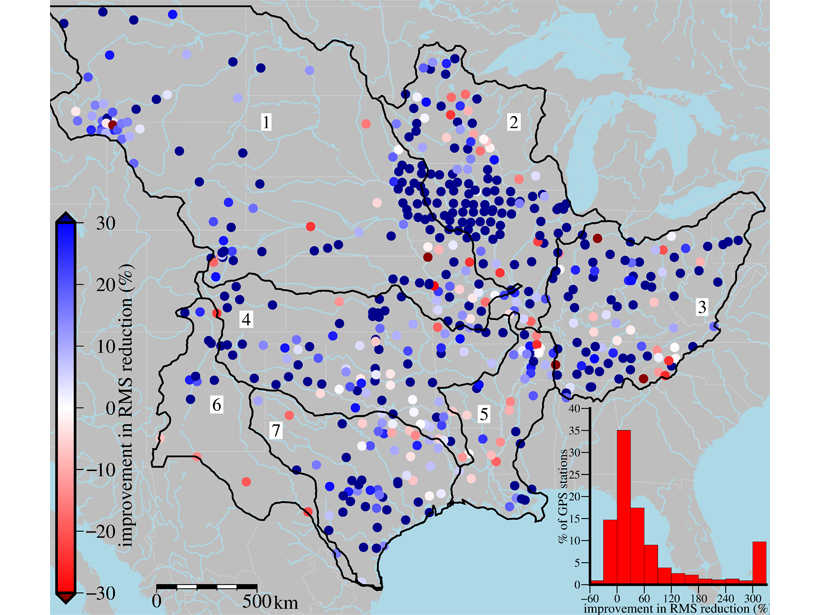
Bulging, Shrinking, and Deformation of Land by Hydrologic Loading
The deformation of continents by groundwater can be measured locally by GPS or detected from satellites, but more precisely monitored when measurements are combined with a hydrologic model.
Posted inEditors' Highlights
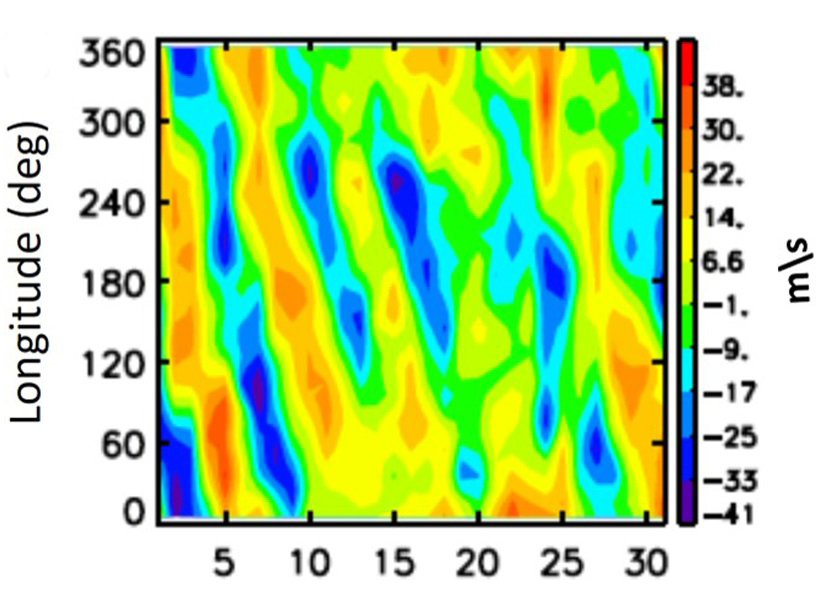
Tides and Waves Interact to Cause Hurricanes in Near-Space
The interaction of tides and waves generated in the lower atmosphere can cause the mean zonal wind speed in the lower ionosphere to oscillate equivalent to a category 1 hurricane at Earth’s surface.