

The 4.5-billion-year record contained in Earth’s continental crust reveals a seven-phase evolution, from an initial magma ocean to the present-day environment in which we live.
Editors’ Vox

Posted inEditors' Vox
The International Reference Ionosphere – A Model Ionosphere
An accurate and reliable description of Earth’s ionosphere is of critical importance because of our increased reliance on satellite technology and the significant impact the ionosphere has on it.

Posted inEditors' Vox
Rare and Revealing: Radiocarbon in Service of Paleoceanography
While radiocarbon is best known as a dating tool, this rare isotope can also provide unique and wide-ranging insights into the cycling of carbon in the Earth system.

Posted inEditors' Vox
New Directions for Perspectives of Earth and Space Scientists
The AGU journal Perspectives of Earth and Space Scientists is changing its aims and scope, removing its by-invitation requirement and adding several new community-serving article formats.

Posted inEditors' Vox
Earth and Space Science Open Archive Takes a Big Step Forward
The ESS Open Archive is moving to a new publishing platform where it will continue to accelerate the open discovery of Earth and space science research.

Posted inEditors' Vox
The Importance of Springs and Why Humanity Needs to Protect Them
A new book explores why springs are critical for humanity and ecosystems, the threats they are facing, and how we can act now to protect and restore them.
Posted inEditors' Vox
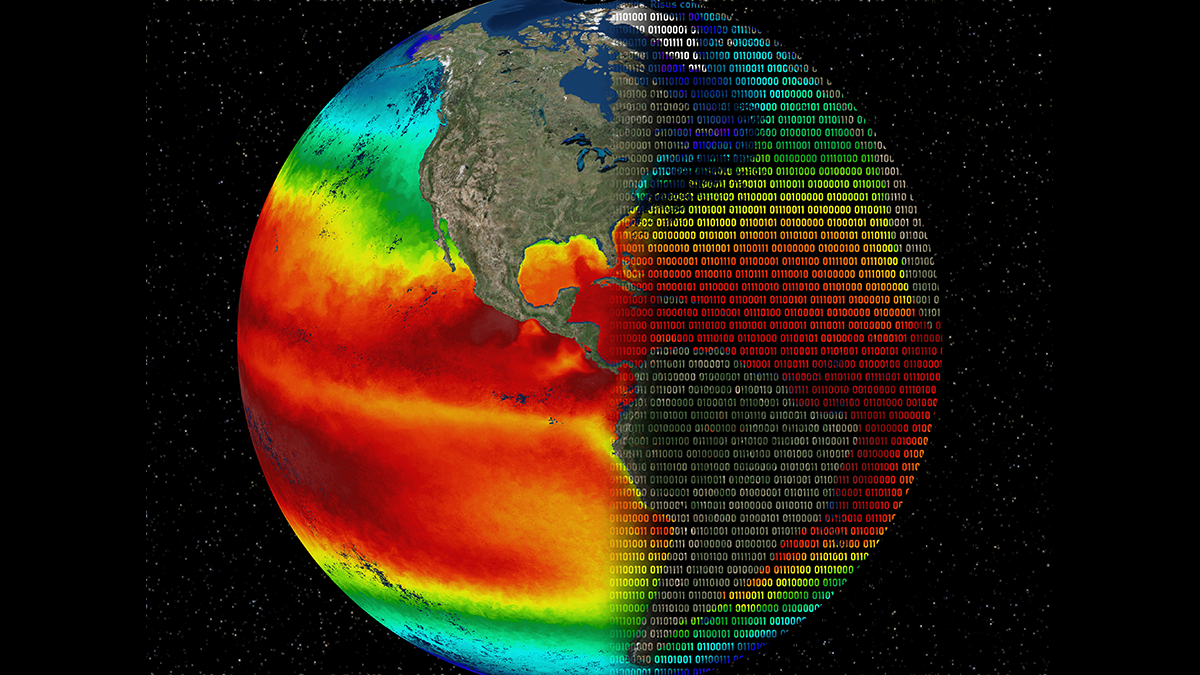
Analyzing Big Earth Data: Progress, Challenges, Opportunities
Big Earth data are accumulating at a rapid rate with challenges for understanding and using the data, but new tools and applications are enabling analysis and enhancing usability by policy makers.
Posted inEditors' Vox
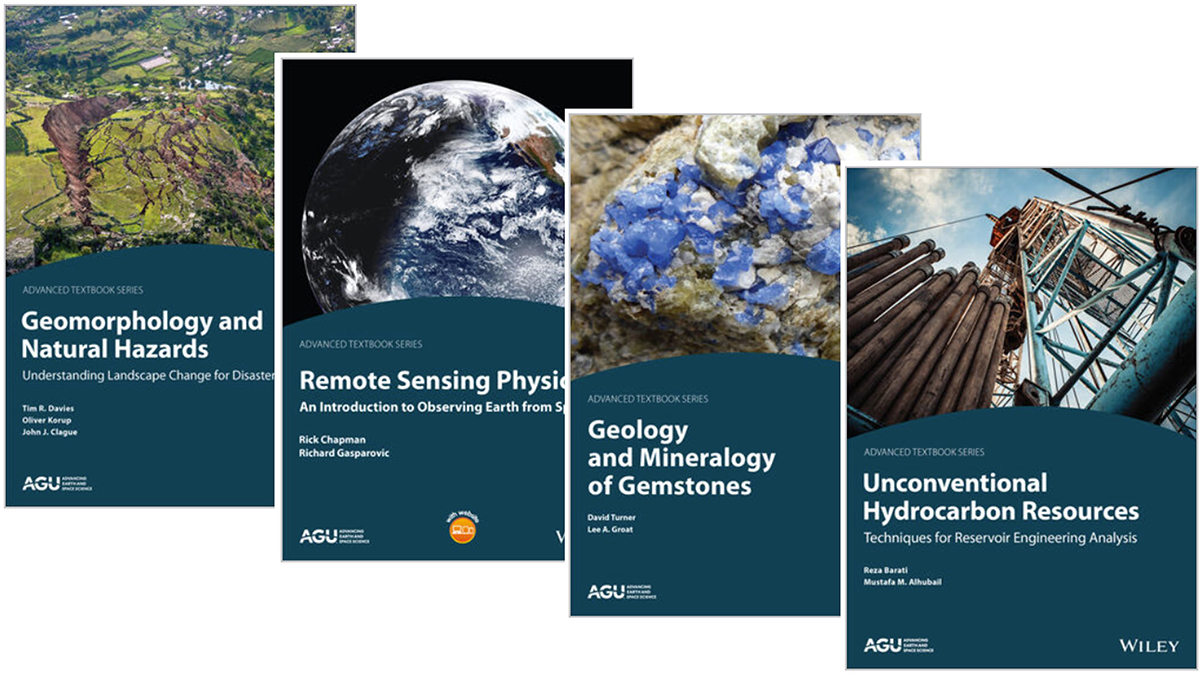
AGU Books Expands into Advanced Textbooks
Find out more about the AGU Advanced Textbook Series that enables upper undergraduate- and graduate-level students to engage with primary literature and develop skills of critical analysis.
Posted inEditors' Vox
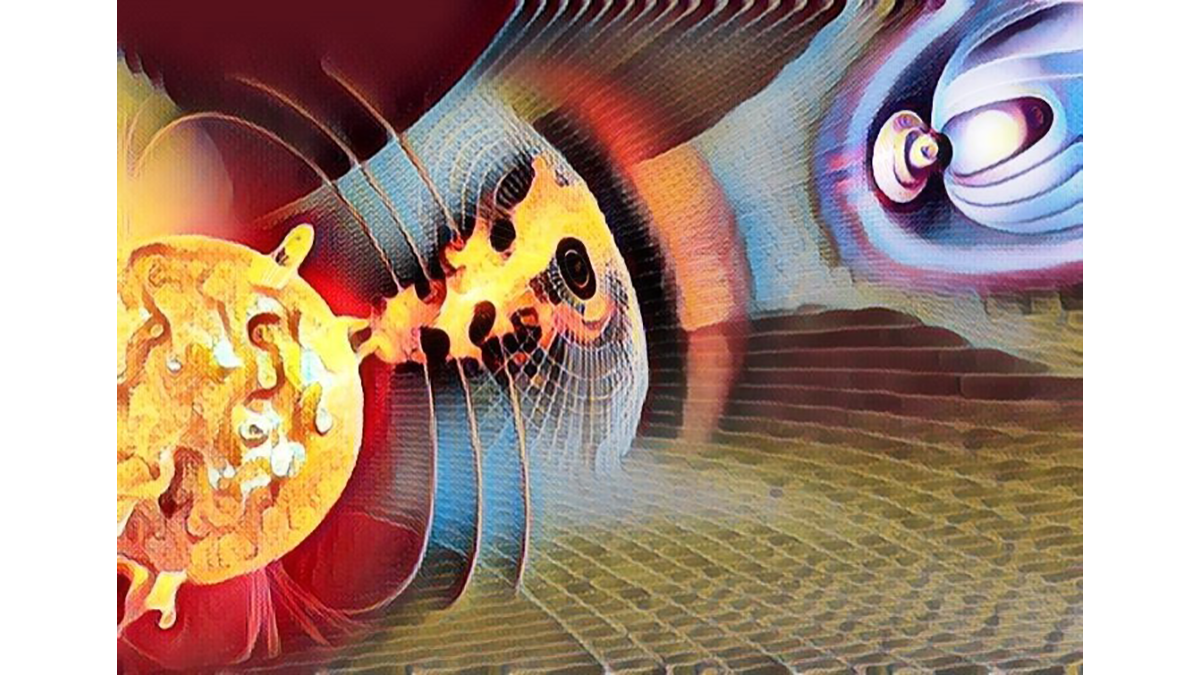
Machine Learning Helps to Solve Problems in Heliophysics
A new special collection invites papers pertaining to the use of machine learning techniques in all sub-fields of heliophysics.

Posted inEditors' Vox
Fantastic Ice-Nucleating Particles and How to Find Them
Recent advances in measurements and models are paving the way to transform fundamental understanding and simulation of ice-nucleating particles and their climate impacts.