
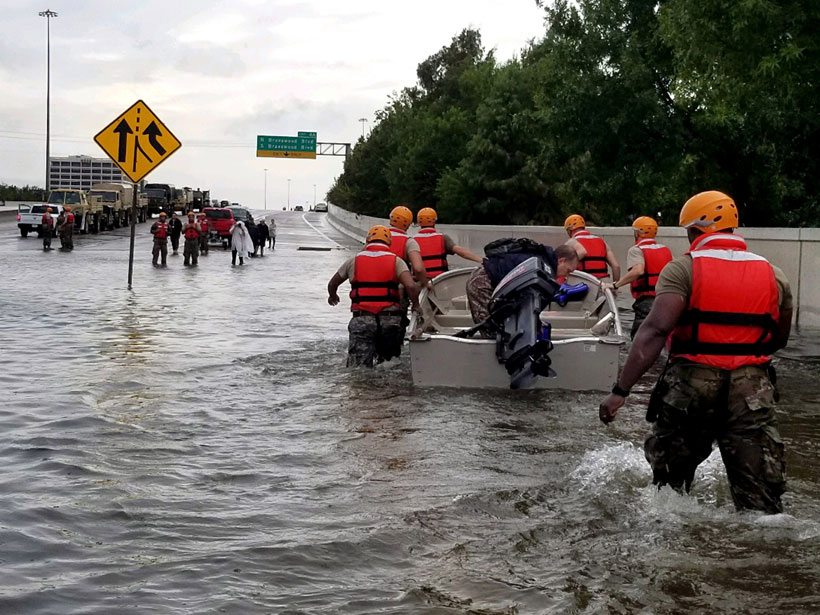
A new U.S. government report finds that climate change is already increasing risks to health, the economy, and ecosystems across the United States. These risks are expected to grow in the coming decades.
Features

Posted inFeatures
Why Is the Gulf of Maine Warming Faster Than 99% of the Ocean?

The Gulf of Maine’s location at the meeting point of two major currents, as well as its shallow depth and shape, makes it especially susceptible to warming.

Posted inFeatures
Exploring Planetary Breadcrumbs One Asteroid at a Time

Six ongoing and future missions explore the variety of asteroids in the solar system, seeking to uncover what makes each of them special.

Posted inFeatures
Congressman on a Climate Change Mission

Rep. Ted Deutch, cochair of the House’s Climate Solutions Caucus, pushes for bipartisan solutions, Democratic goals, and an end to dark money that spurs members of Congress to oppose climate measures.
Posted inFeatures
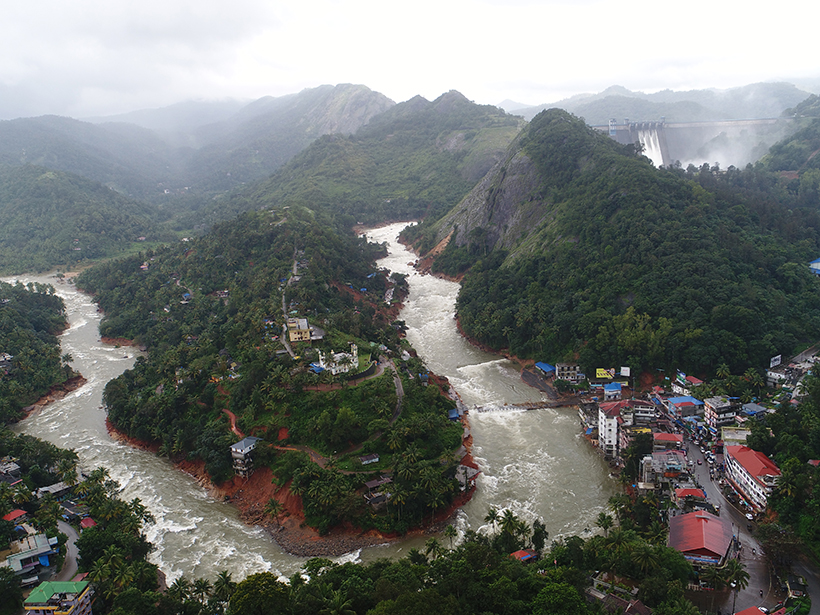
Making Sense of Landslide Danger After Kerala’s Floods

Scientists traveled to Kerala, a state in India recently devastated by severe monsoon rains. They found a vulnerable population that will soon face fresh landslide risks as a new monsoon approaches.

Posted inFeatures
Lessons from Mexico’s Earthquake Early Warning System
The devastating 2017 Puebla quake provides an opportunity to assess how citizens perceive and use the Mexico City earthquake early warning system.

Posted inFeatures
The Kepler Revolution
The Kepler Space Telescope will soon run out of fuel and end its mission. Here are nine fundamental discoveries about planets aided by Kepler in the 9 years since its launch.

Posted inFeatures
Four Ways Kīlauea Is Redrawing the Map

From burying communities to building new land, this historic eruption is changing the landscape of Hawai‘i Island.

Posted inFeatures
Ten Steps to a Successful Career Launch
How to use your first months on the job strategically to explore your new role and make the connections that will carry you onward and upward.

Posted inFeatures
Meeting the Mineral Needs of the United States
A recent report points out where the United States is most dependent on mineral imports and highlights some ways for reducing this dependence.