• About
  • Special Reports
  • Topics
    • Climate
    • Earth Science
    • Oceans
    • Space & Planets
    • Health & Ecosystems
    • Culture & Policy
    • Education & Careers
    • Opinions
  • Projects
    • Postcards From the Field
    • ENGAGE
    • Editors’ Highlights
    • Editors’ Vox
    • Eos en Español
    • Eos 简体中文版
    • Print Archive: 2015–2025
  • Policy Tracker
  • Blogs
    • Research & Developments
    • The Landslide Blog
  • Newsletter
  • Submit to Eos
  • AGU.org
  • Career Center
  • Join AGU
  • Give to AGU
  • About
  • Special Reports
  • Topics
    • Climate
    • Earth Science
    • Oceans
    • Space & Planets
    • Health & Ecosystems
    • Culture & Policy
    • Education & Careers
    • Opinions
  • Projects
    • Postcards From the Field
    • ENGAGE
    • Editors’ Highlights
    • Editors’ Vox
    • Eos en Español
    • Eos 简体中文版
    • Print Archive: 2015–2025
  • Policy Tracker
  • Blogs
    • Research & Developments
    • The Landslide Blog
  • Newsletter
  • Submit to Eos
Skip to content
  • AGU.org
  • Career Center
  • Join AGU
  • Give to AGU
Eos

Eos

Science News by AGU

Support Eos
Sign Up for Newsletter
  • About
  • Special Reports
  • Topics
    • Climate
    • Earth Science
    • Oceans
    • Space & Planets
    • Health & Ecosystems
    • Culture & Policy
    • Education & Careers
    • Opinions
  • Projects
    • Postcards From the Field
    • ENGAGE
    • Editors’ Highlights
    • Editors’ Vox
    • Eos en Español
    • Eos 简体中文版
    • Print Archive: 2015–2025
  • Policy Tracker
  • Blogs
    • Research & Developments
    • The Landslide Blog
  • Newsletter
  • Submit to Eos

Opinions

Posted inOpinions

How Can We Better Understand Low River Flows as Climate Changes?

by I. Pal, E. Towler and B. Livneh 6 August 201515 February 2023

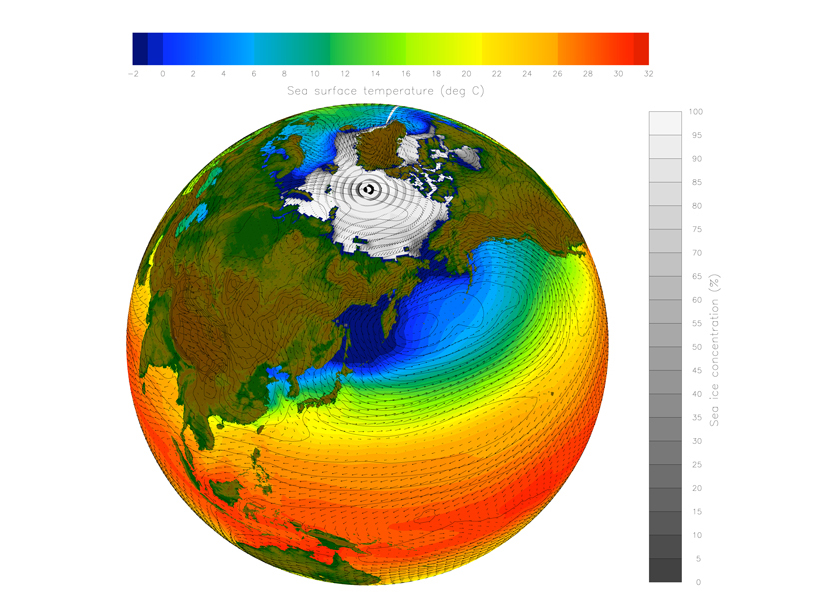
When rivers run low, they threaten ecosystems, economies, and the communities who depend on them. Scientists need to determine how climate change alters this process, but to do so, they'll have to abandon a long-held assumption.
Posted inOpinions

Future Directions for the World Climate Research Programme

by G. Brasseur and D. Carlson 30 July 201531 January 2022

The worldwide climate research community has talent, dedication, and a clear sense of knowledge gaps. It needs to close those gaps and convey its messages effectively to user communities.

Posted inOpinions

Craters Could Make Great Impacts on Mars Exploration

by G. H. Shaw 23 July 201528 January 2022

Future robotic missions to Mars hoping to peer beneath its surface in search of signs of life should target recent impact craters, where falling meteorites have done the drilling for them.

Posted inOpinions

Reality Check: Seismic Hazard Models You Can Trust

by V. G. Kossobokov, A. Peresan and G. F. Panza 25 June 20157 January 2022

Probabilistic hazard assessments, even the most recent models, routinely underestimate earthquake effects. A neodeterministic approach comes closer to observed data.

Posted inOpinions

Spreading the Word About Climate Change

by A. Shultz 6 May 20157 March 2023

It has been 1 year since the release of the third U.S. National Climate Assessment. What has been learned over this year, and how can you help to inform the public about these important results?

Posted inOpinions

Is the Shale Boom Reversing Progress in Curbing Ozone Pollution?

by G. W. Schade and G. S. Roest 21 April 201512 November 2021

Concentrations of volatile organic compounds—precursors to ground-level ozone formation—are on the rise in areas over and downwind of a major shale oil and gas field in Texas.

Posted inOpinions

A Transformational Path Forward for the Ocean Sciences Community

by D. O. Conover and D. A. Bronk 26 March 201514 January 2022

A new Decadal Survey of Ocean Sciences balances rising facilities costs with research needs. The ocean science community should unite behind the report's resounding central message.

Posted inOpinions

Reaffirming the Social Contract Between Science and Society

by W. Hooke 17 March 20151 February 2022

Our geosciences community too often gives the impression that we care primarily about more funding for our research. Such overt self-interest poses risks to our community and to society.

Posted inOpinions

Protecting the Science of Climate Change

by A. D. Hecht 23 February 201522 March 2023

A scientist recalls the politically motivated editing of climate change science in government reports, offering insight into why the reality of climate change was hard for officials to accept.

Posted inOpinions

Realizing the Value of a National Asset: Scientific Data

by A. Wilson, R. R. Downs, C. Lenhardt, C. Meyer, W. Michener, Hampapuram Ramapriyan and E. Robinson 16 December 201410 March 2023

Conducting a National Research Council study that will provide high­‐level strategic guidance could help address some of the challenges and opportunities related to Earth science data.

Posts pagination

Newer posts 1 … 24 25 26 27 28 Older posts
Over a dark blue-green square appear the words Special Report: The State of the Science 1 Year On.

Features from AGU Publications

Research Spotlights

A Long-Term Look Beneath an Antarctic Ice Shelf

6 March 20269 March 2026
Editors' Highlights

The Fate of the Greenland Ice Sheet: Deep Learning from SkySat Images

9 March 20269 March 2026
Editors' Vox

How Radar Reveals the Hidden Fabric of Ice Sheets

9 March 20269 March 2026
Eos logo at left; AGU logo at right

About Eos
ENGAGE
Awards
Contact

Advertise
Submit
Career Center
Sitemap

© 2026 American Geophysical Union. All rights reserved Powered by Newspack