


The first study on the shift toward higher sea levels in the eastern Pacific Ocean over the past 5 years indicates it will continue, leading to much higher seas on the western coasts of the Americas.
Research Spotlights
Research spotlights are plain-language summaries of recent articles published in AGU’s suite of 24 journals.
Posted inResearch Spotlights
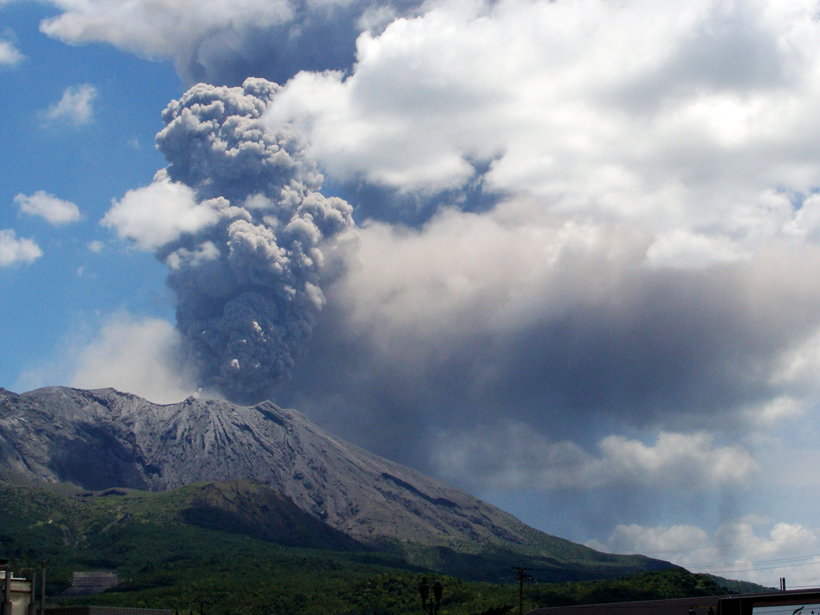
Japan's Volcanic History, Hidden Under the Sea
Scientists investigate marine tephra layers for clues to Japan's volcanic past.
Posted inResearch Spotlights
Measuring Progress Toward Sustainable Goals
Grouping targets that need to be hit into composite goals may help countries evaluate their progress toward sustainable development targets laid out by the United Nations.

Posted inResearch Spotlights
A (Dust) Devil of a Time—on Mars

New computer simulations of Martian dust devils could aid Red Planet weather forecasts.
Posted inResearch Spotlights
Patches of Low Electron Density Help to Heat the Ionosphere
Simulations show how changes in electron density can trap electromagnetic waves and heat electrons in the ionosphere.

Posted inResearch Spotlights
Traces of Ancient Buried Subduction Zone Found in China

A combination of observations and modeling reveals evidence of a late Paleozoic intraoceanic subduction zone in the western Junggar region of northwest China.
Posted inResearch Spotlights
How Accurate Are Ionospheric Models?
A new study puts the latest version of a venerable model of Earth's ionosphere to the test, with some unexpected results.
Posted inResearch Spotlights
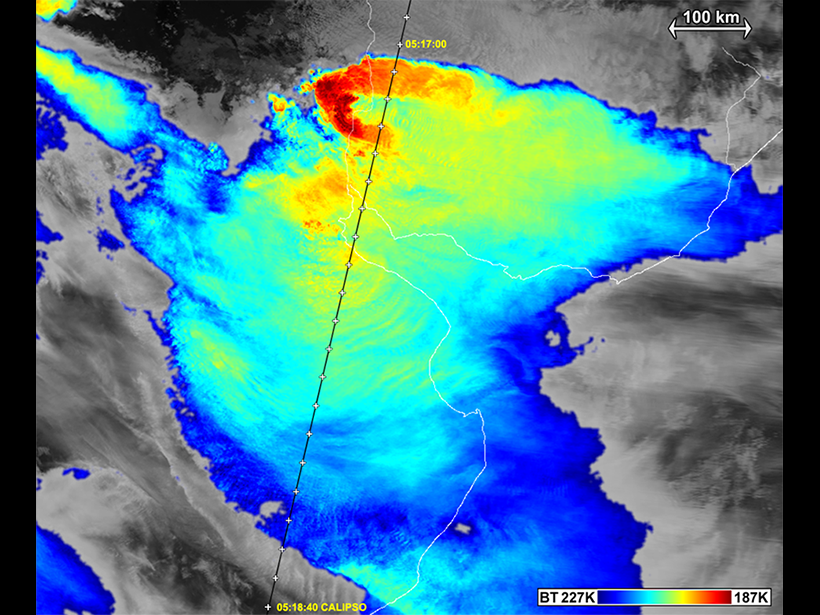
When Thunderstorms Have Wings
A new study uncovers the origin of a gull wing–shaped cirrus cloud above an Argentinian thunderstorm captured in satellite images.
Posted inResearch Spotlights
Predicting Temperature Shifts off the U.S. East Coast
New research reveals the relative importance of oceanic and atmospheric processes in year-to-year changes in ocean temperature along the Middle Atlantic Bight.
Posted inResearch Spotlights
Adapting Weather Forecasting Techniques to Paleoclimate Studies
First results of the Last Millennium Climate Reanalysis Project demonstrate the potential of the method to improve historical climate estimates by linking proxy data with climate models.