

Researchers investigate the properties of bubbles at deep-ocean oil seeps to improve oil spill models.
Research Spotlights
Research spotlights are plain-language summaries of recent articles published in AGU’s suite of 24 journals.
Posted inResearch Spotlights
Defining the Onset and End of the Indian Summer Monsoon

A new, objective definition of the onset of the summer monsoon could improve predictions of rainfall in India.

Posted inResearch Spotlights
A River Runs Through It, but Why?
Researchers investigate the factors that cause river terraces to form.
Posted inResearch Spotlights
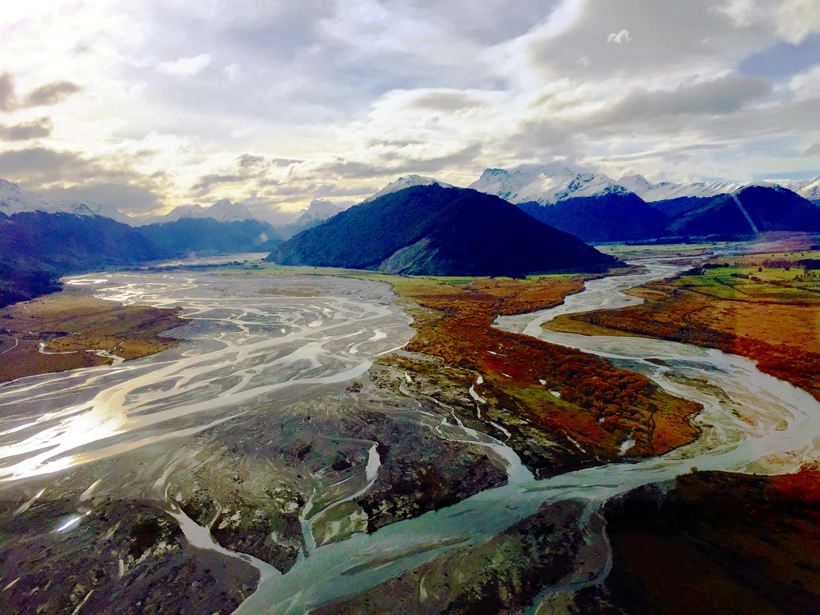
The Mathematics of Braided Rivers
River researchers find a mathematical relationship that predicts the average shape of a riverbed over a defined distance, opening the door to new ideas about modeling braided rivers.
Posted inResearch Spotlights
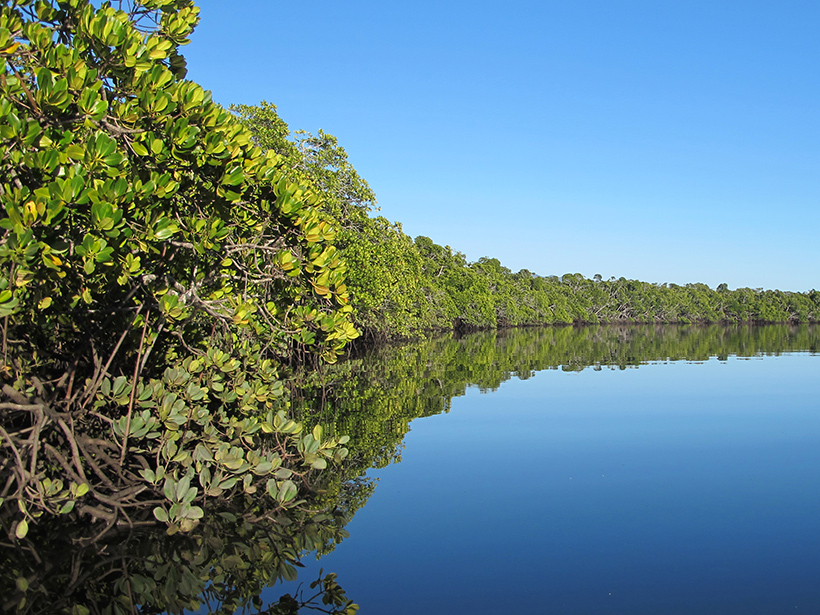
Can Mangroves Buffer Ocean Acidification?
New research evaluates the ability of coastal foliage to influence the ocean's pH.

Posted inResearch Spotlights
Curiosity Sends Curious Water Data from Mars
The rover's neutron spectroscopy instrument hints at an unexpected trend: The upper soil levels in the layers of Gale Crater's Kimberley formation seem to hold more water-associated hydrogen.
Posted inResearch Spotlights
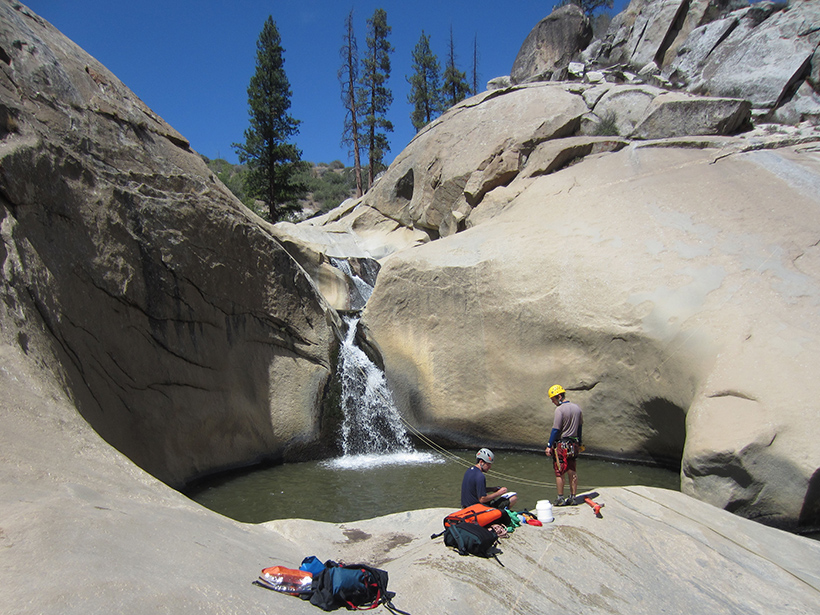
Plunging into Waterfall Sediment Transport Modeling
A first-of-its-kind model describes how pools at the base of waterfalls adjust their depth to keep up with sediment flow.
Posted inResearch Spotlights
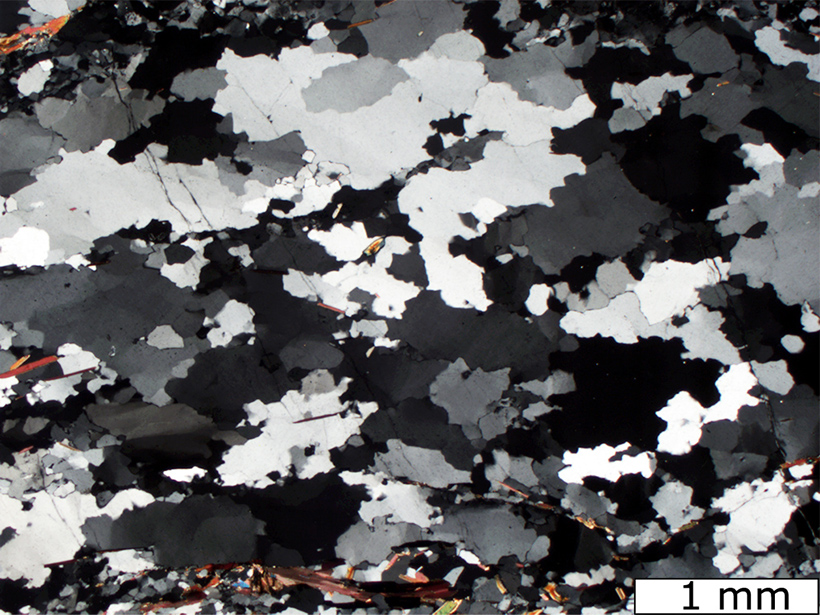
Despite Dryness, Quartz Grains Can Deform in Earth's Crust

A comparison of water content in undeformed and deformed quartz indicates that grains may change shape via weakening processes that cannot be duplicated in laboratory experiments.
Posted inResearch Spotlights
How Regional Wind Patterns Will Influence Climate Change
Climate change is expected to cause wet regions to get wetter and dry regions to get drier, but new research suggests that the truth is more complicated.

Posted inResearch Spotlights
Mysterious "Necklace Echoes" in the Sky Explained
Scientists studying a 50–year–old mystery in the Earth's ionosphere have come up with their best explanation of it yet.