• About
  • Special Reports
  • Topics
    • Climate
    • Earth Science
    • Oceans
    • Space & Planets
    • Health & Ecosystems
    • Culture & Policy
    • Education & Careers
    • Opinions
  • Projects
    • Postcards From the Field
    • ENGAGE
    • Editors’ Highlights
    • Editors’ Vox
    • Eos en Español
    • Eos 简体中文版
    • Print Archive: 2015–2025
  • Policy Tracker
  • Blogs
    • Research & Developments
    • The Landslide Blog
  • Newsletter
  • Submit to Eos
  • AGU.org
  • Career Center
  • Join AGU
  • Give to AGU
  • About
  • Special Reports
  • Topics
    • Climate
    • Earth Science
    • Oceans
    • Space & Planets
    • Health & Ecosystems
    • Culture & Policy
    • Education & Careers
    • Opinions
  • Projects
    • Postcards From the Field
    • ENGAGE
    • Editors’ Highlights
    • Editors’ Vox
    • Eos en Español
    • Eos 简体中文版
    • Print Archive: 2015–2025
  • Policy Tracker
  • Blogs
    • Research & Developments
    • The Landslide Blog
  • Newsletter
  • Submit to Eos
Skip to content
  • AGU.org
  • Career Center
  • Join AGU
  • Give to AGU
Eos

Eos

Science News by AGU

Support Eos
Sign Up for Newsletter
  • About
  • Special Reports
  • Topics
    • Climate
    • Earth Science
    • Oceans
    • Space & Planets
    • Health & Ecosystems
    • Culture & Policy
    • Education & Careers
    • Opinions
  • Projects
    • Postcards From the Field
    • ENGAGE
    • Editors’ Highlights
    • Editors’ Vox
    • Eos en Español
    • Eos 简体中文版
    • Print Archive: 2015–2025
  • Policy Tracker
  • Blogs
    • Research & Developments
    • The Landslide Blog
  • Newsletter
  • Submit to Eos

CC BY 2016

Patrick Hurley of MIT shows how continents fit around the Atlantic in a talk at the History of the Earth’s Crust Symposium.
Posted inFeatures

A Meeting That Helped Foster the Acceptance of Global Tectonics

by M. R. Rampino 12 December 201628 September 2021

Fifty years ago, in the United States added their heft to a theory with profound implications: Earth's ocean crust recycles itself on a global scale, and continents move across the face of the planet.

AGU has accepted more than half a million dollars from ExxonMobil, a company that systematically attacks climate science.
Posted inOpinions

AGU Should Sever Its Ties with ExxonMobil

by M. E. Mann, N. Oreskes and K. A. Emanuel 24 October 201623 February 2023

AGU and its funders should be held to the same standards of evidence-based scrutiny that it expects of the scientists who publish in its own journals.
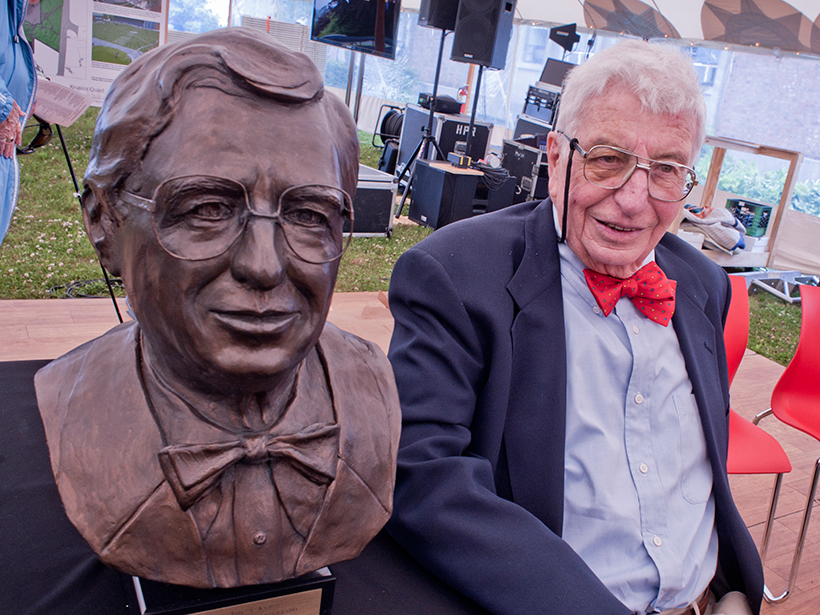
John A. Knauss sits next to a bust of himself at URI GSO’s Fiftieth Anniversary celebration.
Posted inNews

John A. Knauss (1925–2015)

Margaret Leinen, president of AGU by M. Leinen, B. Corliss and R. A. Duce 9 September 201614 January 2022

Knauss, an oceanographer who fiercely advocated for national and global marine initiatives, helped to develop many iconic programs and institutions that are key parts of oceanography today.

Artist’s conceptualization of NISAR in orbit.
Posted inScience Updates

Satellite Radar to Observe Earth’s Changing Surface

by T. G. Farr, S. Owen and P. Rosen 18 May 20165 January 2022

NASA-ISRO SAR Mission Science and Applications Workshops; Ahmedabad, India, 19–20 November 2015

Posted inScience Updates

The Importance of Atmospheric Nutrients in the Earth System

by Z. Shi and R. Herbert 27 January 20163 December 2021

Aerosol Impacts on Global Biogeochemical Cycles; Leeds, United Kingdom, 8 July 2015
Posted inScience Updates

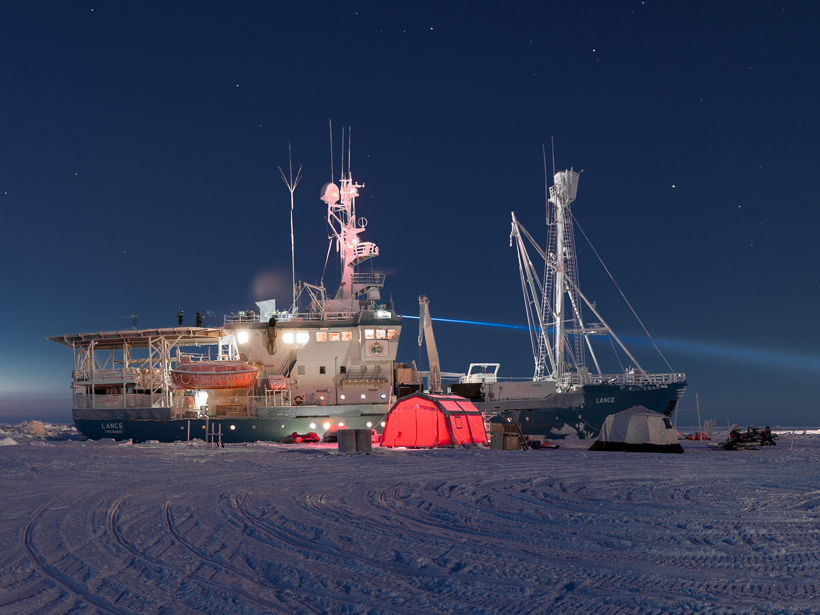
Arctic Research on Thin Ice: Consequences of Arctic Sea Ice Loss

by M. A. Granskog, P. Assmy, S. Gerland, G. Spreen, H. Steen and Lars H. Smedsrud 26 January 201616 September 2022

Scientists embarked on a 6-month expedition in the Arctic Ocean to study the thinning sea ice cover, improve our understanding of sea ice loss effects, and help predict future changes.
Posted inScience Updates

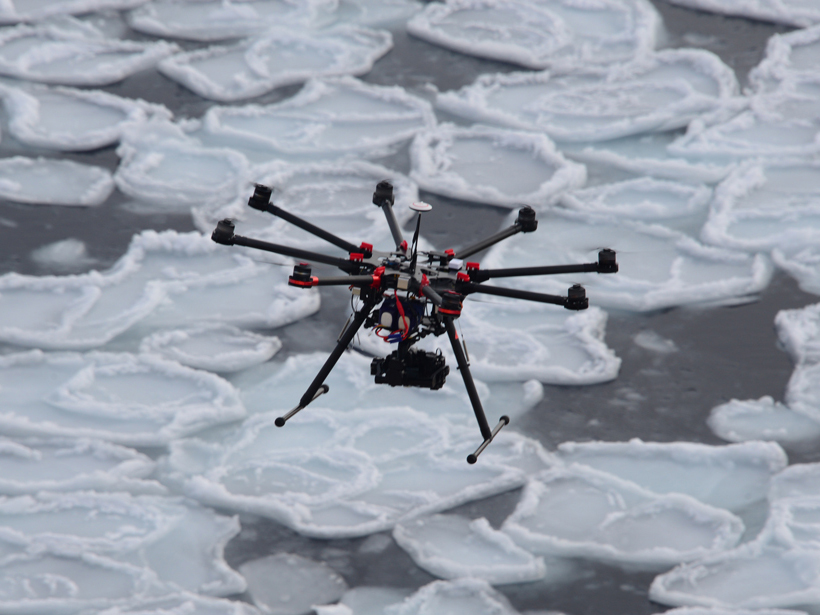
Drones in a Cold Climate

by G. D. Williams, A. D. Fraser, A. Lucieer, D. Turner, E. Cougnon, P. Kimball, T. Toyota, T. Maksym, H. Singh, F. Nitsche and M. Paget 19 January 201611 January 2022

As climate change reshapes the Earth's polar regions, scientists turn to drone-mounted cameras to measure sea ice. One expedition found out that flying drones near Antarctica isn't easy.

Over a dark blue-green square appear the words Special Report: The State of the Science 1 Year On.

Features from AGU Publications

Research Spotlights

Improving Eddy Tower Evapotranspiration Estimates

20 May 202620 May 2026
Editors' Highlights

Recycled Rocks Reveal Subduction Zone Dynamics Off Baja California

21 May 202621 May 2026
Editors' Vox

The Impact of Advocacy: American Geophysical Union’s Days of Action

14 May 202613 May 2026
Eos logo at left; AGU logo at right

About Eos
ENGAGE
Awards
Contact

Advertise
Submit
Career Center
Sitemap

© 2026 American Geophysical Union. All rights reserved Powered by Newspack