Source: Journal of Geophysical Research: Oceans
Typhoons are becoming more frequent and more intense as a result of climate change, and scientists are working to understand the transient but impactful changes these storms have on ocean biogeochemistry.
A typhoon stirs up the stratified water of the ocean, redistributing nutrients and organisms, as well as changing the temperature and salinity of the seawater.
Previous research found that this mixing process can change the makeup and activity of bacterioplankton communities and stimulate primary productivity. Those two changes can temporarily alter the water column’s food web and its role as a carbon sink or source.
But that work relied on the field’s relatively scarce opportunities for data collection. Sampling is often performed months apart, for instance, typically in the nontyphoon season and then following a typhoon. It has also traditionally focused mostly on coastal, estuarine, or lagoonal environments. These gaps left open questions about the timeline of change and recovery in the open ocean.
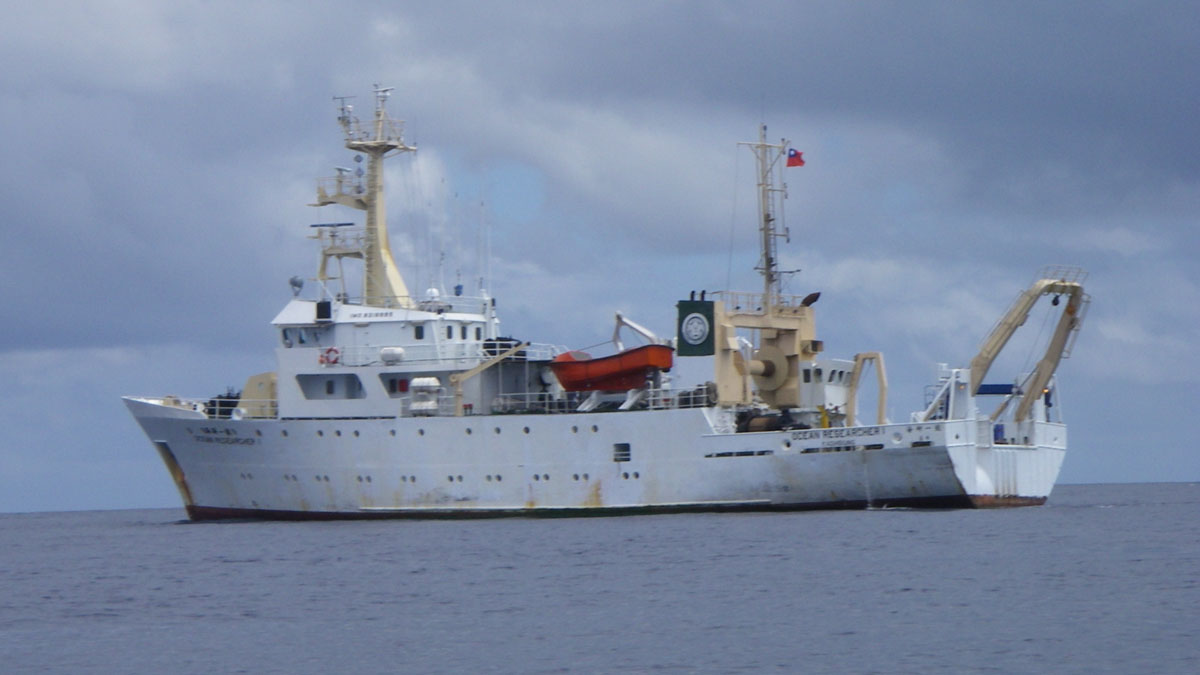
While on a research cruise in 2018 in the East China Sea, Lo et al. were interrupted by the category 5 Typhoon Maria. It was a rare opportunity to, for the first time, sample the bacterioplankton communities throughout the water column immediately before and after a typhoon.
The team collected environmental data and bacterioplankton samples for 3 and 4 days before and after the storm, respectively, at four depths in the water column.
As expected, nutrient concentrations, primary production, and bacterial activity all increased after the storm.
The researchers also documented a shift in community structure. Contrary to their expectations, overall bacterioplankton diversity did not change. But the composition of bacterial communities became more homogeneous between distantly spaced layers of the water column. And copiotrophic taxa that thrive in nutrient-rich conditions increased, while oligotrophic taxa that prefer low-nutrient conditions decreased.
These observations have given scientists novel insights into how typhoons enhance microbially mediated biogeochemical cycling in the ocean, which, as storms increase, could affect whether the ocean acts as a local carbon source or sink.
Fuller analyses of the microbial community’s gene expressions (metatranscriptomics), which may help elucidate metabolic activity and functional responses, would be valuable future work, as would a longer sampling period to reveal the time needed for the community to return to a pretyphoon state, the researchers note. (Journal of Geophysical Research: Oceans, https://doi.org/10.1029/2025JC023738, 2026)
—Rebecca Dzombak, Science Writer