Research & Developments is a blog for brief updates that provide context for the flurry of news regarding law and policy changes that impact science and scientists today.
NOAA has finalized a rule that will expedite the permit and license application process for deep seabed mining and allow companies to mine beyond U.S. jurisdictional boundaries.
The changes were published in a 113-page regulation on 21 January.
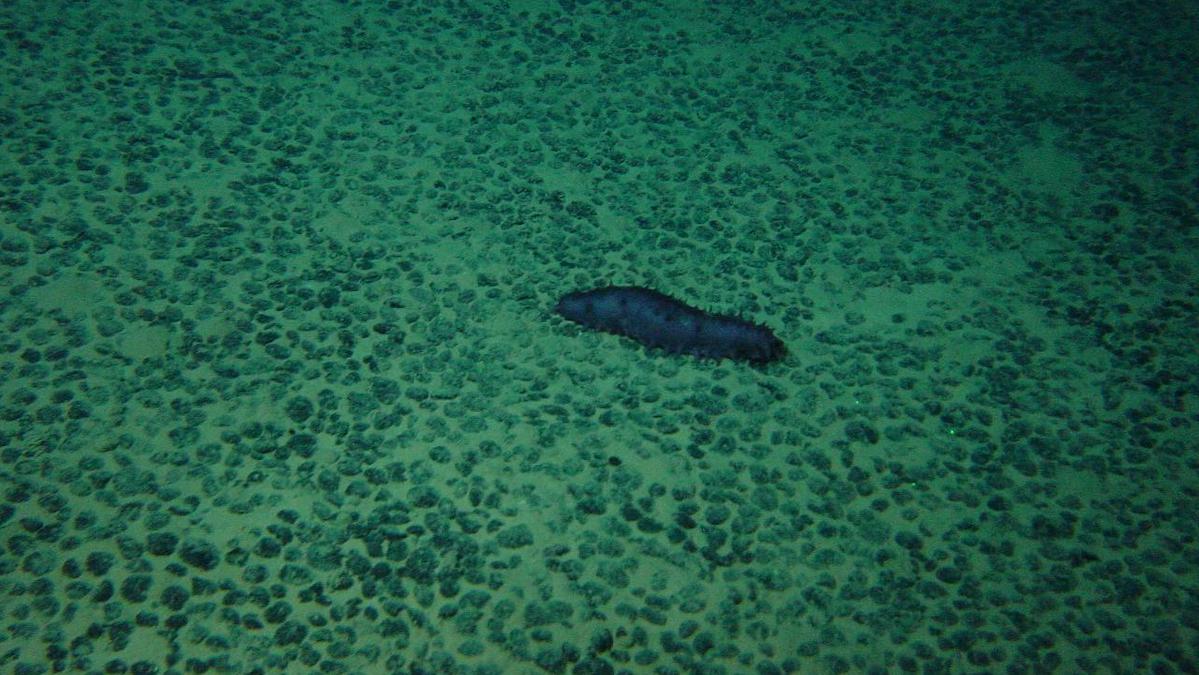
The changes revise the Deep Seabed Hard Mineral Resources Act (DSHMRA) of 1980, which required individuals or corporations who wanted to explore and mine mineral-rich nodules in the deep sea to apply for an exploration license and a commercial recovery (large-scale extraction) permit separately. Now, applicants may apply for both the exploration license and commercial recovery permit at the same time.
“By issuing the permit simultaneously, they’re committing to exploitation without the information that you would need to evaluate its impacts.”
“Deep seabed mining is key to unlocking a domestic source of critical minerals for the United States,” Neil Jacobs, NOAA administrator, said in a statement. “This consolidation modernizes the law and supports the America First agenda by enabling U.S. companies to access these resources more quickly, strengthening our nation’s economic resilience and advancing the discovery and use of critical seafloor minerals.”
Critics are concerned that the move will loosen environmental oversight. “By issuing the permit simultaneously, they’re committing to exploitation without the information that you would need to evaluate its impacts,” Emily Jeffers, senior attorney at the Center for Biological Diversity, told Agence France-Presse.
Beyond U.S. Boundaries
The updated rule also states that DSHMRA gives NOAA the ability to issue exploration licenses and permits for the seabed beyond national jurisdiction. The International Seabed Authority (ISA), an autonomous international governing body, regulates deep sea mining in international waters for countries that are part of the 1982 Law of the Sea Convention. The United States has never been a party to that treaty but has mostly followed its guidelines.
Now, NOAA’s insistence that the United States can regulate U.S. companies’ deep sea mining beyond U.S. waters is expected to cause controversy among members of the ISA, which has for years been negotiating rules to govern mining in international waters. In December, the Trump administration announced it had received an application for mining exploration in international waters from the Metals Company.
The final rule follows an executive order issued last year calling for the rapid development of deep sea mining capabilities both domestically and beyond U.S. jurisdictional boundaries.
In a response to that order, the ISA called it “surprising because for over 30 years the US has been a reliable observer and significant contributor to the negotiations of the International Seabed Authority.” In the statement, the ISA also said any unilateral action to mine the deep sea “sets a dangerous precedent that could destabilize the entire system of global ocean governance.”
The deep sea has never been commercially mined. Compared to other ecosystems, little is known about the ecology of the ocean floor or how these ecosystems support marine life. Disturbing these ecosystems could have wide-ranging consequences.
“Once nodules are removed by mining, all biodiversity and functions directly dependent on the minerals will be lost for millions of years at the mined location, as nodules need millions of years to re-form,” Sabine Gollner, a deep-sea marine biologist at the Royal Netherlands Institute for Sea Research told Eos in 2024.
—Grace van Deelen (@gvd.bsky.social), Staff Writer
These updates are made possible through information from the scientific community. Do you have a story about how changes in law or policy are affecting scientists or research? Send us a tip at [email protected].