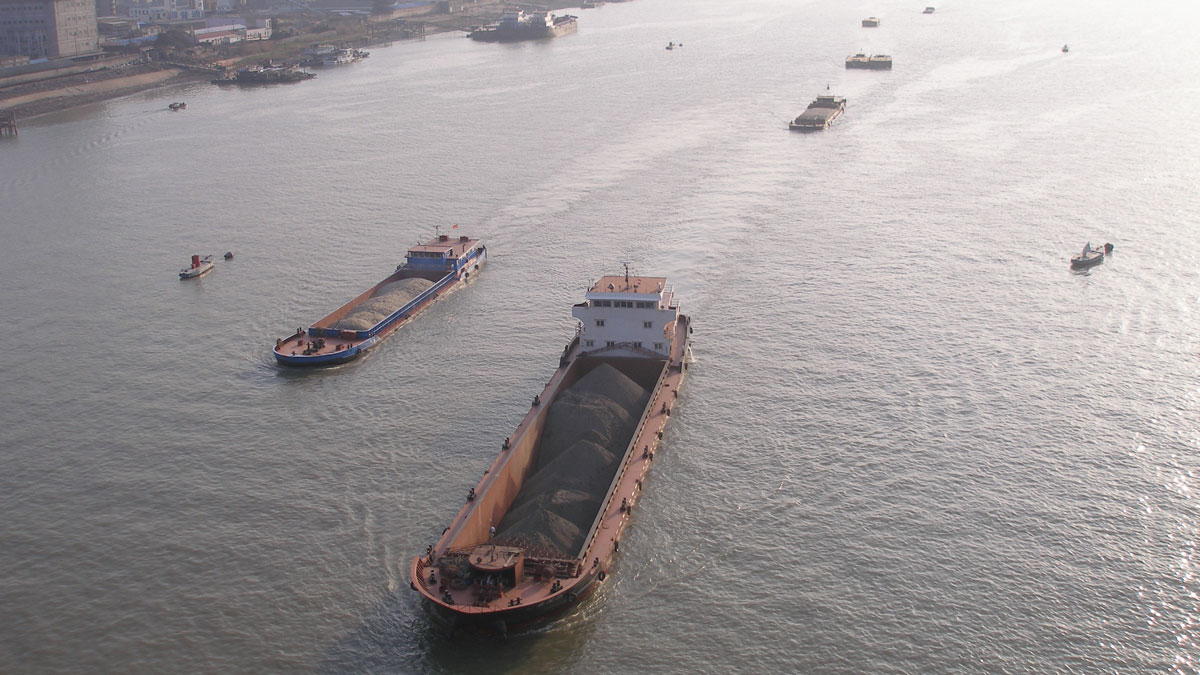
Source: AGU Advances
Ocean tides push upstream along coastal rivers, in some cases reaching hundreds of kilometers inland. These inland stretches are known as tidal rivers, and they’re the scene of complex interactions between the river current and tidal oscillations. When rivers flood, tidal dynamics can sometimes add to a river’s height, increasing overall peak water levels and amplifying flooding.
This heightening mechanism occurred in China’s Yangtze River, where disastrous floods in both 1954 and 2020 were aided by tides. To learn more, Guo et al. combined data on river discharge and tides from both flood periods, along with a tidal model, to explore how interactions between the river and incoming tides conspired to create anomalously high water levels.
The authors found that peak water levels in both floods occurred around 1 to 2 weeks after peak river discharge during perigean spring tides when both the Sun and Moon are in optimal positions to create high tides. They hypothesize that peak river discharge rates suppress subharmonic tidal amplitudes, while intermediate rates of discharge allow for greater amplitudes and therefore higher water levels. Additionally, river water takes some time to fully move downstream, meaning that water levels are higher in the days following floods, adding to the effects of tidal inflows.
Comparing the two floods, the authors noted that channel deepening caused by sediment depletion from the Three Gorges Dam helped create higher water levels in 2020 than in 1954. Additionally, higher sea levels in 2020 helped water move upstream, also contributing to peak water levels.
Looking to other tidal rivers around the world, the authors say that cumulatively, more than 3,380 kilometers of tidal rivers are potentially exposed to floods caused by similar mechanisms. Other rivers, such as the Mekong and the Amazon, also see similar tidal subharmonics, meaning the same forces could conspire to create extra-large floods as swollen rivers and incoming ocean water combine. (AGU Advances, https://doi.org/10.1029/2025AV002247, 2026)
—Nathaniel Scharping (@nathanielscharp), Science Writer