
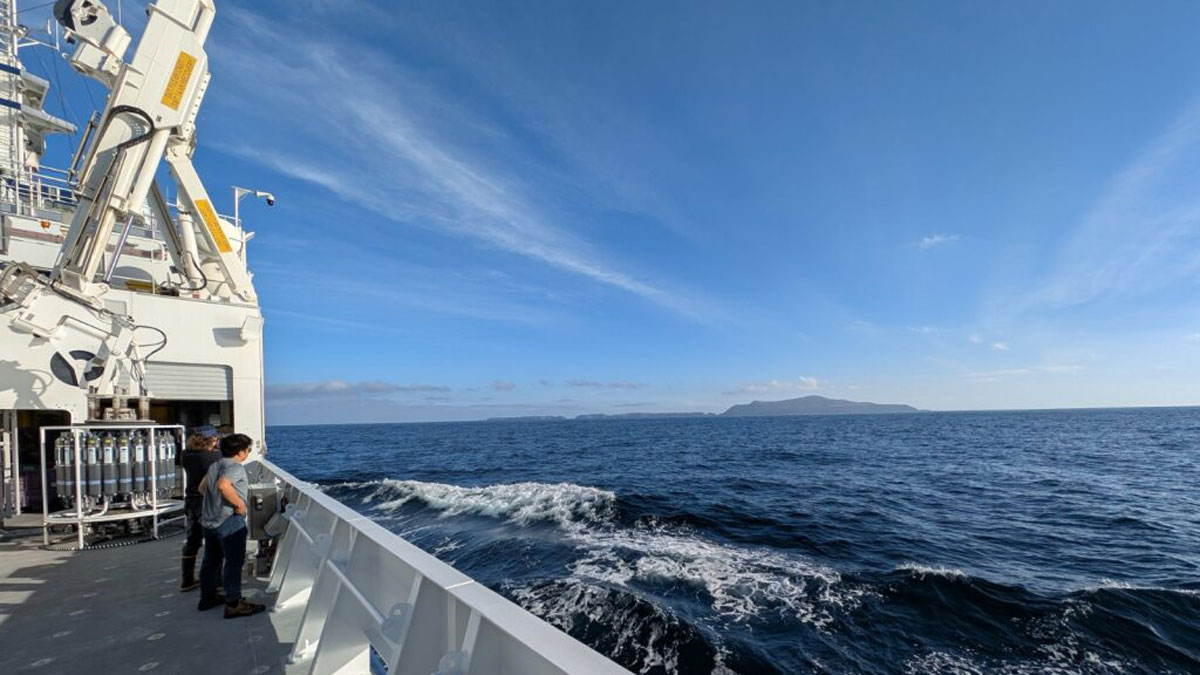
Far below the ocean’s sunlit surface, there are places in the water where oxygen runs low, sometimes becoming so depleted that barely any remains. These regions, called oxygen minimum zones (OMZs), are vast midwater deserts that make survival difficult for many organisms: Fish migrate elsewhere, and shell-forming microscopic species begin to dissolve. Yet deserts are never lifeless, and within OMZs, microbial life thrives.
Throughout most of the ocean, aerobic bacteria use dissolved molecular oxygen to decompose organic matter and gain energy, releasing carbon dioxide in the process. But when water ages or is overloaded with organic material, this oxygen is completely consumed, and OMZs become oxygen-deficient zones (ODZs).
In the absence of dissolved oxygen, anaerobic microbes take over, stripping oxygen atoms from other molecules like nitrate (a key nutrient for photosynthesis in the sunlit ocean) to consume organic matter and transforming those molecules step by step into nitrogen gas that can eventually escape to the atmosphere. As a result, ODZs are hot spots of nitrogen loss from the ocean, loss that subtly, but significantly, alters the marine nitrogen reservoir that sustains global productivity and the carbon cycle.
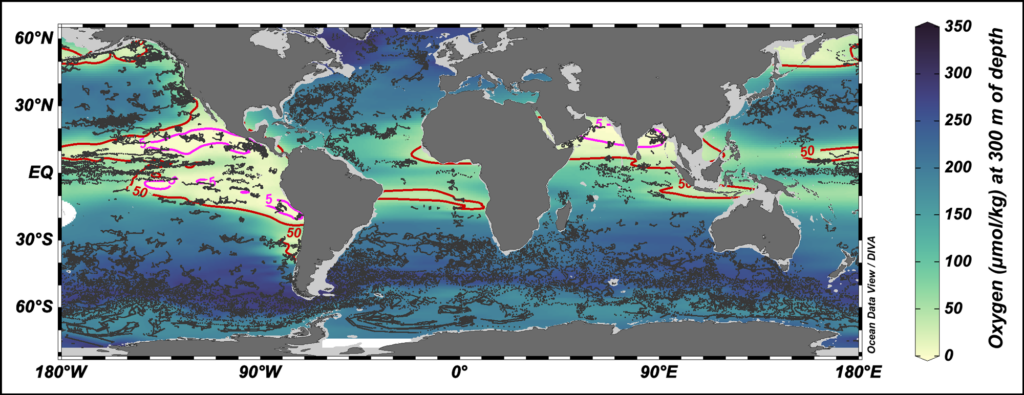
Strongest in the tropical Pacific and Indian Oceans (but also occurring in the Atlantic), OMZs are expanding—and their ODZ cores are intensifying—as warmer and more stratified waters slow oxygen replenishment from the surface (Figure 1).
To predict how OMZs and ODZs will evolve, scientists must observe the invisible chemistry that drives them—chemistry that has been nearly impossible to measure across seasons, years, and vast areas of the ocean. With a newly developed technique inspired by bioinformatics software, however, I have begun unmasking a crucial chemical signal long hidden in existing oceanic datasets. Applying this technique to data old and new will help researchers reveal important details of nitrogen cycling and other secrets of the ocean.
The Challenges of Measuring Transient Molecules
Oxygen minimum zones are notoriously difficult to study.
OMZs are notoriously difficult to study. Nitrogen transformations within these zones occur through multistep reactions driven by different cohorts of specialized microbes. The microbes generate fleeting, intermediate molecules that react quickly before reaching their final form as nitrogen gas. Among the most important of these is nitrite, which acts as a “control valve on the marine N [nitrogen] budget,” and nitrous oxide, a potent greenhouse gas that can escape to the atmosphere before being converted into nitrogen gas.
Understanding how marine microbes transform nitrate into various intermediates and eventually into nitrogen requires frequent measurements of molecular concentrations at sea to capture the rapid reactions. Observations must also be collected across different depths, as distinct microbial communities inhabit specific water layers, causing these processes to vary spatially. These requirements create substantial challenges to adequate ocean sampling.
Ship-based sampling is valuable but sparse across space and time, meaning it is often insufficient for detecting how transient molecules in nitrogen transformation processes are produced and consumed in situ.
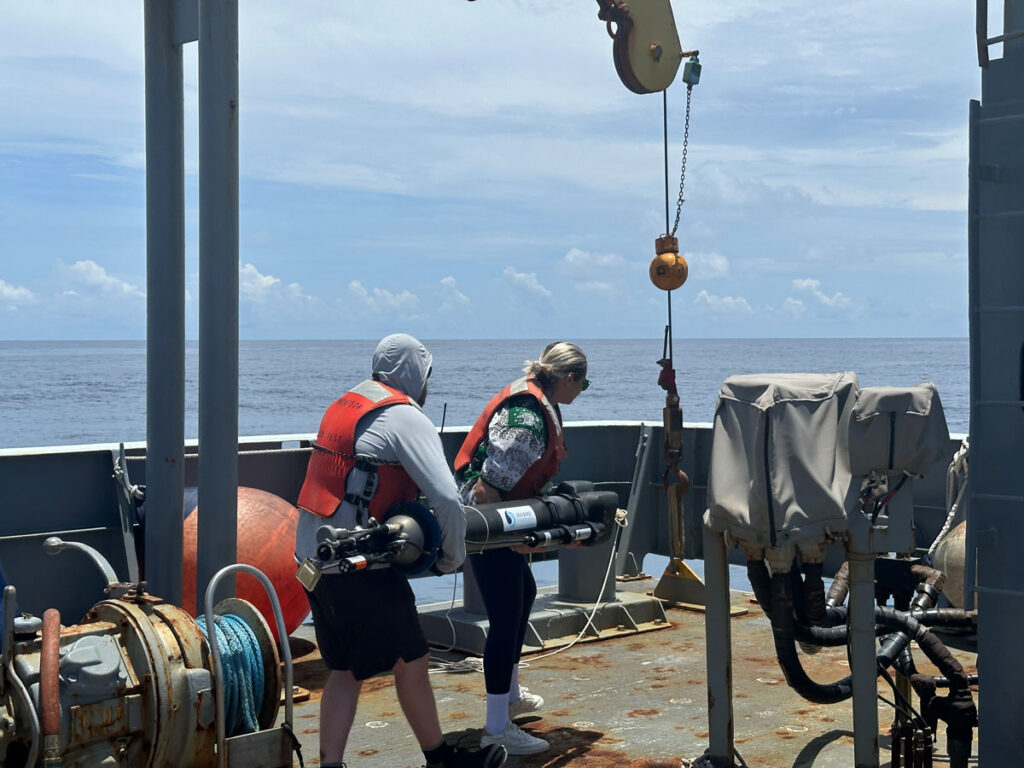
Robotic platforms that drift, dive, and surface across the global ocean offer another option. In particular, the system of biogeochemical Argo (BGC-Argo) floats, which record and return data around the clock and in near-real time, comprises a worldwide network of hundreds of remote observers that continuously measure nitrate, oxygen, pH, and other ocean properties.
Until recently, these autonomous sensors were thought to be blind to short-lived nitrite, the key to revealing how microbes in oxygen-deficient waters regulate the planet’s nitrogen and carbon cycles. Now, however, oceanographers can rely on them for measurements of this all-important intermediary [Bif and Johnson, 2025].
A Statistical Spark
When I began working at the Monterey Bay Aquarium Research Institute (MBARI), a casual conversation with my former supervisor Ken Johnson about ocean floats changed the course of my research. He mentioned that the data from nitrate sensors on floats might already contain hidden information about nitrite. These sensors measure oceanic nitrate indirectly by detecting how strongly ultraviolet (UV) light at specific wavelengths is absorbed by seawater.
Like nitrate, nitrite also absorbs UV light because of its inherent chemical characteristics, albeit more weakly. And from float data collected in ODZs, where nitrite is known to be present, it appeared that nitrite might, indeed, be altering detected UV spectral signals from what’s expected from nitrate alone. However, when Ken had tried to add nitrite as an extra variable into his calculations of nitrite and nitrate concentrations, the results did not match observed real-world measurements; the calculated values were simply too high for the ocean. Curiosity over that discrepancy became our starting point for further digging.
I began investigating the spectral fingerprints of compounds commonly found in ODZs, including nitrite. In the lab, I mixed these compounds into seawater and used the same UV spectrometers deployed on BGC-Argo floats to test their UV absorption. Among the molecules studied, nitrite and thiosulfate (an intermediate compound in the much less known sulfur cycle) were the strongest absorbers. Each left a subtle but distinct imprint on the UV spectrum. If those spectral signatures—hidden within what had long been considered noise—could be teased apart statistically, it might be possible to detect these fleeting intermediates in the ocean remotely.
The evidence was there, but we had to find a way to separate the signals from those of compounds that often coexist inside ODZs. That breakthrough happened with assistance from an unexpected source: Ken’s brother, Bruce Johnson, a bioinformatics researcher at the City University of New York’s Advanced Science Research Center.
What began as a speculative idea born from a cross-disciplinary family conversation became a powerful analytical tool.
Over dinner with Ken while he was in town for a conference near MBARI, Bruce described an upgrade to the software he develops to determine protein structures from nuclear magnetic resonance spectral data. The upgrade involves using a statistical approach called LASSO (Least Absolute Shrinkage and Selection Operator) regression to sift through overlapping chemical signals and identify the key components behind a spectrum. If it works for parsing different protein structures, Ken thought, maybe we could use it to sort molecular signals in our UV spectra. I loved the idea.
And it worked. After building our own algorithms to apply LASSO regression, we could finally separate the faint spectral contributions of nitrite and thiosulfate from the much stronger nitrate signal. What began as a speculative idea born from a cross-disciplinary family conversation became a powerful analytical tool. The next question was whether the ocean would confirm what our mathematical calculations and experimental lab data had revealed.
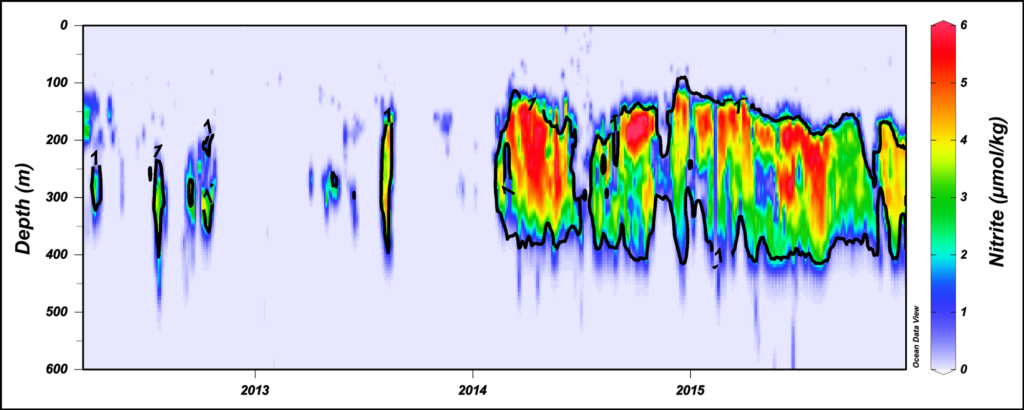
Indeed, it did. Applying the LASSO method to real BGC-Argo float data collected at different ODZs, we watched nitrite patterns emerge for the first time from years of raw spectra, even those from older floats that have long since stopped operating [Bif and Johnson, 2025] (Figure 2). Analysis of research cruise water samples validated the signals seen in the float data, confirming that they’d been recording chemical transformations all along. Seeing the first time series of nitrite concentration data gave the impression that the ocean was speaking back to us, revealing a story long hidden from view.
What the Ocean May Tell Us
The ability to measure nitrite in seawater allows us to track nitrogen (and potentially sulfur) transformations remotely and continuously and to connect biochemical microbial processes to large-scale cycling of elements in the ocean. With this approach, for example, we can now examine vast datasets to map how nitrogen cycling changes across seasons and years and to identify the chemical processes occurring within different layers of an ODZ.
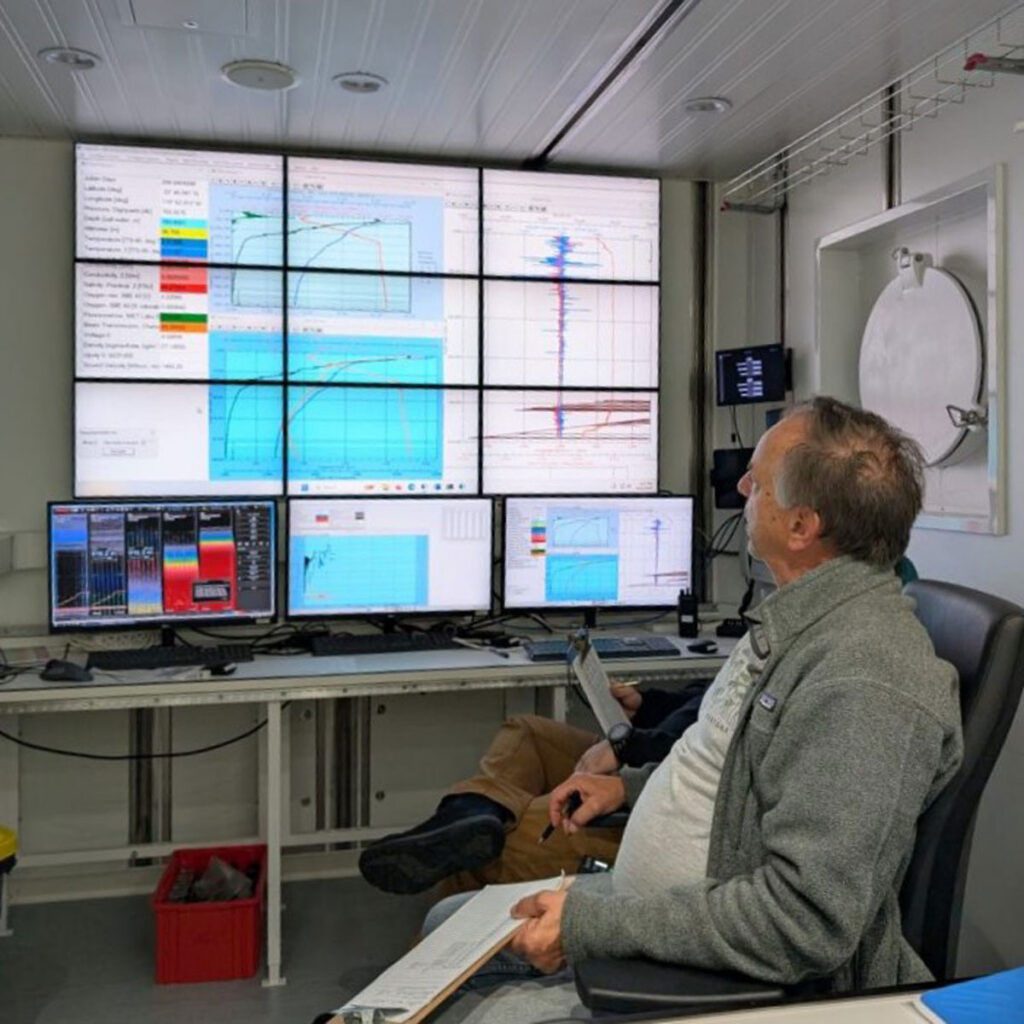
Perhaps most exciting is that so many datasets already exist. By reanalyzing UV spectra from sensors deployed on BGC-Argo floats, we are uncovering new information about ocean chemistry. Building on this effort, we are applying a biochemical model to estimate reaction rates of microbially mediated nitrogen transformations [Bif et al., 2025], bridging the gap between chemical observations and the biological processes that control them.
To further strengthen and validate the approach, we are collecting new data to survey additional ODZs, including during recent field campaigns in the Bay of Bengal in June–August 2025 and the Santa Barbara Basin in October 2025. In parallel, we are developing a new method to automate measurement of sulfite and thiosulfate concentrations in situ, providing a crucial link between laboratory measurements and float-based observations of the sulfur cycle.
Floating Into the Future
The advances highlighted here show the potential to further tap existing arrays of scientific ocean floats to reveal even more about the invisible ocean.
The advances highlighted here came from curiosity and persistence and reveal the power of interdisciplinary thinking—in this case involving chemistry, biology, and engineering applied to oceanography. They also show the potential to further tap existing arrays of scientific ocean floats to reveal even more about the invisible ocean than they already do.
We didn’t invent new sensors for the floats; we just learned to use the tools at our disposal differently. As this capability is applied globally, it will enable the oceanographic community to better constrain nitrogen transformation processes that have long been difficult to observe directly.
Of course, to keep learning, we need instruments in the water. The future availability of the global BGC-Argo network, which made these discoveries possible, and other floats is in question given the uncertainty of long-term support for float maintenance and new deployments both in the United States and internationally. Our ability to observe the ocean’s invisible chemistry and the microbial transformations that drive elemental cycles could thus fade just as vital signals are coming into focus.
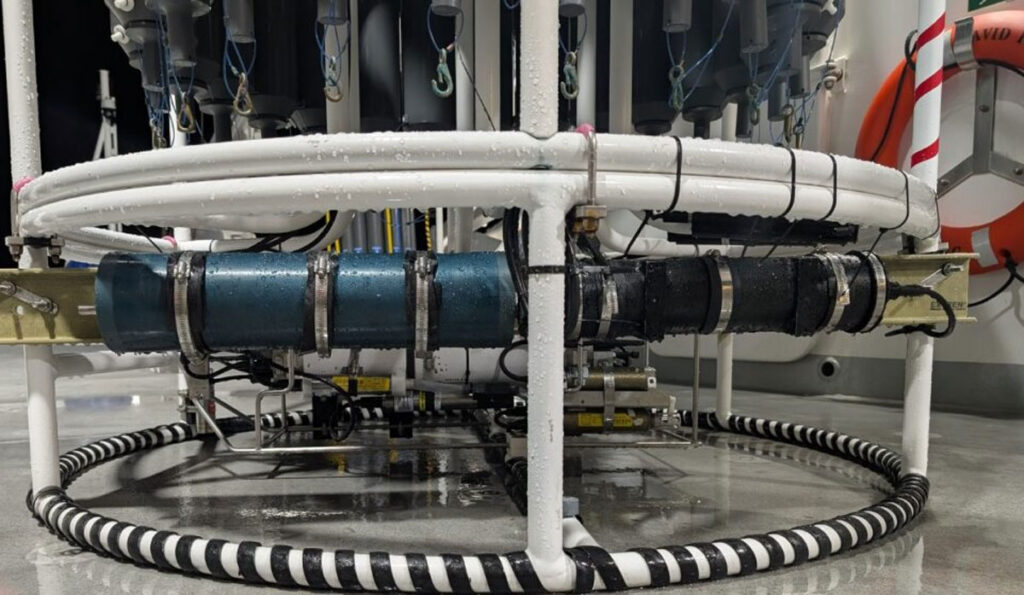
The ocean still holds many secrets in OMZs and elsewhere that affect us globally and locally. Maintaining the tools we have—and finding innovative ways to use them—is an efficient strategy for leveraging investments already made as we look to reveal these secrets.
References
Bif, M. B., and K. S. Johnson (2025), BGC-Argo floats reveal nitrite and thiosulfate dynamics in the oceans with high spatiotemporal resolution, Global Biogeochem. Cycles, 39, e2024GB008473, https://doi.org/10.1029/2024GB008473.
Bif, M., et al. (2025), BGC-Argo float reveals regime shifts in nitrogen-carbon cycling in an oxygen-deficient zone, Research Square, https://doi.org/10.21203/rs.3.rs-7809237/v1.
Author Information
Mariana Bif ([email protected]), Rosenstiel School of Marine, Atmospheric and Earth Sciences, University of Miami, Key Biscayne, Fla.