
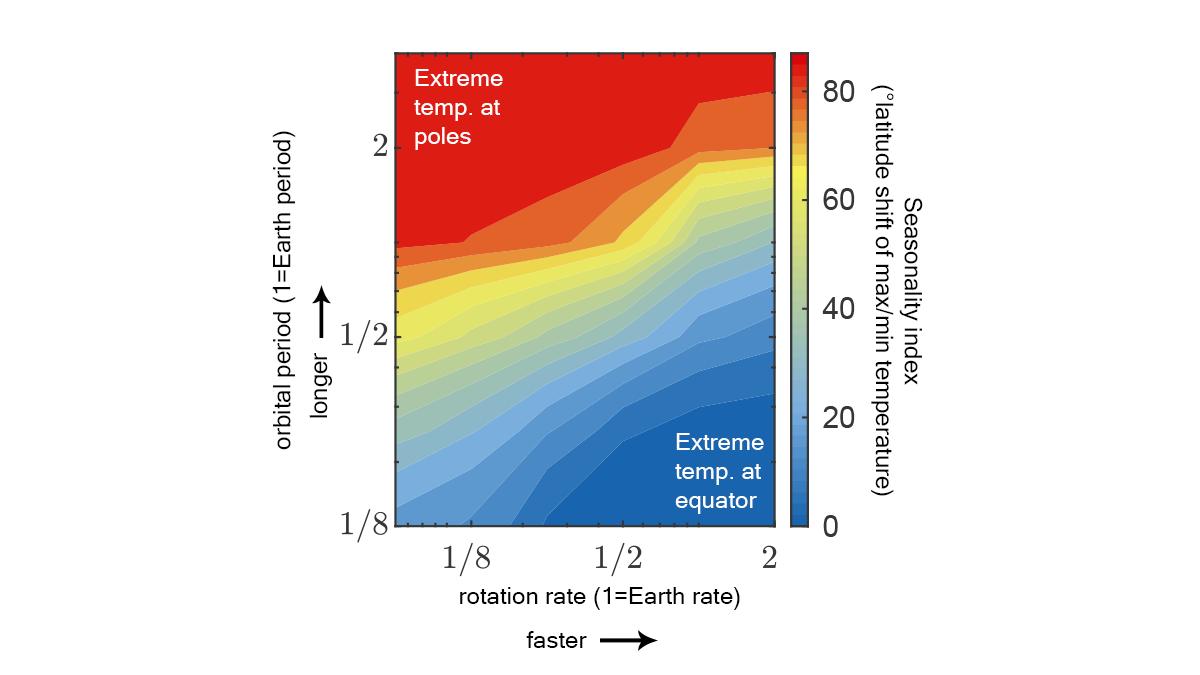
We’ve long known that a planet’s orbital period and tilt determine length and intensity of seasons. We now see rotation rate matters too: max temperature shifts poleward as rotation slows.
AGU Advances
Posted inEditors' Highlights
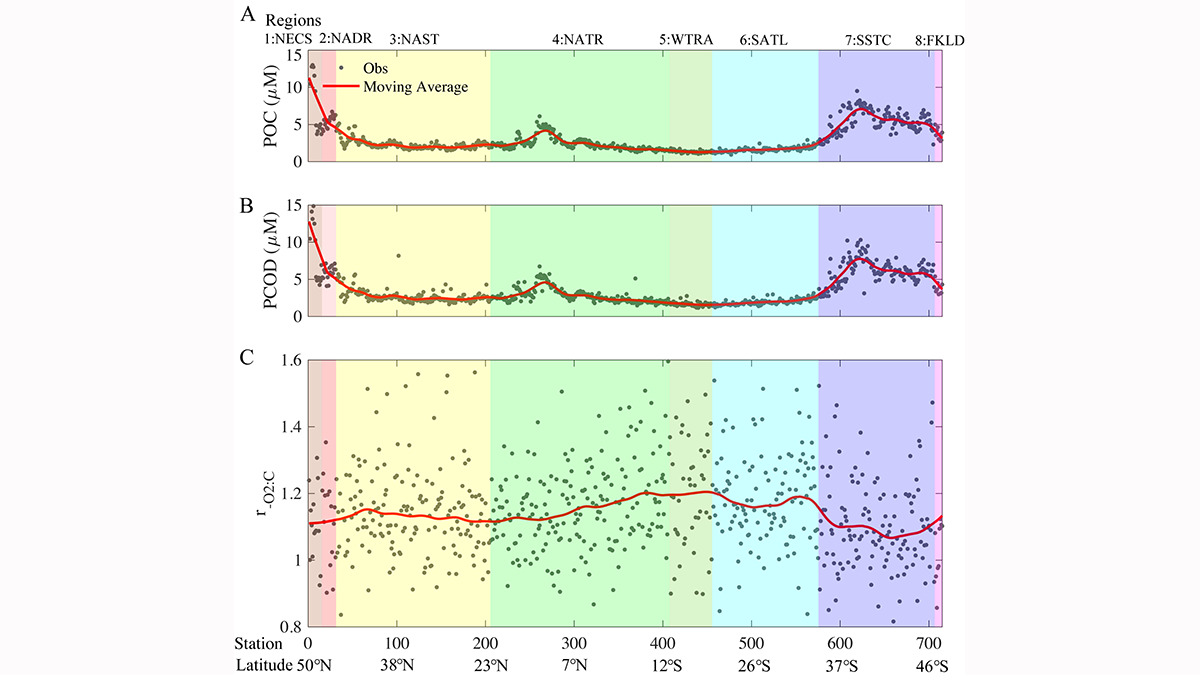
Respiration Quotient Variability and Ocean Oxygen Levels
Respiration quotients in the Atlantic and Pacific Oceans reflect different water temperature, nutrient stress and phytoplankton community structure, important for regional carbon and oxygen cycling.
Posted inEditors' Highlights
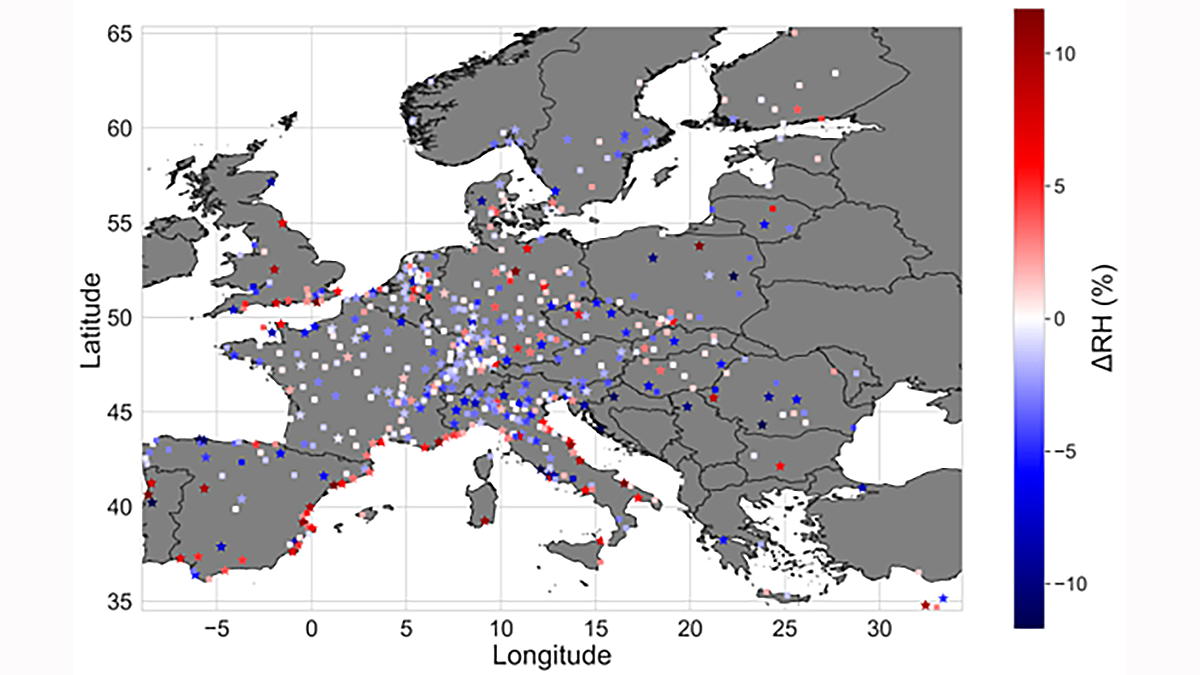
The Lower Humidity of Urban Areas Moderates Outdoor Heat Stress
Data scarcity of traditional observations cannot reveal whether surface temperature capture the potential for urban heat stress. This study improves the dataset with 40,000 citizen weather stations.

Posted inEditors' Highlights
A Really Big (Global) Splash at Chicxulub
What caused a tsunami 30,000 times more powerful than the December 26, 2004 Indian Ocean tsunami? A new modeling study says this was one of the results from the Cretaceous Chicxulub asteroid impact.
Posted inEditors' Highlights
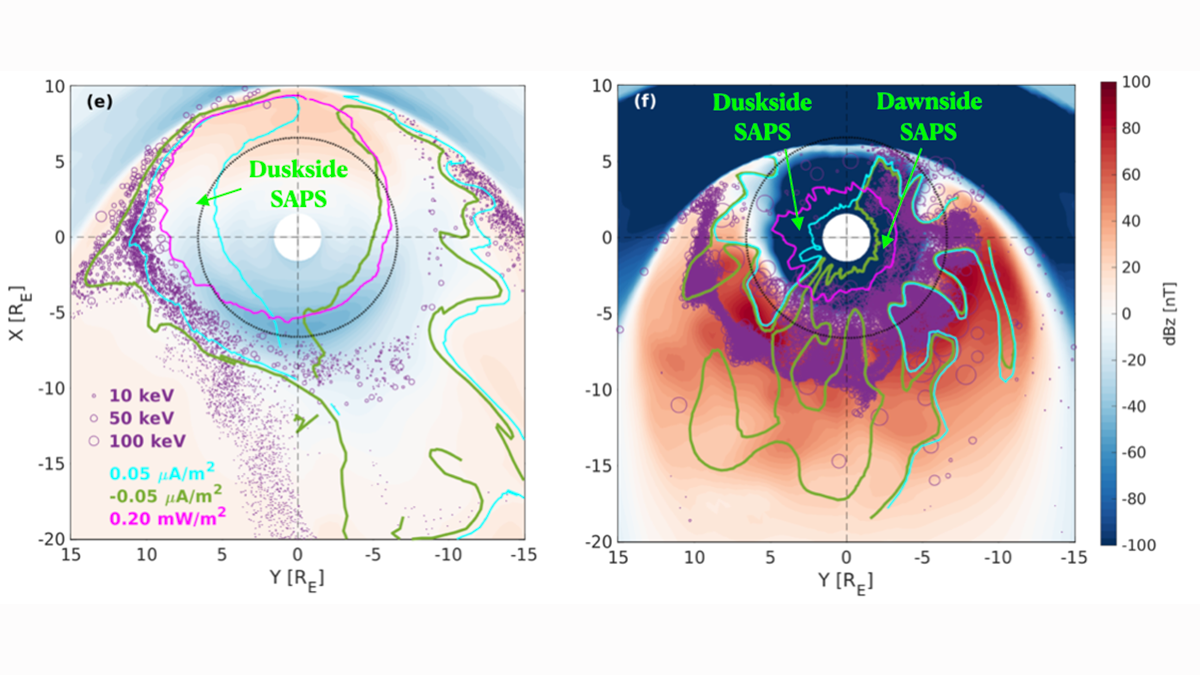
Origin of Dawnside Subauroral Plasma Flows in Geomagnetic Storms
Geomagnetic storms induce fast plasma flows next to the aurora and affect space weather. Lin et al. explain the origin of a special “dawnside” plasma stream that occurs only during extreme storm events.
Posted inEditors' Highlights
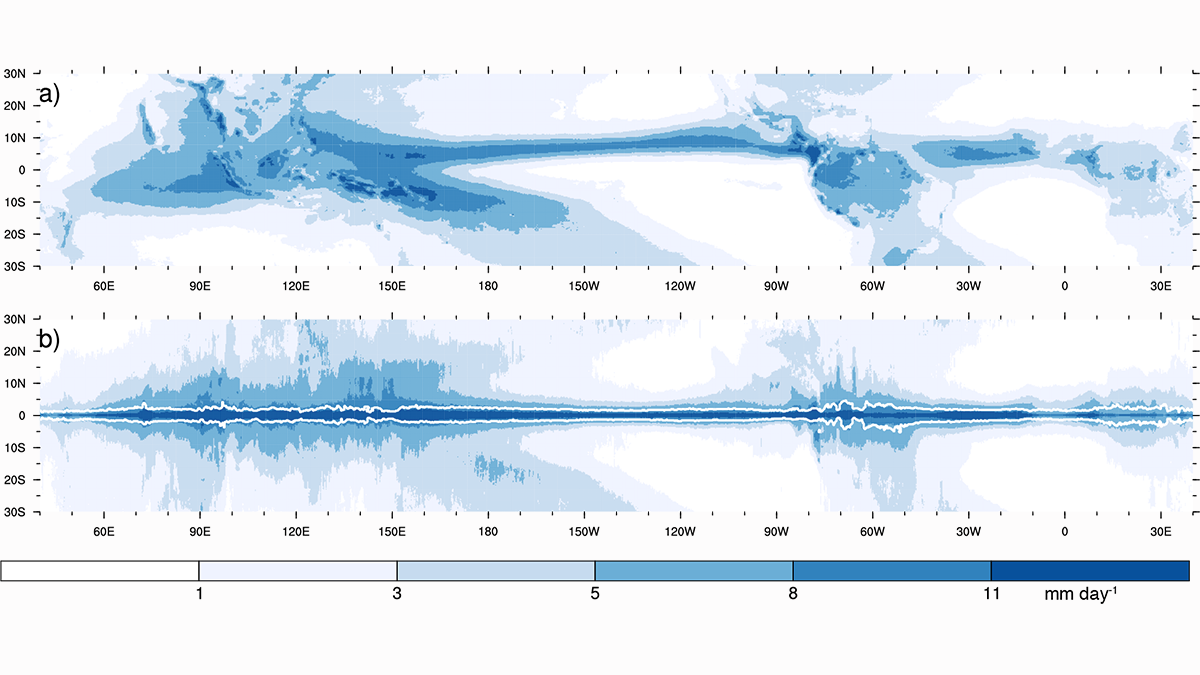
Why Does It Rain So Much Over Tropical Land?
Analyses of observations show that tropical land receives more rain than its fair share, owing to a proposed negative feedback that is not captured in current climate models.

Posted inEditors' Highlights
The Long-Lasting Impact of a Nuclear War on the Ocean
Model simulations of the impact of a large-scale nuclear war reveal long lasting effects with much of the ocean not returning to pre-war levels despite the cessation of the initial cooling.

Posted inEditors' Highlights
Oceans Warming Increases Xinjiang’s Precipitation, but Scarcity Stays
A transition toward an unusually wet condition due to ocean surface warming-induced increased precipitation will not alleviate the water scarcity risk in Xinjiang, China.
Posted inEditors' Highlights
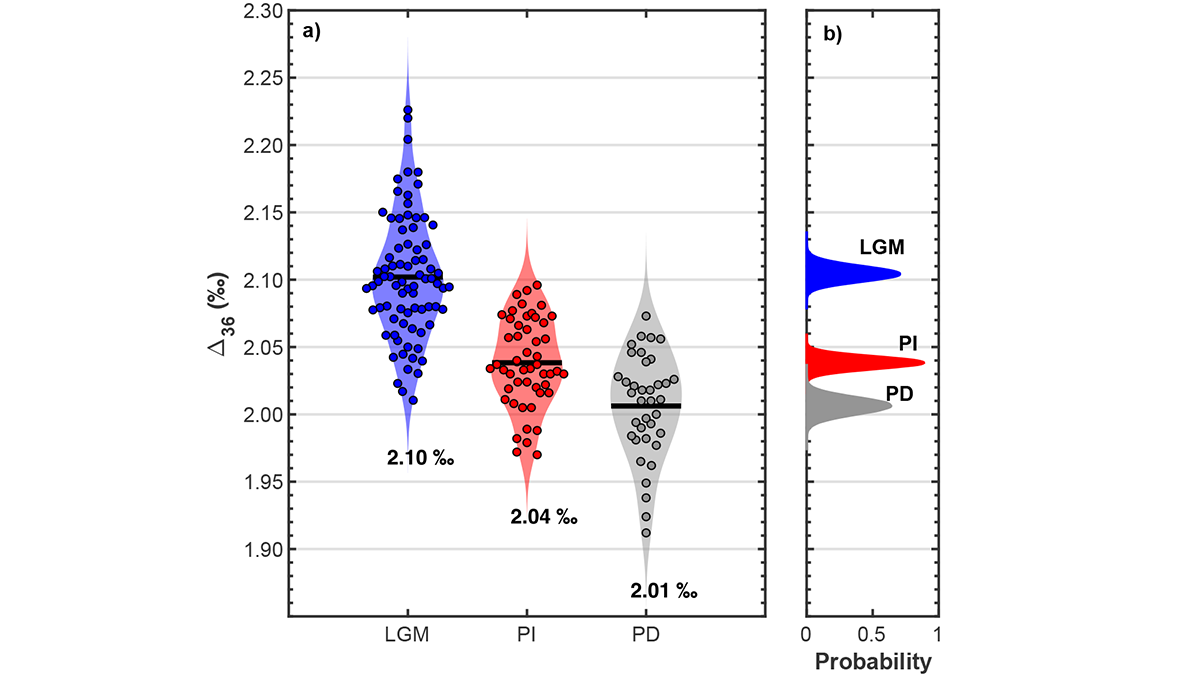
New Tool to Decipher Past Upper Troposphere Temperatures
Small variations in clumped O2 isotopes reflect temperatures in the upper troposphere. Bubbles measured in polar ice cores show the global lapse-rate appears to steepen during the Last Glacial Maximum.
Posted inEditors' Highlights
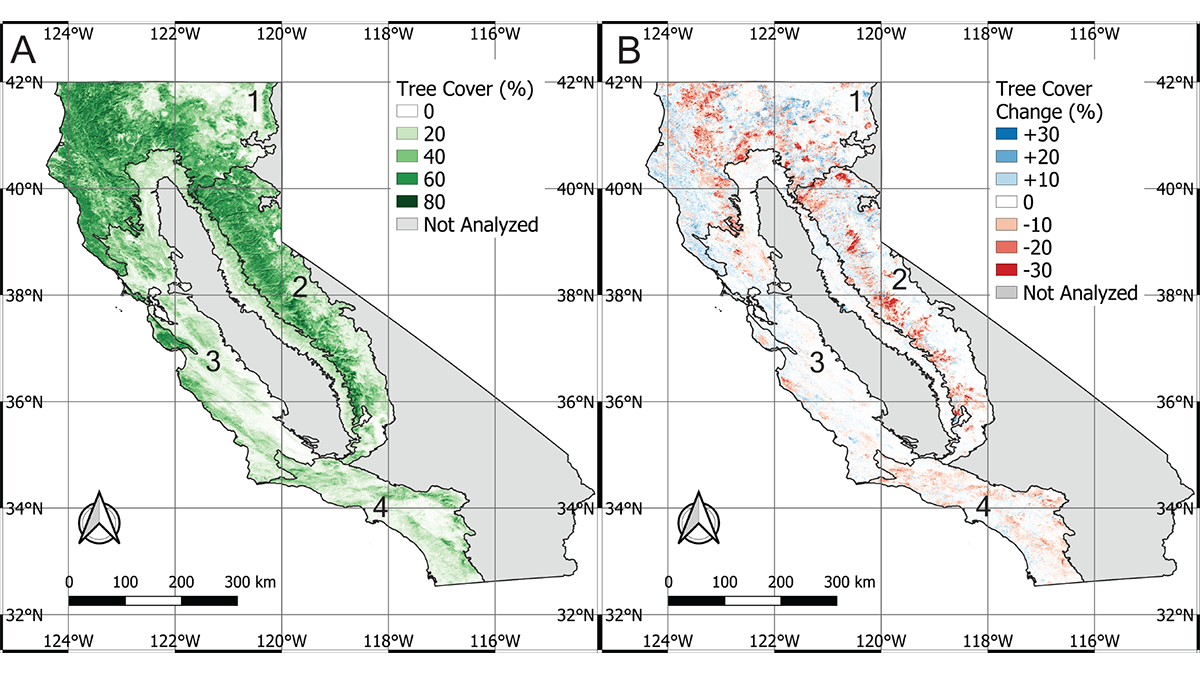
A Burning Issue
California has lost 7% of its forest cover to climate change over the past 25 years.