

Alfred Wegener, of plate tectonics fame, proposed a link nearly 100 years ago between fungi and "hair ice" on dead wood. A new study has identified the fungus and how it may influence ice structure.
biogeosciences
Posted inAGU News
Manzoni Receives 2014 Early Career Hydrologic Science Award
Stefano Manzoni received the 2014 Early Career Hydrologic Science Award at the 2014 American Geophysical Union Fall Meeting, held 15–19 December in San Francisco, Calif. The award is for significant early career contributions to hydrologic science.
Posted inAGU News
Benitez-Nelson Receives 2014 Sulzman Award for Excellence in Education and Mentoring
Claudia Benitez-Nelson received the 2014 Sulzman Award for Excellence in Education and Mentoring at the 2014 American Geophysical Union Fall Meeting, held 15–19 December in San Francisco, Calif. The award is given for "significant contributions by a mid-career female scientist as a role model and mentor for the next generation of biogeoscientists."
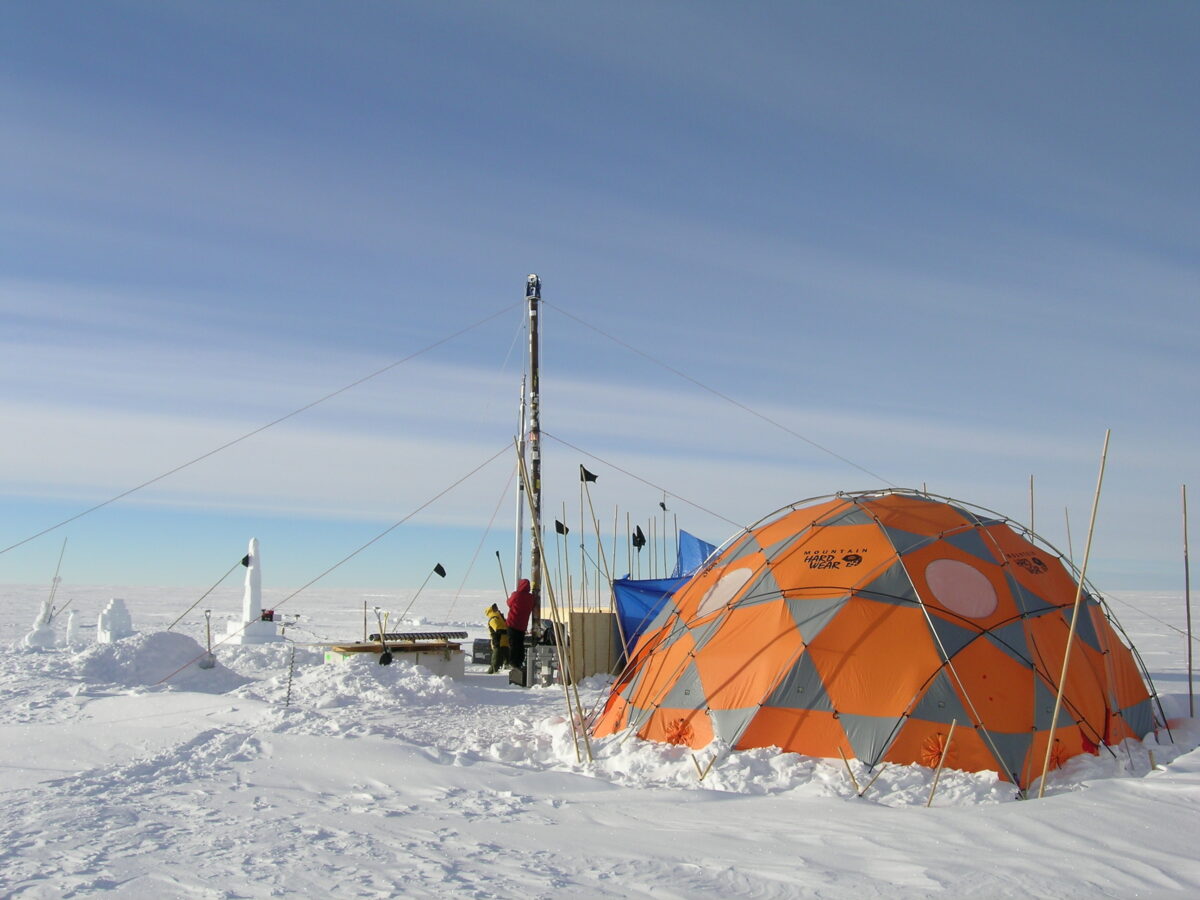
Posted inResearch Spotlights
Atmospheric Carbonyl Sulfide Hit a Minimum 5,000 Years Ago
A new ice core measurements-based record of a climate-active gas shows variability on millennial timescales.

Posted inNews
Estuaries May Face Increased Parasitism as Sea Levels Rise

Researchers document how past sea levels changes affected invertebrate health in coastal environments.
Posted inScience Updates
A Deep Cabled Observatory: Biology and Physics in the Abyss
The ALOHA Cabled Observatory, located 100 kilometers north of Oahu, is enabling a variety of studies of the biology and physics of the deep ocean.
Posted inNews
Tectonic Events May Have Triggered the Cambrian Explosion
A researcher proposes a tectonic mechanism that could have helped drive one of the biggest evolutionary events in history: the Cambrian Explosion.
Posted inScience Updates
Expanding the Role of Reactive Transport Modeling in Biogeochemical Sciences
Reactive Transport Modeling Workshop;
Alexandria, Virginia, 13–15 April 2014