


Measurements of carbon-14 show that roughly 20% of carbon dioxide emissions in the Los Angeles Basin are likely due to the decay of plants in managed landscapes.
carbon emissions
Posted inNews
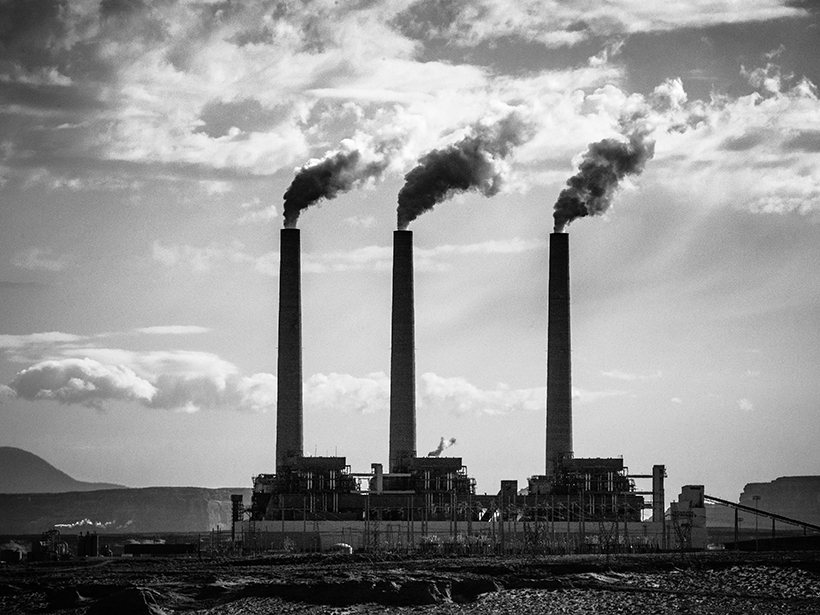
Bipartisan Legislation Would Put a Price on Carbon

A bill introduced in Congress yesterday could help cut U.S. carbon pollution by 40% in 10 years.

Posted inResearch Spotlights
Satellite Observations Validate Stratosphere Temperature Models
Since the 1970s, the stratosphere has cooled as ozone levels dropped and carbon dioxide levels increased. Chemical models of the temperature decline conflicted with satellite observations—until now.

Posted inNews
Black Carbon Not the Primary Cause of Historic Glacial Retreat
Ice cores and glacial records reveal that European glaciers retreated before the rise of industrialization in the 1870s, suggesting that soot deposition did not primarily drive the shift.

Posted inNews
World off Course to Meet Emissions Reduction Goals
A new energy report shows a disconnect between scientific research targets and what is happening in the energy markets.
Posted inResearch Spotlights
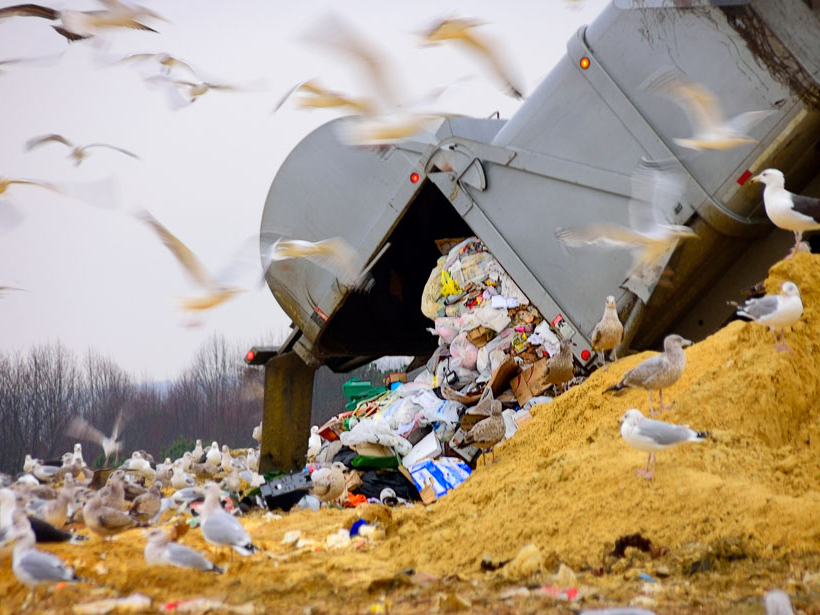
Greenhouse Gas Inventories Underestimate Methane Emissions

A new study in the Baltimore-Washington metropolitan area reveals prior estimates may significantly underrepresent methane emissions, particularly from landfills and natural gas systems.

Posted inResearch Spotlights
Volcano in Iceland Is One of the Largest Sources of Volcanic CO2

High-precision airborne measurements, in combination with atmospheric modeling, suggest that the Katla subglacial caldera may be one of the planet’s biggest sources of volcanic carbon dioxide.
Posted inScience Updates
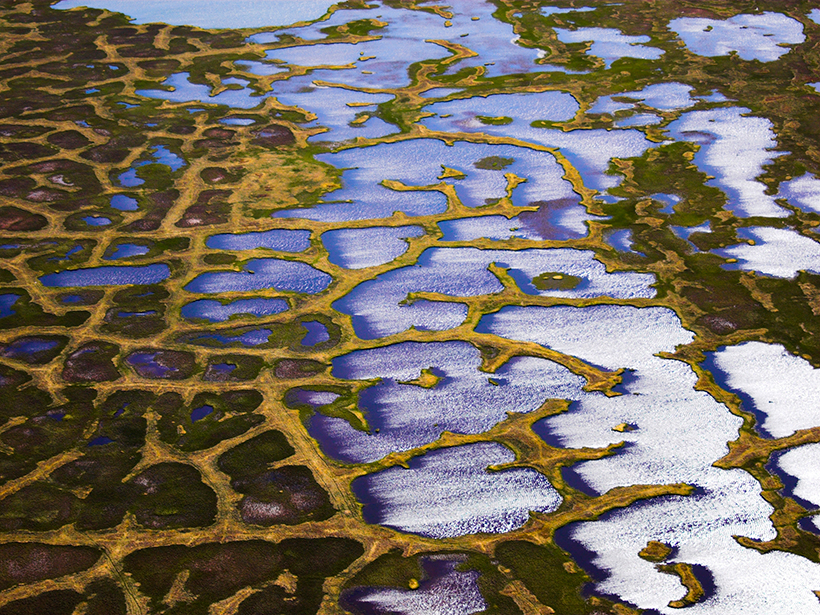
A Modeling Toolbox for Permafrost Landscapes
A new resource makes it easier for researchers to explore predictions of how melting permafrost might affect carbon release, wetlands, and river deltas as they evolve and other interacting effects.
Posted inEditors' Highlights
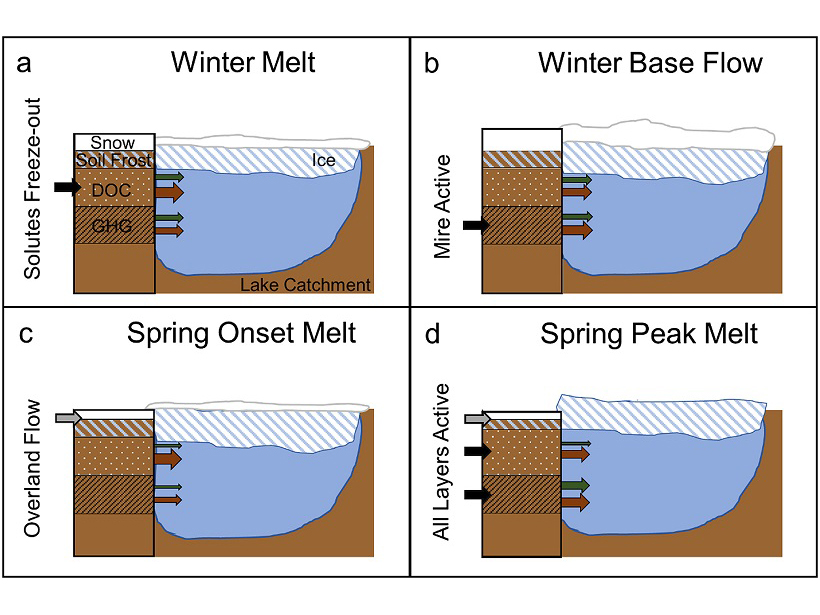
What Lies and Waits Beneath Lake Ice?
Rarely made detailed measurements of carbon dioxide and methane under lake ice reveal a story more complex than simple models of gas buildup, with surprising findings for climate change impacts.
Posted inResearch Spotlights
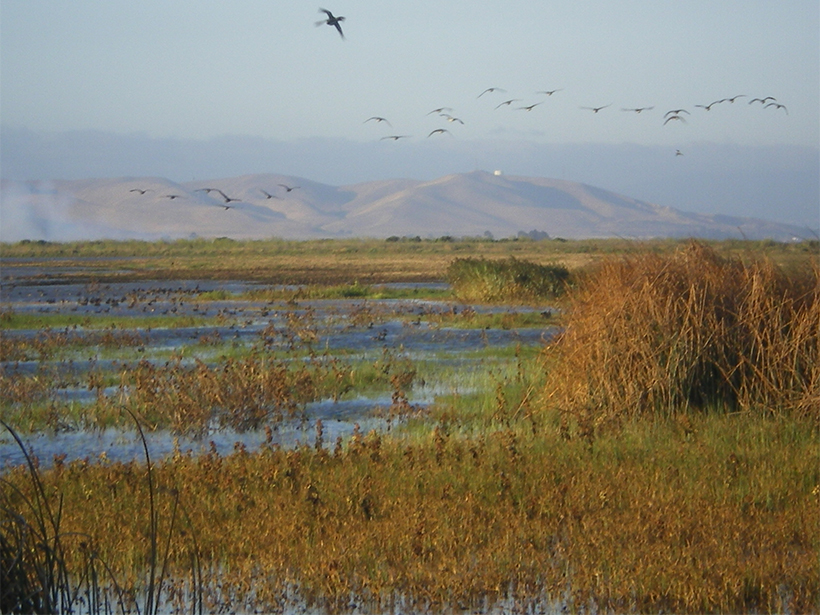
Budgeting Ozone-Depleting Emissions from Coastal Tidal Marshes
Brackish wetlands and their salt-tolerant vegetation are significant methyl halide emitters. The natural emissions add chlorine and bromine to the stratosphere, which break down ozone.