• About
  • Special Reports
  • Topics
    • Climate
    • Earth Science
    • Oceans
    • Space & Planets
    • Health & Ecosystems
    • Culture & Policy
    • Education & Careers
    • Opinions
  • Projects
    • Postcards From the Field
    • ENGAGE
    • Editors’ Highlights
    • Editors’ Vox
    • Eos en Español
    • Eos 简体中文版
    • Print Archive: 2015–2025
  • Policy Tracker
  • Blogs
    • Research & Developments
    • The Landslide Blog
  • Newsletter
  • Submit to Eos
  • AGU.org
  • Career Center
  • Join AGU
  • Give to AGU
  • About
  • Special Reports
  • Topics
    • Climate
    • Earth Science
    • Oceans
    • Space & Planets
    • Health & Ecosystems
    • Culture & Policy
    • Education & Careers
    • Opinions
  • Projects
    • Postcards From the Field
    • ENGAGE
    • Editors’ Highlights
    • Editors’ Vox
    • Eos en Español
    • Eos 简体中文版
    • Print Archive: 2015–2025
  • Policy Tracker
  • Blogs
    • Research & Developments
    • The Landslide Blog
  • Newsletter
  • Submit to Eos
Skip to content
  • AGU.org
  • Career Center
  • Join AGU
  • Give to AGU
Eos

Eos

Science News by AGU

Support Eos
Sign Up for Newsletter
  • About
  • Special Reports
  • Topics
    • Climate
    • Earth Science
    • Oceans
    • Space & Planets
    • Health & Ecosystems
    • Culture & Policy
    • Education & Careers
    • Opinions
  • Projects
    • Postcards From the Field
    • ENGAGE
    • Editors’ Highlights
    • Editors’ Vox
    • Eos en Español
    • Eos 简体中文版
    • Print Archive: 2015–2025
  • Policy Tracker
  • Blogs
    • Research & Developments
    • The Landslide Blog
  • Newsletter
  • Submit to Eos

Climate Change

Posted inEditors' Vox

AOMIP and FAMOS for Enhancing Understanding of Arctic Changes

by A. Proshutinsky 15 June 201612 January 2022

This community-based approach to modeling provides a unique forum for coordination, investigation, and synthesis.

Suspended fine sediment threatens fish.
Posted inNews

Silty Streams Muddy Freshwater Conservation Issues

by E. Deatrick 15 June 201621 December 2023

Throughout the Pacific Northwest, dirt from unpaved roads can clog streams, threatening fish habitats. Scientists have only a murky understanding of how to clear up these turbid waters.
Posted inScience Updates

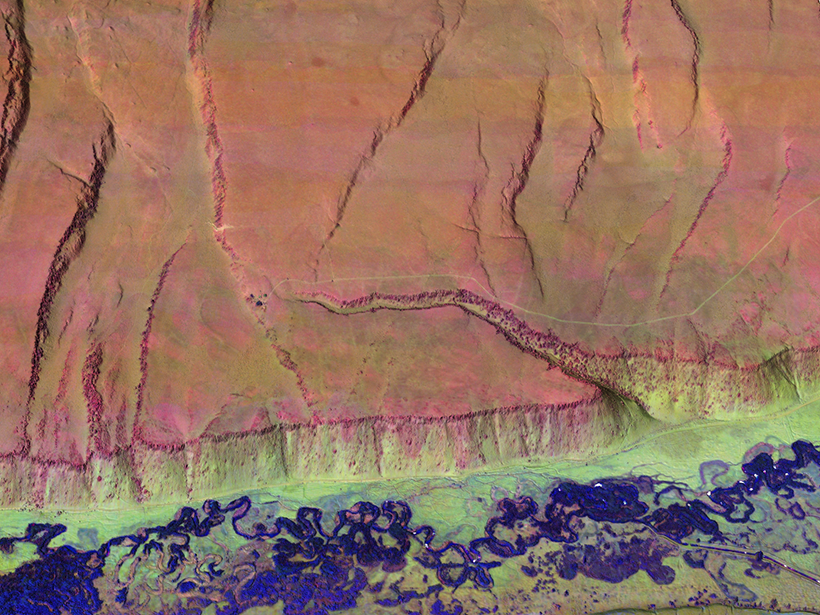
Multicolor Terrain Mapping Documents Critical Environments

by J. C. Fernandez-Diaz, W. E. Carter, R. Shrestha and C. L. Glennie 14 June 20161 November 2021

The Titan airborne topographic laser system takes spatial and spectral data at three wavelengths at once, mapping threats from climate change and ecological disasters in regions with complex terrain.
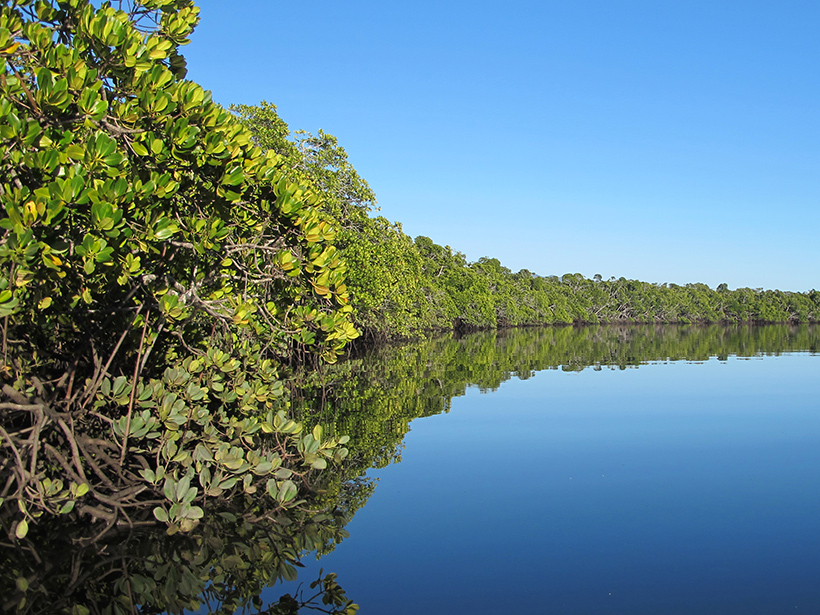
Mangroves at Coral Creek, Hinchinbrook Island. Australia.
Posted inResearch Spotlights

Can Mangroves Buffer Ocean Acidification?

by W. Yan 9 June 201620 April 2022

New research evaluates the ability of coastal foliage to influence the ocean's pH.

The 15 June 1991 eruption of Mount Pinatubo.
Posted inNews

Pinatubo 25 Years Later: Eight Ways the Eruption Broke Ground

JoAnna Wendel, freelance science writer and illustratorMohi Kumar headshot by JoAnna Wendel and M. Kumar 9 June 20165 June 2023

From the first rapid assessment of a volcano's history to insights on geoengineering, the 15 June 1991 eruption of Mount Pinatubo changed the way we approach and learn from volcanic hazards.

A small tributary of the Clauge River, Jura, France, during the dry period.
Posted inScience Updates

One for All, All for One: A Global River Research Network

by T. Datry, R. Corti, A. Foulquier, D. von Schiller and K. Tockner 7 June 201623 September 2022

Intermittent rivers are an increasing share of the world's river network, but current models don't include them. One research network is gathering knowledge about these rivers from around the world.

Posted inResearch Spotlights

How Regional Wind Patterns Will Influence Climate Change

by W. Yan 6 June 201612 January 2022

Climate change is expected to cause wet regions to get wetter and dry regions to get drier, but new research suggests that the truth is more complicated.

Posted inEditors' Vox

They Got to “Ask-Me-Anything.” So, What Did They Want to Know?

by Kristopher B. Karnauskas 6 June 201616 February 2023

On behalf of JGR: Oceans, I consented to a Reddit Science AMA. What did an anonymous public want to learn about oceanography and climate science? More importantly, what can we learn from them?
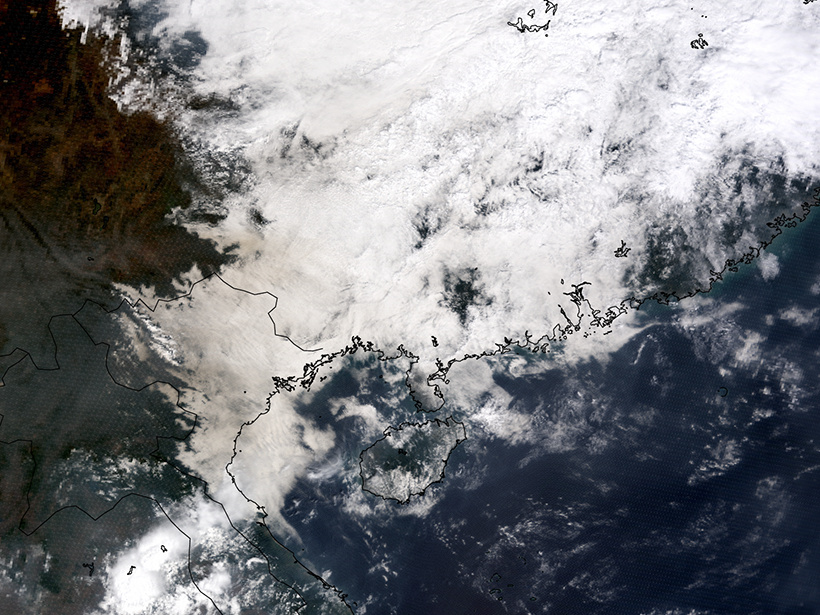
Clouds and smoke over southeastern Asia in March 2015.
Posted inResearch Spotlights

Measuring Atmospheric Aerosols Despite the Clouds

by W. Yan 2 June 20162 March 2023

Researchers devise ways for remote sensors to integrate aerosol content above clouds into current methods of measurement.
Posted inEditors' Vox

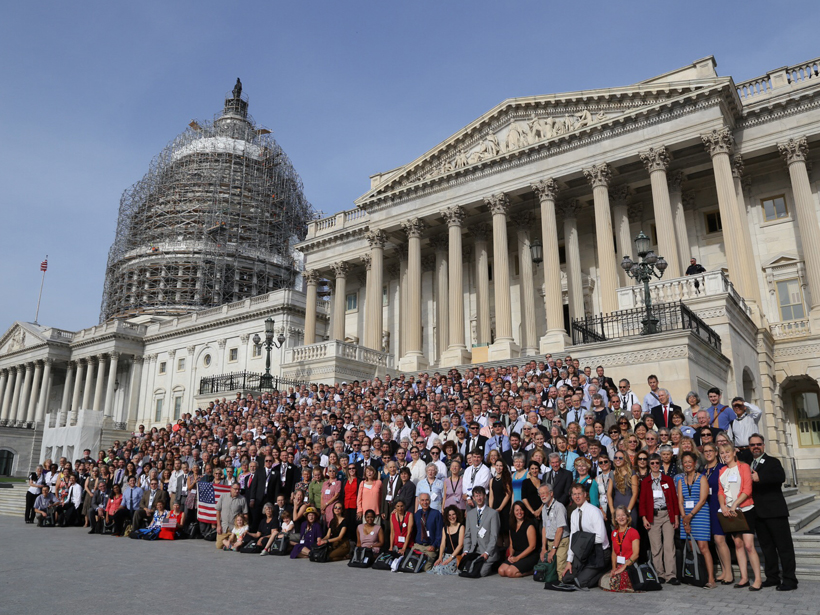
Climate Scientists as Activists

by S. J. Ghan 2 June 201616 February 2023

The pursuit of global political solutions to climate change is not for the faint of heart—but it is a matter of civic responsibility.

Posts pagination

Newer posts 1 … 223 224 225 226 227 … 257 Older posts
Over a dark blue-green square appear the words Special Report: The State of the Science 1 Year On.

Features from AGU Publications

Research Spotlights

Glaciers May Flow into the Ocean More Quickly Than We Think

14 April 202614 April 2026
Editors' Highlights

Machine Learning Can Improve the Use of Atmospheric Observations in the Tropics 

14 April 20267 April 2026
Editors' Vox

Synergistic Integration of Flood Inundation Modeling Methods

10 April 202610 April 2026
Eos logo at left; AGU logo at right

About Eos
ENGAGE
Awards
Contact

Advertise
Submit
Career Center
Sitemap

© 2026 American Geophysical Union. All rights reserved Powered by Newspack