• About
  • Special Reports
  • Topics
    • Climate
    • Earth Science
    • Oceans
    • Space & Planets
    • Health & Ecosystems
    • Culture & Policy
    • Education & Careers
    • Opinions
  • Projects
    • Postcards From the Field
    • ENGAGE
    • Editors’ Highlights
    • Editors’ Vox
    • Eos en Español
    • Eos 简体中文版
    • Print Archive: 2015–2025
  • Policy Tracker
  • Blogs
    • Research & Developments
    • The Landslide Blog
  • Newsletter
  • Submit to Eos
  • AGU.org
  • Career Center
  • Join AGU
  • Give to AGU
  • About
  • Special Reports
  • Topics
    • Climate
    • Earth Science
    • Oceans
    • Space & Planets
    • Health & Ecosystems
    • Culture & Policy
    • Education & Careers
    • Opinions
  • Projects
    • Postcards From the Field
    • ENGAGE
    • Editors’ Highlights
    • Editors’ Vox
    • Eos en Español
    • Eos 简体中文版
    • Print Archive: 2015–2025
  • Policy Tracker
  • Blogs
    • Research & Developments
    • The Landslide Blog
  • Newsletter
  • Submit to Eos
Skip to content
  • AGU.org
  • Career Center
  • Join AGU
  • Give to AGU
Eos

Eos

Science News by AGU

Support Eos
Sign Up for Newsletter
  • About
  • Special Reports
  • Topics
    • Climate
    • Earth Science
    • Oceans
    • Space & Planets
    • Health & Ecosystems
    • Culture & Policy
    • Education & Careers
    • Opinions
  • Projects
    • Postcards From the Field
    • ENGAGE
    • Editors’ Highlights
    • Editors’ Vox
    • Eos en Español
    • Eos 简体中文版
    • Print Archive: 2015–2025
  • Policy Tracker
  • Blogs
    • Research & Developments
    • The Landslide Blog
  • Newsletter
  • Submit to Eos

cool tools

Posted inResearch Spotlights

Particle Accelerator in Space Could Help Scientists Study Auroras

by Mark Zastrow 8 April 201520 October 2021

Researchers could launch an electron beam device into space to study the Earth's magnetic field and trigger artificial auroras and lightning.

Posted inScience Updates

Fire in the Hole: Recreating Volcanic Eruptions with Cannon Blasts

by B. Zimanowski and M. T. Gudmundsson 7 April 20152 May 2022

Artificial volcanic plumes, fired from cannons loaded with ash plucked from the slopes of Iceland, may help researchers better monitor disruptive eruptions.
Posted inScience Updates

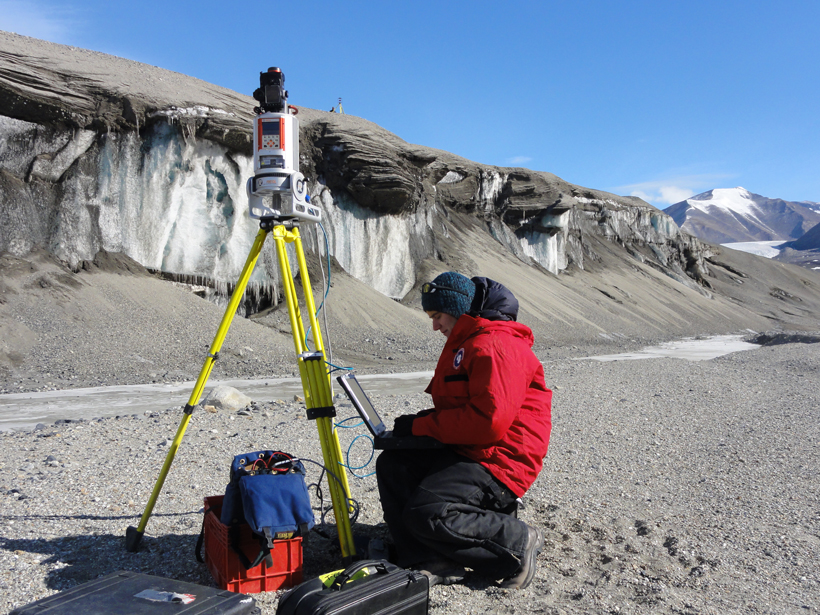
What Instruments Are Available for Polar Studies?

by K. M. Brunt and J. A. MacGregor 3 April 20157 March 2023

Instrumentation for Polar Glaciology and Geophysics Research Workshop; Baltimore, Maryland, 9–10 October 2014
Posted inResearch Spotlights

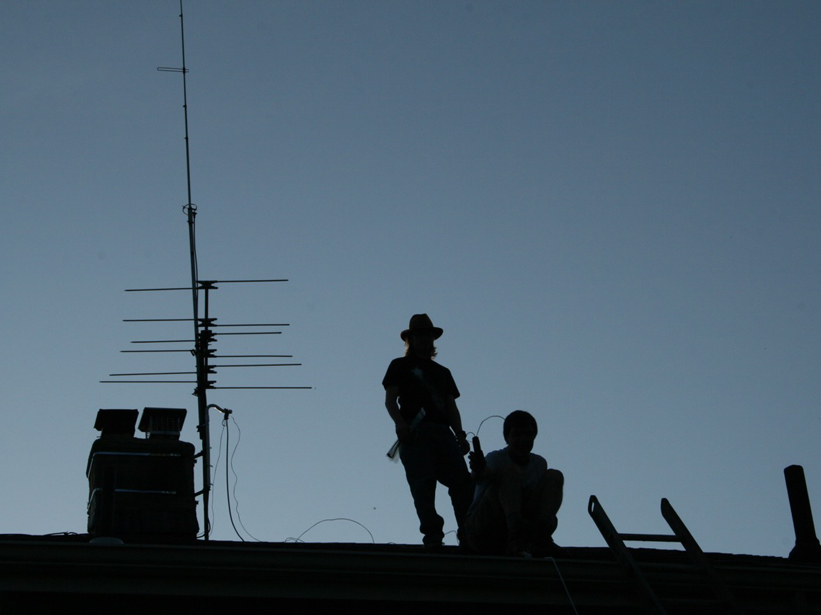
Radio Blackout! Ham Radio as an Operational and Scientific Instrument

by Mark Zastrow 16 February 201527 January 2022

Monitoring solar activity that disrupts communications can be helped by crowdsourced and automated reports from amateur radio operators.
Posted inResearch Spotlights

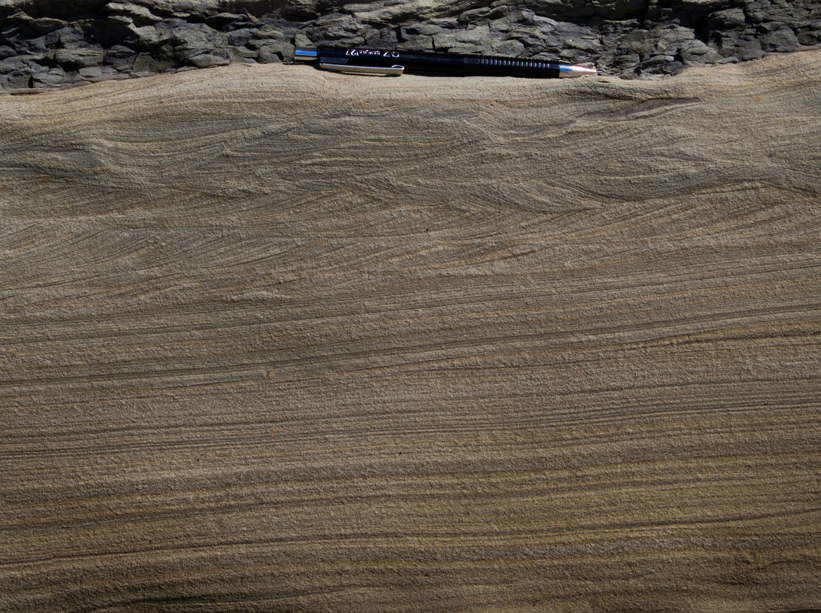
Exploring How Water Flow Affects Bed Forms in Different Environments

by S. Palus 4 February 201529 June 2022

In a flat sand bed, water creates undulating features.

Posted inResearch Spotlights

Fiber Optics Can Improve Borehole Measurements

by E. Betz 9 December 201416 February 2022

Scientists demonstrate the potential of fiber optics to measure fluid flow in boreholes as an alternative to traditional measurement techniques.

Posted inResearch Spotlights

Measuring Rainfall in West Africa Using Cellular Networks

by J. Orwig and Faith Ishii 25 November 201418 February 2022

Scientists demonstrated that rainfall can be monitored using the network of cellular towers throughout West Africa.

Posted inFeatures

Time-Lapse Imaging in Polar Environments

by J. L. Dickson, J. S. Levy and J. W. Head 18 November 201429 September 2021

New techniques are speeding up the slowest-changing landscapes on Earth.

Posted inScience Updates

The Impact of Coronagraphs

by O. C. St. Cyr, B. Fleck, J. M. Davila and Faith Ishii 14 October 201427 January 2022

Observations of the Sun’s extended atmosphere with coronagraphs have become indispensable to both basic and applied research.

Posted inScience Updates

Using Lidar to Advance Critical Zone Science

by Adrian A. Harpold, S. W. Lyon and J. A. Marshall 7 October 201424 October 2022

The Next Generation of LiDAR Analysis for Critical Zone Research;
Boulder, Colorado, 12–14 May 2014

Posts pagination

Newer posts 1 … 35 36 37 38 Older posts
Over a dark blue-green square appear the words Special Report: The State of the Science 1 Year On.

Features from AGU Publications

Research Spotlights

Wind Works: The Atmosphere’s Invisible Energetic Tug-of-War

17 September 202617 September 2026
Editors' Highlights

Dust and Marine Halogens Team Up to Destroy Tropospheric Ozone

17 September 202617 September 2026
Editors' Vox

In Appreciation of AGU’s Outstanding Reviewers of 2025

14 September 202610 September 2026
Eos logo at left; AGU logo at right

About Eos
ENGAGE
Awards
Contact

Advertise
Submit
Career Center
Sitemap

© 2026 American Geophysical Union. All rights reserved Powered by Newspack