
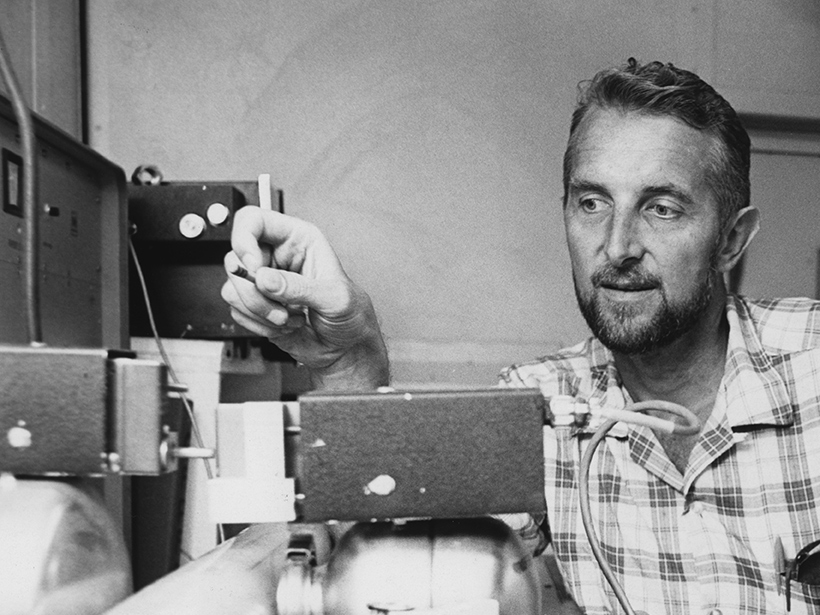
Richard P. Von Herzen, a pioneer of marine heat flow studies who helped validate plate tectonics and discover oceanic hydrothermal vents, passed away on 28 January 2016. He was 85.
Earth science

Posted inNews
Gypsum Forms in an Unexpected Way

Scientists spot the "stem cell" building blocks that lay the foundation for gypsum's formation.
Posted inResearch Spotlights
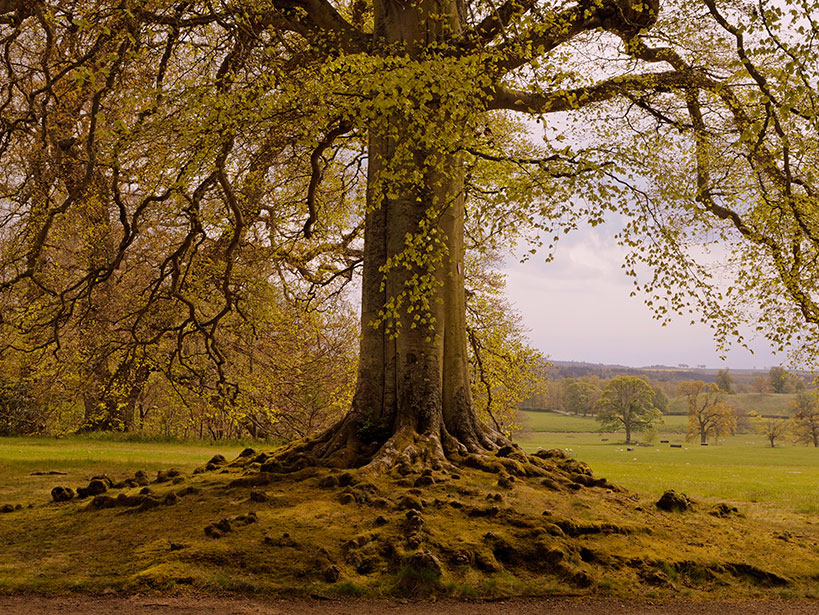
Nitrogen Garners Starring Role in Refined Earth System Model
Scientists create a more realistic representation of plant nitrogen uptake and usage to improve global climate simulations.
Posted inNews
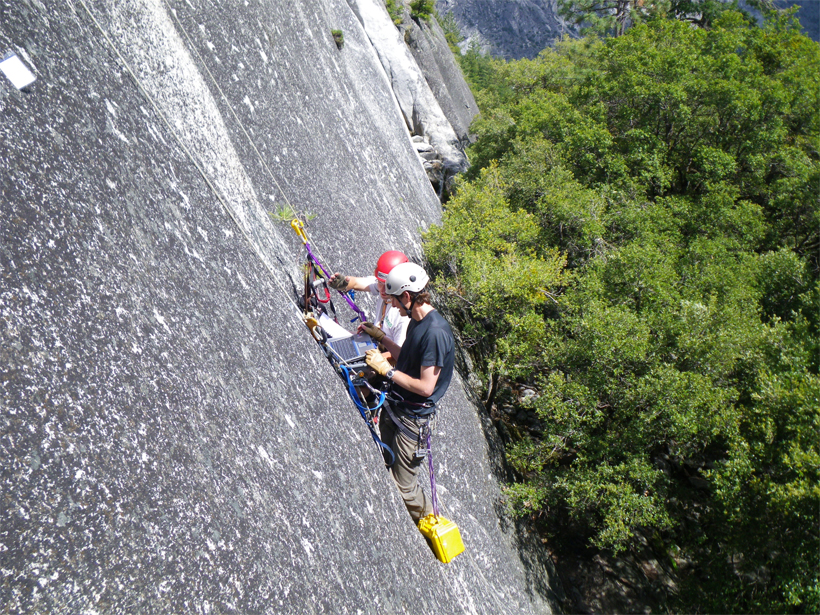
A Warm Day Can Trigger Rockfalls
Research on a cliff face in Yosemite National Park finds that when rockfalls happen without an obvious cause, ordinary warming in the Sun could be the culprit.
Posted inScience Updates
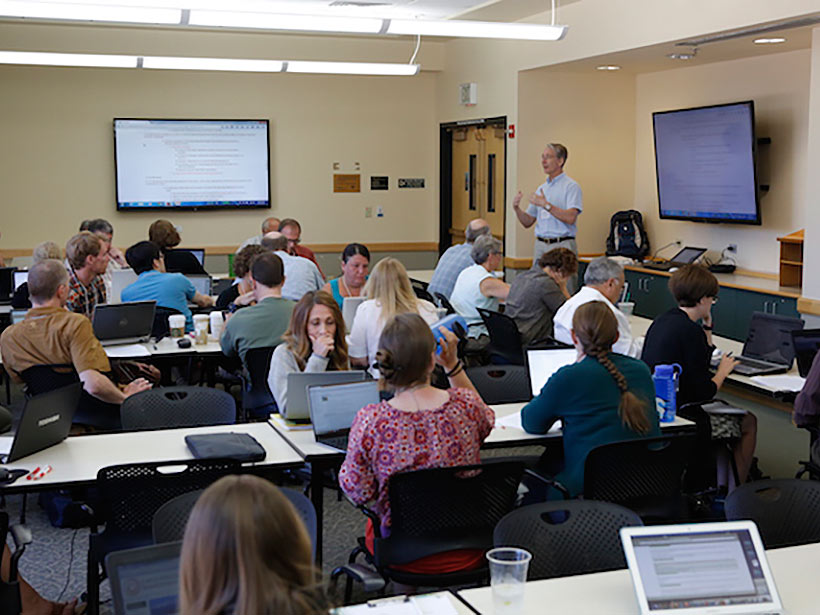
Learning About Teaching: Geoscience Educators Share Insights
Earth Educators' Rendezvous; Boulder, Colorado, 13–17 July 2015
Posted inOpinions
Embracing Open Data in Field-Driven Sciences
Allowing data to be reused and research results to be replicated fosters innovation, high-quality research, and public trust in science.

Posted inNews
McNutt Breaks Barriers as Incoming Science Academy President

Two traditions fall to the wayside as the U.S. National Academy of Sciences selects its first woman ever as president and, in choosing her, elevates its second consecutive geoscientist to the helm.

Posted inNews
Proposed NASA Budget: Earth Science Up, Planetary Science Down

A new line item for space transportation would support NASA partnerships with commercial spaceflight vendors and reduce dependence on Russia for transporting astronauts.
Posted inResearch Spotlights
Building New Ways to Think About Arctic Freshwater
A new literature review summarizes the complex role of freshwater in the Arctic and its impact on climate and biogeochemical systems as a whole.
Posted inOpinions
Understanding Ecosystem Services from a Geosciences Perspective
Assessment of ecosystem services—the benefits society receives from ecosystems—can be improved by including broader spatial and temporal scales of geosciences perspectives.