• About
  • Special Reports
  • Topics
    • Climate
    • Earth Science
    • Oceans
    • Space & Planets
    • Health & Ecosystems
    • Culture & Policy
    • Education & Careers
    • Opinions
  • Projects
    • Postcards From the Field
    • ENGAGE
    • Editors’ Highlights
    • Editors’ Vox
    • Eos en Español
    • Eos 简体中文版
    • Print Archive: 2015–2025
  • Policy Tracker
  • Blogs
    • Research & Developments
    • The Landslide Blog
  • Newsletter
  • Submit to Eos
  • AGU.org
  • Career Center
  • Join AGU
  • Give to AGU
  • About
  • Special Reports
  • Topics
    • Climate
    • Earth Science
    • Oceans
    • Space & Planets
    • Health & Ecosystems
    • Culture & Policy
    • Education & Careers
    • Opinions
  • Projects
    • Postcards From the Field
    • ENGAGE
    • Editors’ Highlights
    • Editors’ Vox
    • Eos en Español
    • Eos 简体中文版
    • Print Archive: 2015–2025
  • Policy Tracker
  • Blogs
    • Research & Developments
    • The Landslide Blog
  • Newsletter
  • Submit to Eos
Skip to content
  • AGU.org
  • Career Center
  • Join AGU
  • Give to AGU
Eos

Eos

Science News by AGU

Support Eos
Sign Up for Newsletter
  • About
  • Special Reports
  • Topics
    • Climate
    • Earth Science
    • Oceans
    • Space & Planets
    • Health & Ecosystems
    • Culture & Policy
    • Education & Careers
    • Opinions
  • Projects
    • Postcards From the Field
    • ENGAGE
    • Editors’ Highlights
    • Editors’ Vox
    • Eos en Español
    • Eos 简体中文版
    • Print Archive: 2015–2025
  • Policy Tracker
  • Blogs
    • Research & Developments
    • The Landslide Blog
  • Newsletter
  • Submit to Eos

Hawaii

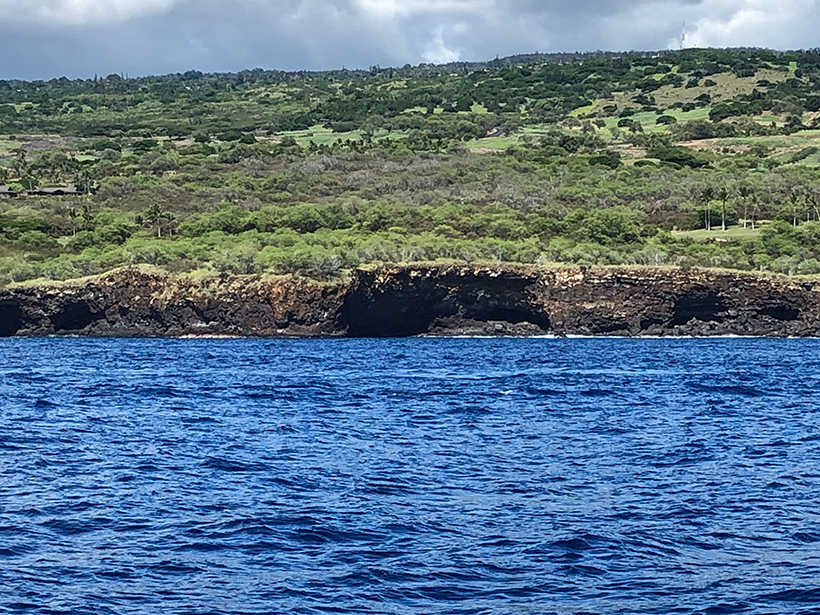
View from the water of lava tubes along the coast of Hawaiʻi near Hualalai volcano
Posted inScience Updates

Deep Submarine Fresh Water: A New Resource for Volcanic Islands?

by E. Attias, S. Constable, B. Taylor and D. Thomas 23 March 202129 September 2021

The discovery of large freshwater reservoirs off Hawaii suggests that other volcanic islands may have similar resources, which could help meet water demands amid population growth and climate change.

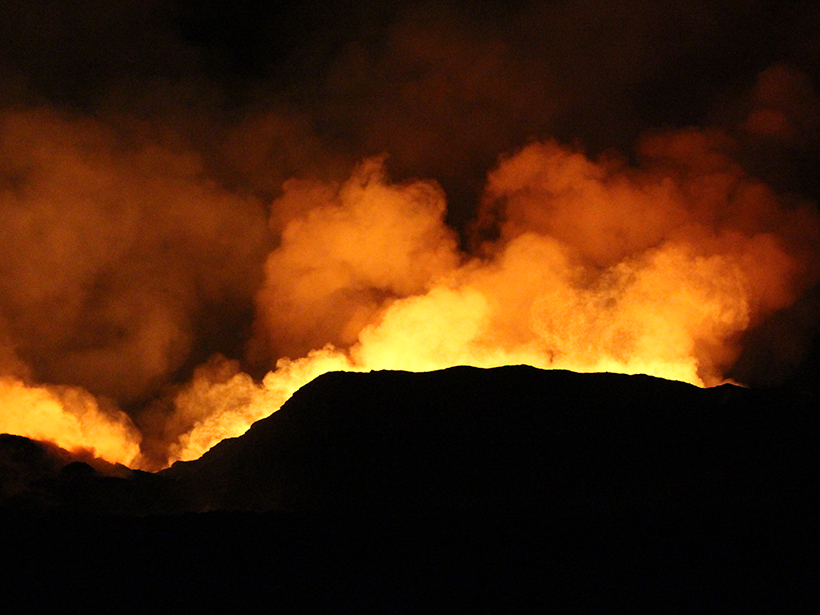
Image of orange and red smoke rising from behind the black banks of a lava channel at night
Posted inNews

Insights from the Depths of Hawaii’s Kīlauea Volcano

Kate Wheeling, freelance science writer by Kate Wheeling 11 March 202122 September 2022

One of the world’s best monitored and most active volcanos still has secrets to yield, and researchers are turning to vapor bubbles trapped in melt inclusions to find them.

A film crew interviews a scientist in Haleakalā National Park, Maui, Hawaiʻi
Posted inScience Updates

A Tried-and-True Medium to Broaden the Reach of Science

by K. Duncan Seraphin 11 January 202110 March 2023

Television programming reaches broad, diverse audiences, but scientists must help tell their own stories and speak to the communities in which they live.

Scientists stand at the crater rim at Kīlauea Volcano on 26 October 2019
Posted inFeatures

From Lava to Water: A New Era at Kīlauea

by P. A. Nadeau, A. K. Diefenbach, S. Hurwitz and D. A. Swanson 25 September 20204 October 2021

At Kīlauea Volcano, scientists are using unoccupied aircraft to monitor the new water lake, a possible harbinger of explosive activity, that formed after the volcano’s 2018 eruption.

An explosion from Kīlauea Volcano’s summit sends an ash plume into the sky on 27 May 2018.
Posted inResearch Spotlights

Fault Dips Figured in Kīlauea’s Caldera Collapse

by David Shultz 6 January 20206 October 2021

Large-volume volcanic eruptions can create instabilities in the ground above magma chambers, leading to massive collapses and telltale calderas.

Photograph of scientists Stacey Sueoka and David Harrington at the new Daniel K. Inouye Solar Telescope.
Posted inNews

Looking Straight at the Sun

Lucas Joel by L. Joel 19 July 201920 December 2021

Thanks to some crucial calibrations, the world’s biggest solar telescope will have a clearer view of the Sun.
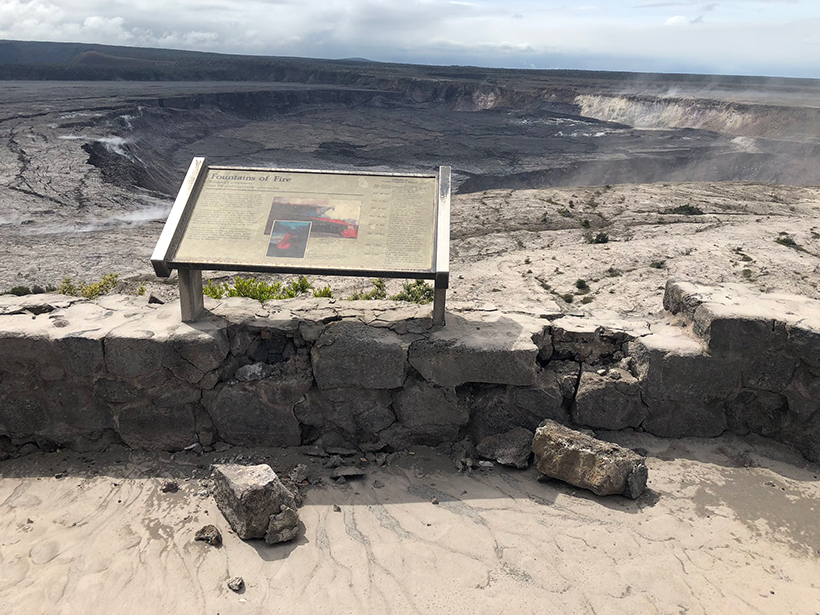
Charred and crumbling caldera overlook labeled Fountains of Fire
Posted inNews

Hawaiian Volcano Observatory Searches for a New Home

Ilima Loomis, Science Writer by Ilima Loomis 12 April 201917 January 2023

Seismic activity during the eruption of Kīlauea damaged the Hawaiian Volcano Observatory beyond repair. Now officials are looking for a new site.
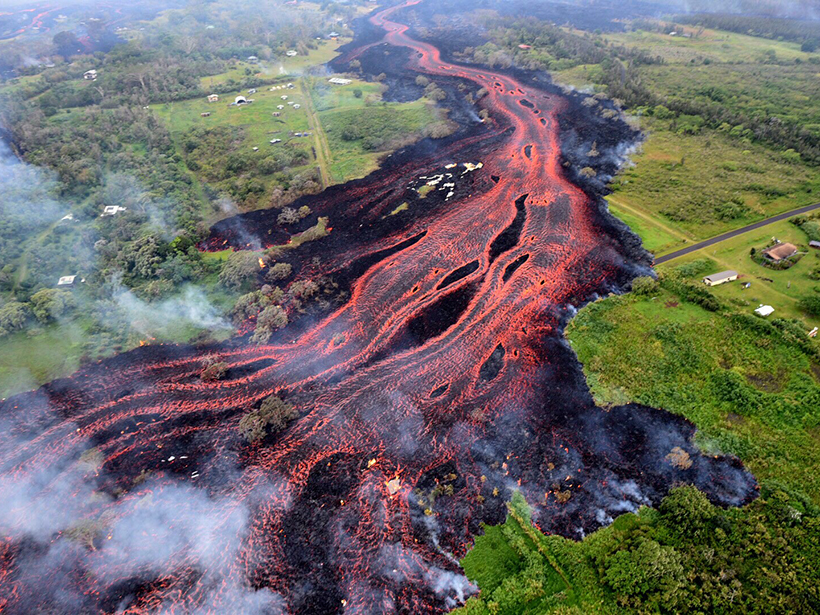
A lava flow rolls down Kīlauea in Hawaii
Posted inResearch Spotlights

A New Tool for Studying Volcanic Eruptions Like Kīlauea

by E. Underwood 9 January 20192 May 2022

A new study sheds light on how magma erodes the conduit it flows through.

A 7 August overflight showed weakly bubbling lava at Kīlauea’s fissure 8, a significant change from flows in prior weeks.
Posted inNews

Kīlauea Eruption Abruptly Slows Down

Ilima Loomis, Science Writer by Ilima Loomis 9 August 20182 May 2022

Volcanologists say it’s too soon to know whether the sudden drop in activity signals the end of the eruption or just a pause.

Lava bursts from a fissure on the flanks of Kīlauea volcano
Posted inFeatures

Four Ways Kīlauea Is Redrawing the Map

Ilima Loomis, Science Writer by Ilima Loomis 27 July 20185 October 2021

From burying communities to building new land, this historic eruption is changing the landscape of Hawai‘i Island.

Posts pagination

Newer posts 1 2 3 4 5 6 Older posts
Over a dark blue-green square appear the words Special Report: The State of the Science 1 Year On.

Features from AGU Publications

Research Spotlights

Our Ocean’s “Natural Antacids” Act Faster Than We Thought

30 January 202630 January 2026
Editors' Highlights

Visualizing and Hearing the Brittle–Plastic Transition

3 February 20263 February 2026
Editors' Vox

Tsunamis from the Sky

3 February 20263 February 2026
Eos logo at left; AGU logo at right

About Eos
ENGAGE
Awards
Contact

Advertise
Submit
Career Center
Sitemap

© 2026 American Geophysical Union. All rights reserved Powered by Newspack