• About
  • Special Reports
  • Topics
    • Climate
    • Earth Science
    • Oceans
    • Space & Planets
    • Health & Ecosystems
    • Culture & Policy
    • Education & Careers
    • Opinions
  • Projects
    • Postcards From the Field
    • ENGAGE
    • Editors’ Highlights
    • Editors’ Vox
    • Eos en Español
    • Eos 简体中文版
    • Print Archive: 2015–2025
  • Policy Tracker
  • Blogs
    • Research & Developments
    • The Landslide Blog
  • Newsletter
  • Submit to Eos
  • AGU.org
  • Career Center
  • Join AGU
  • Give to AGU
  • About
  • Special Reports
  • Topics
    • Climate
    • Earth Science
    • Oceans
    • Space & Planets
    • Health & Ecosystems
    • Culture & Policy
    • Education & Careers
    • Opinions
  • Projects
    • Postcards From the Field
    • ENGAGE
    • Editors’ Highlights
    • Editors’ Vox
    • Eos en Español
    • Eos 简体中文版
    • Print Archive: 2015–2025
  • Policy Tracker
  • Blogs
    • Research & Developments
    • The Landslide Blog
  • Newsletter
  • Submit to Eos
Skip to content
  • AGU.org
  • Career Center
  • Join AGU
  • Give to AGU
Eos

Eos

Science News by AGU

Support Eos
Sign Up for Newsletter
  • About
  • Special Reports
  • Topics
    • Climate
    • Earth Science
    • Oceans
    • Space & Planets
    • Health & Ecosystems
    • Culture & Policy
    • Education & Careers
    • Opinions
  • Projects
    • Postcards From the Field
    • ENGAGE
    • Editors’ Highlights
    • Editors’ Vox
    • Eos en Español
    • Eos 简体中文版
    • Print Archive: 2015–2025
  • Policy Tracker
  • Blogs
    • Research & Developments
    • The Landslide Blog
  • Newsletter
  • Submit to Eos

Himalayas

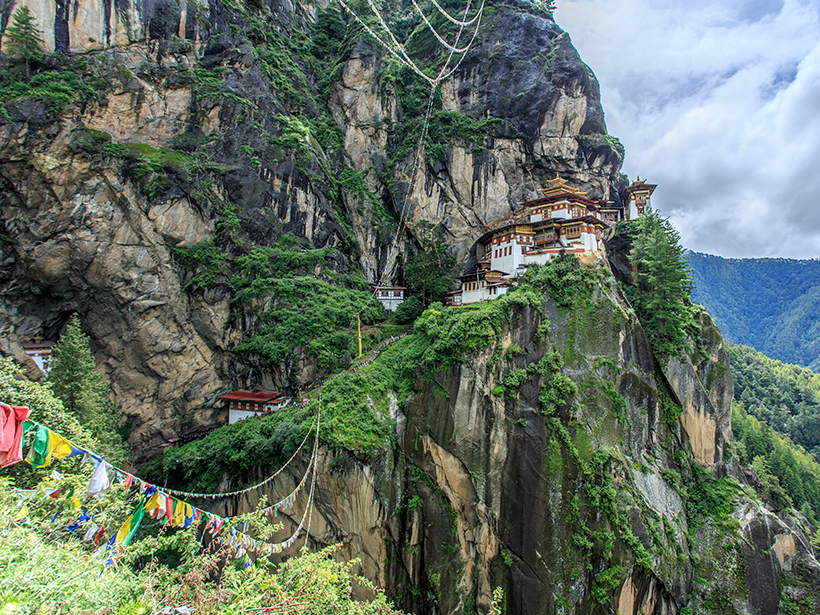
Taktsang, also known as the Tiger’s Nest, is a famous cliffside monastery in western Bhutan.
Posted inScience Updates

Bhutan Earthquake Opens Doors to Geophysical Studies

by G. Hetényi, R. Cattin and D. Drukpa 13 August 201828 October 2021

A multinational research team discovered an underestimated earthquake hazard during their 7-year exploration of the unique geodynamics of the eastern Himalayas in Bhutan.

A new method combines elevation change with other data to estimate debris thickness on glaciers
Posted inResearch Spotlights

A Novel Way to Map Debris Thickness on Himalayan Glaciers

by Terri Cook 29 May 20187 February 2023

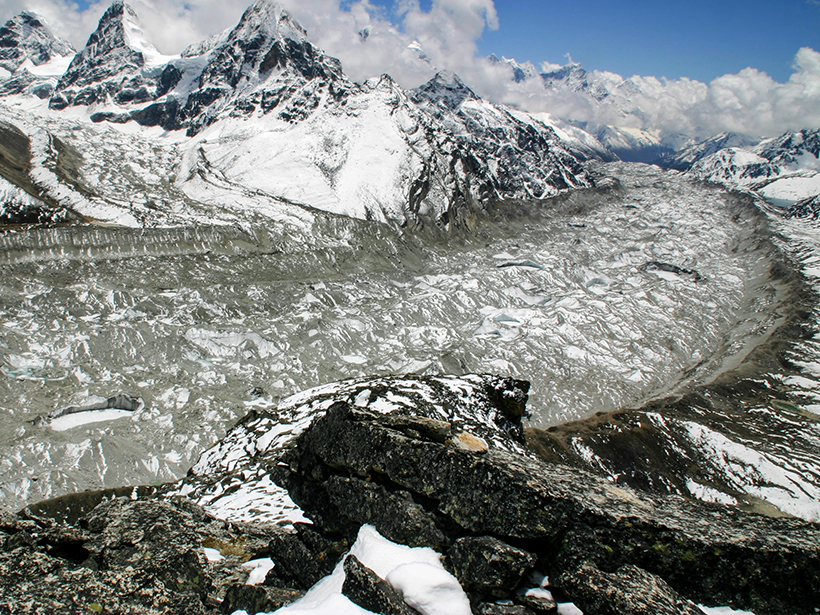
By combining changes in elevation with other data, scientists have developed a method for estimating the thickness of debris covering glaciers on whose water more than 800 million people depend.

Imja Lake—the long, silty lake in this 2010 photo—has grown in front of Imja and Lhotse Shar glaciers (top right) in the Himalayas.
Posted inNews

Satellite Data Archives Reveal Unrecorded Himalayan Floods

Katherine Kornei, Science Writer by Katherine Kornei 8 May 201819 October 2021

Almost 30 years’ worth of Landsat observations created a comprehensive inventory of catastrophic floods caused by glacial lakes bursting through their rock dams.
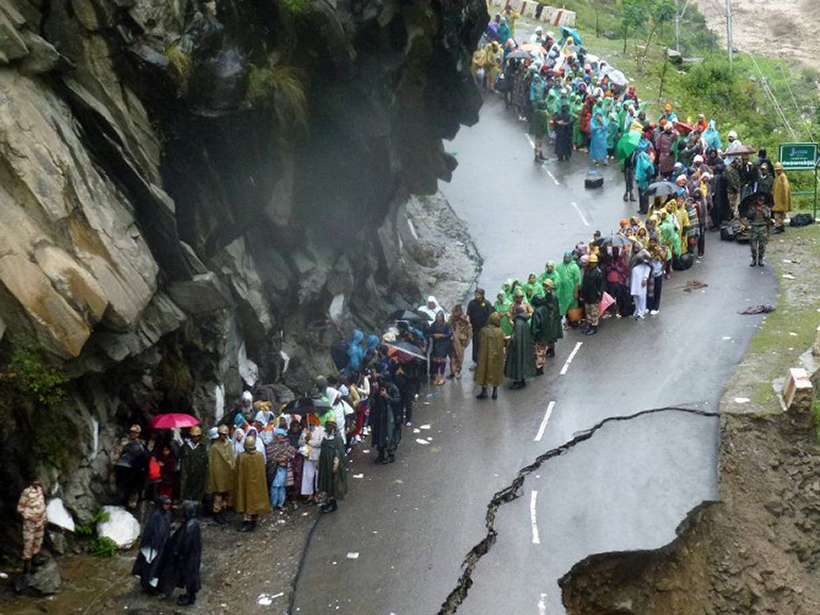
Researchers improve climate models by including Himalayan topography and land-atmosphere interactions.
Posted inResearch Spotlights

A Better Way to Predict the Indian Monsoon

by E. Underwood 4 May 201815 February 2023

A new study finds that including Himalayan topography and land-atmosphere interactions improves climate models.
Posted inEditors' Vox

Hot Water, Cold Ice

by B. Hubbard 14 September 201711 April 2023

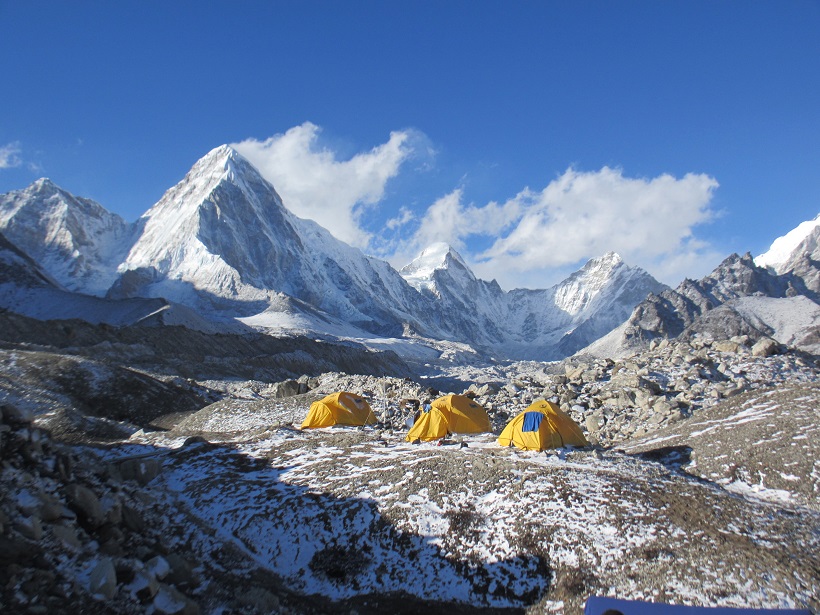
Despite careful planning, there can be many uncertainties and unknowns about doing field research in remote locations.

Deformed and metamorphosed rocks may be left over from subduction processes during the growth of the Himalaya
Posted inResearch Spotlights

Unraveling the History of the India-Asia Collision

by Terri Cook 15 May 201713 April 2022

A study of deformed and metamorphosed rocks exposed in Tibet’s Lopu Range suggests that episodes of crustal shortening and extension during the evolution of the Himalaya are related to subduction processes.
Posted inEditors' Vox

Competing Models of Mountain Formation Reconciled

by A. Parsons 8 May 201724 March 2023

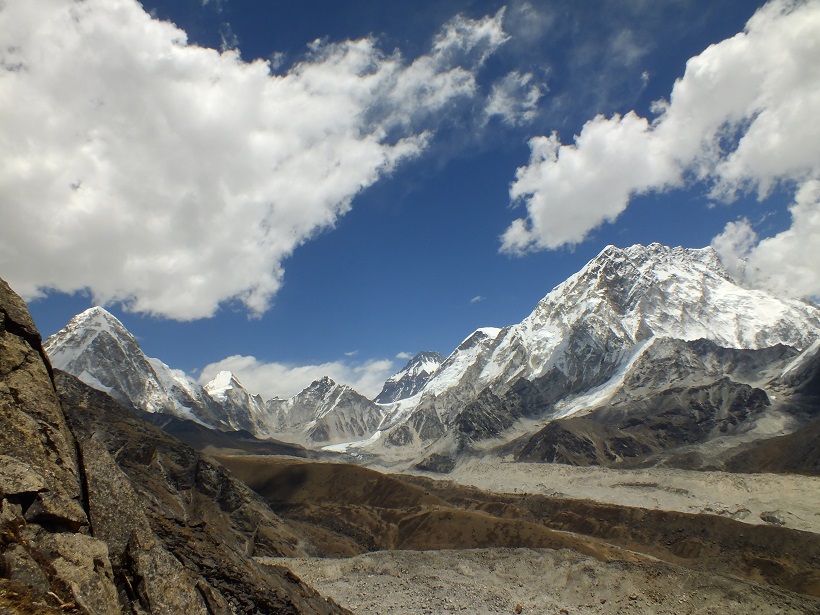
The author of a prize-winning paper published in Geochemistry, Geophysics, Geosystems describes new insights into crustal mechanics and the formation of the Himalaya.

Himalayan peaks near Namche Bazar in northeastern Nepal within a region called the Third Pole.
Posted inScience Updates

Himalayan Climate Change Affects Regional, Global Environments

by M. E. Guelld Joswiak, D. Joswiak and T. Yao 15 March 201731 January 2022

6th Third Pole Environment (TPE) Workshop; Columbus, Ohio, 16–18 May 2016

Posted inScience Updates

Forecasting India's Water Future

by M. d. S. Mesquita, V. Veldore, L. Li, R. Krishnan, Y. Orsolini, R. Senan, M. V. S. Ramarao and E. Viste 31 March 201626 October 2022

The NORINDIA project sheds light on how climate change could affect monsoons, droughts, and glaciers in northern India.
Posted inNews

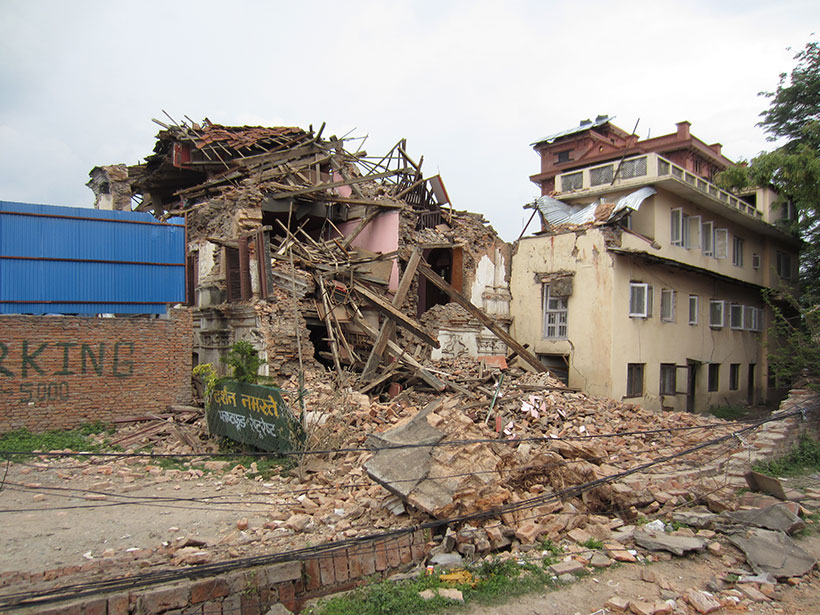
Scientist's Field Season Ends with Nepal Quake

Nanci Bompey, assistant director of AGU’s media relations department by N. Bompey 12 May 20158 December 2022

A graduate student studying tectonics found himself caught in a disaster at the end of fieldwork in the Himalayas.

Posts pagination

Newer posts 1 … 7 8 9 10 Older posts
Over a dark blue-green square appear the words Special Report: The State of the Science 1 Year On.

Features from AGU Publications

Research Spotlights

Mapping Childhood Lead Exposure Risk in the United States, Neighborhood by Neighborhood

8 October 20268 October 2026
Editors' Highlights

Limits of Satellite Detection of Extreme Carbon Cycle Events

7 October 20267 October 2026
Editors' Vox

Where Fire Ends, Chemistry Begins

30 September 202630 September 2026
Eos logo at left; AGU logo at right

About Eos
ENGAGE
Awards
Contact

Advertise
Submit
Career Center
Sitemap

© 2026 American Geophysical Union. All rights reserved Powered by Newspack