• About
  • Sections
  • Topics
    • Climate
    • Earth Science
    • Oceans
    • Space & Planets
    • Health & Ecosystems
    • Culture & Policy
    • Education & Careers
    • Opinions
  • Projects
    • ENGAGE
    • Editors’ Highlights
    • Editors’ Vox
    • Eos en Español
    • Eos 简体中文版
    • Print Archive
  • Science Policy Tracker
  • Blogs
    • Research & Developments
    • The Landslide Blog
  • Newsletter
  • Submit to Eos
  • AGU.org
  • Career Center
  • Join AGU
  • Give to AGU
  • About
  • Sections
  • Topics
    • Climate
    • Earth Science
    • Oceans
    • Space & Planets
    • Health & Ecosystems
    • Culture & Policy
    • Education & Careers
    • Opinions
  • Projects
    • ENGAGE
    • Editors’ Highlights
    • Editors’ Vox
    • Eos en Español
    • Eos 简体中文版
    • Print Archive
  • Science Policy Tracker
  • Blogs
    • Research & Developments
    • The Landslide Blog
  • Newsletter
  • Submit to Eos
Skip to content
  • AGU.org
  • Career Center
  • Join AGU
  • Give to AGU
Eos

Eos

Science News by AGU

Support Eos
Sign Up for Newsletter
  • About
  • Sections
  • Topics
    • Climate
    • Earth Science
    • Oceans
    • Space & Planets
    • Health & Ecosystems
    • Culture & Policy
    • Education & Careers
    • Opinions
  • Projects
    • ENGAGE
    • Editors’ Highlights
    • Editors’ Vox
    • Eos en Español
    • Eos 简体中文版
    • Print Archive
  • Science Policy Tracker
  • Blogs
    • Research & Developments
    • The Landslide Blog
  • Newsletter
  • Submit to Eos

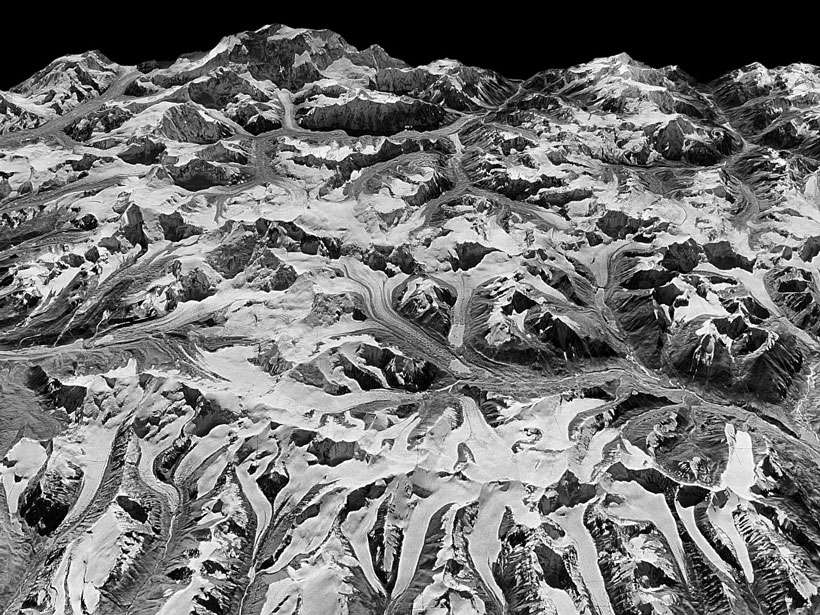
Himalayas

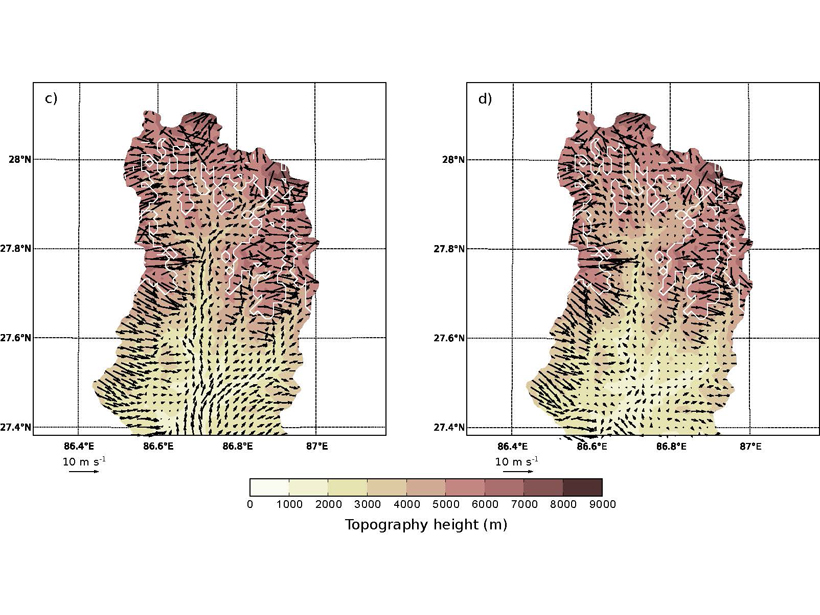
Researchers improve climate models by including Himalayan topography and land-atmosphere interactions.
Posted inResearch Spotlights

A Better Way to Predict the Indian Monsoon

by E. Underwood 4 May 201815 February 2023

A new study finds that including Himalayan topography and land-atmosphere interactions improves climate models.

Posted inEditors' Vox

Hot Water, Cold Ice

by B. Hubbard 14 September 201711 April 2023

Despite careful planning, there can be many uncertainties and unknowns about doing field research in remote locations.

Deformed and metamorphosed rocks may be left over from subduction processes during the growth of the Himalaya
Posted inResearch Spotlights

Unraveling the History of the India-Asia Collision

by Terri Cook 15 May 201713 April 2022

A study of deformed and metamorphosed rocks exposed in Tibet’s Lopu Range suggests that episodes of crustal shortening and extension during the evolution of the Himalaya are related to subduction processes.

Posted inEditors' Vox

Competing Models of Mountain Formation Reconciled

by A. Parsons 8 May 201724 March 2023

The author of a prize-winning paper published in Geochemistry, Geophysics, Geosystems describes new insights into crustal mechanics and the formation of the Himalaya.

Himalayan peaks near Namche Bazar in northeastern Nepal within a region called the Third Pole.
Posted inScience Updates

Himalayan Climate Change Affects Regional, Global Environments

by M. E. Guelld Joswiak, D. Joswiak and T. Yao 15 March 201731 January 2022

6th Third Pole Environment (TPE) Workshop; Columbus, Ohio, 16–18 May 2016

Posted inScience Updates

Forecasting India's Water Future

by M. d. S. Mesquita, V. Veldore, L. Li, R. Krishnan, Y. Orsolini, R. Senan, M. V. S. Ramarao and E. Viste 31 March 201626 October 2022

The NORINDIA project sheds light on how climate change could affect monsoons, droughts, and glaciers in northern India.

Posted inNews

Scientist's Field Season Ends with Nepal Quake

Nanci Bompey, assistant director of AGU’s media relations department by N. Bompey 12 May 20158 December 2022

A graduate student studying tectonics found himself caught in a disaster at the end of fieldwork in the Himalayas.

Posted inScience Updates

Advancing Multinational Research in the Highest Mountain Regions

by D. Joswiak, M. E. Guelld Joswiak and T. Yao 16 April 201531 January 2022

5th Third Pole Environment Workshop; Berlin, Germany, 8–9 December 2014

Posts pagination

Newer posts 1 … 6 7 8
A view of a bridge, with the New Orleans skyline visible in the distance between the bridge and the water. A purple tint, a teal curved line representing a river, and the text “#AGU25 coverage from Eos” overlie the photo.

Features from AGU Publications

Research Spotlights

An Ecosystem Never Forgets

19 December 202519 December 2025
Editors' Highlights

Frictional Properties of the Nankai Accretionary Prism

11 December 20259 December 2025
Editors' Vox

Hydrothermal Circulation and Its Impact on the Earth System

3 December 20253 December 2025
Eos logo at left; AGU logo at right

About Eos
ENGAGE
Awards
Contact

Advertise
Submit
Career Center
Sitemap

© 2025 American Geophysical Union. All rights reserved Powered by Newspack