• About
  • Special Reports
  • Topics
    • Climate
    • Earth Science
    • Oceans
    • Space & Planets
    • Health & Ecosystems
    • Culture & Policy
    • Education & Careers
    • Opinions
  • Projects
    • Postcards From the Field
    • ENGAGE
    • Editors’ Highlights
    • Editors’ Vox
    • Eos en Español
    • Eos 简体中文版
    • Print Archive: 2015–2025
  • Policy Tracker
  • Blogs
    • Research & Developments
    • The Landslide Blog
  • Newsletter
  • Submit to Eos
  • AGU.org
  • Career Center
  • Join AGU
  • Give to AGU
  • About
  • Special Reports
  • Topics
    • Climate
    • Earth Science
    • Oceans
    • Space & Planets
    • Health & Ecosystems
    • Culture & Policy
    • Education & Careers
    • Opinions
  • Projects
    • Postcards From the Field
    • ENGAGE
    • Editors’ Highlights
    • Editors’ Vox
    • Eos en Español
    • Eos 简体中文版
    • Print Archive: 2015–2025
  • Policy Tracker
  • Blogs
    • Research & Developments
    • The Landslide Blog
  • Newsletter
  • Submit to Eos
Skip to content
  • AGU.org
  • Career Center
  • Join AGU
  • Give to AGU
Eos

Eos

Science News by AGU

Support Eos
Sign Up for Newsletter
  • About
  • Special Reports
  • Topics
    • Climate
    • Earth Science
    • Oceans
    • Space & Planets
    • Health & Ecosystems
    • Culture & Policy
    • Education & Careers
    • Opinions
  • Projects
    • Postcards From the Field
    • ENGAGE
    • Editors’ Highlights
    • Editors’ Vox
    • Eos en Español
    • Eos 简体中文版
    • Print Archive: 2015–2025
  • Policy Tracker
  • Blogs
    • Research & Developments
    • The Landslide Blog
  • Newsletter
  • Submit to Eos

Journal of Geophysical Research: Oceans

Visit the journal.

Image of the North Atlantic Ocean
Posted inResearch Spotlights

Nonlinear Effects of Wind on Atlantic Ocean Circulation

by Jack Lee 11 January 20222 July 2024

Simulations reveal the influence of reduced and enhanced wind stress on the Atlantic Meridional Overturning Circulation.
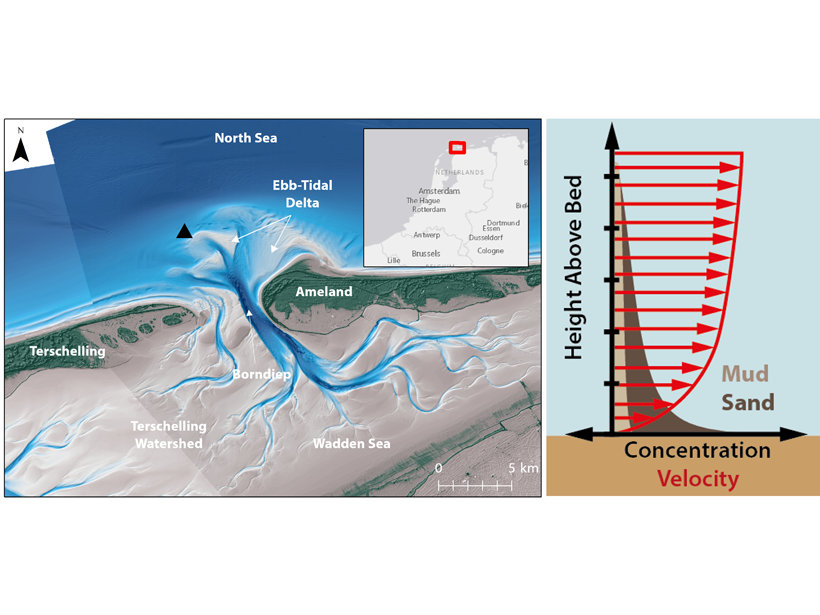
Map showing location of study area (left) and conceptual model of tidally driven mixed sand–mud sediment transport at flood tide (right).
Posted inEditors' Highlights

Unravelling Sands and Muds Suspended in Coastal Environments

by Ryan P. Mulligan 26 July 202129 June 2022

A new study uses the response of optical and acoustic measurements to derive a sediment composition index for prediction of the relative fractions of mixed sediments in suspension.

A world map showing relative shipping density
Posted inResearch Spotlights

Monitoring the Agulhas Current Through Maritime Traffic

Kate Wheeling, freelance science writer by Kate Wheeling 28 June 202116 December 2021

Researchers turn to the shipping industry for data on ocean surface currents.

Imagen mostrando bolsas y otros restos de plástico flotando en el océano.
Posted inResearch Spotlights

Rastreando cómo se mueve el plástico en el océano costero

Kate Wheeling, freelance science writer by Kate Wheeling 3 March 202124 February 2023

Investigadores utilizaron un tanque de olas para estudiar el movimiento de partículas de plástico de forma experimental y comprender el papel de la densidad de partículas en el comportamiento de deriva.
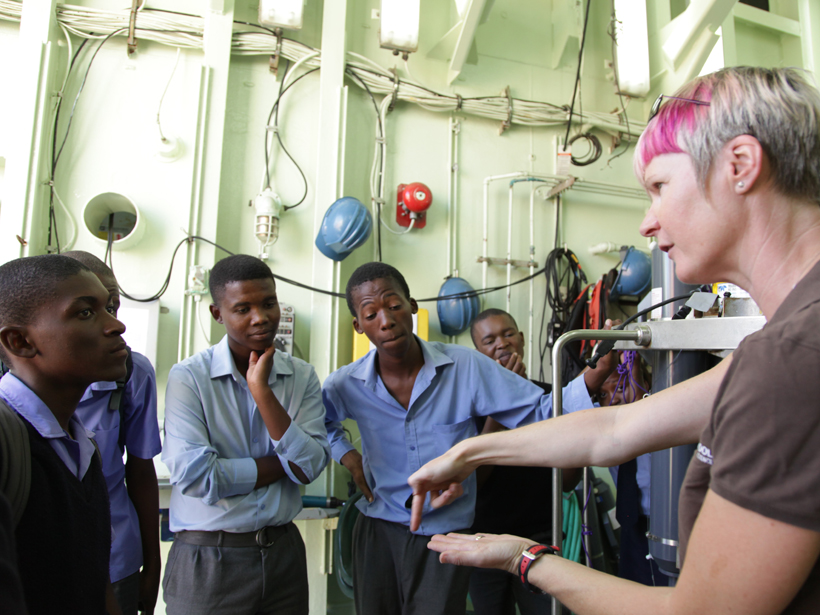
Photograph of Lisa Beal giving a tour aboard RV Knorr
Posted inEditors' Vox

Introducing the New Editor in Chief of JGR: Oceans

by L. Beal 25 February 202121 October 2022

Find out about the person taking the helm of Journal of Geophysical Research: Oceans and her vision for the coming years.
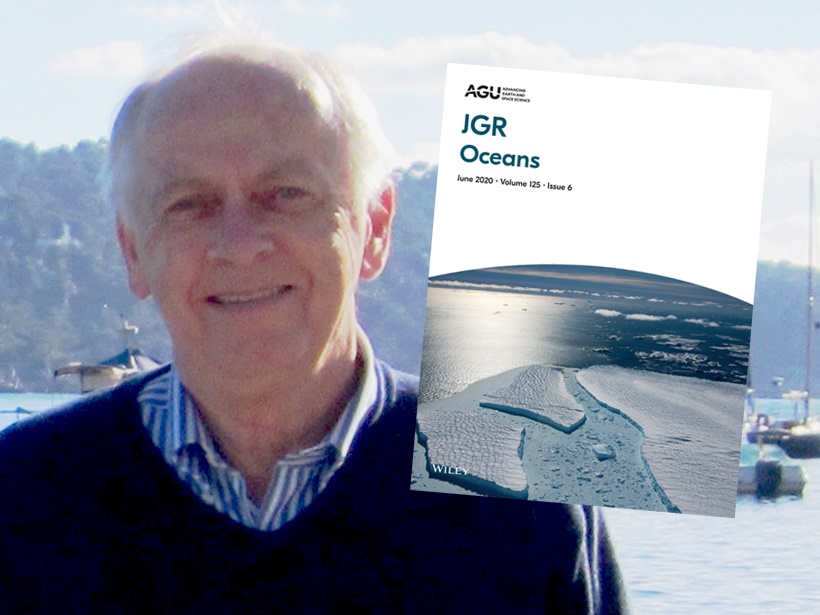
A picture of Peter Brewer and a JGR: Oceans cover
Posted inEditors' Vox

The View from Six Years Atop the Masthead of JGR: Oceans

by P. Brewer 25 February 202112 January 2023

The outgoing editor in chief of JGR: Oceans reflects on his tenure and developments in ocean science research over recent years.

Posted inEditors' Highlights

Wind Stress is not the Ceiling of Momentum Flux to the Ocean

by Lei Zhou 15 February 202116 September 2022

The ocean is mainly driven by wind stress, but simultaneous observations show that the gain of momentum flux by the ocean can be larger than the wind stress due to the influence of ocean waves.

Plastic debris floats near the ocean surface, as seen from underwater
Posted inResearch Spotlights

Tracking How Plastic Moves in the Coastal Ocean

Kate Wheeling, freelance science writer by Kate Wheeling 21 December 20203 November 2021

Researchers used a wave tank to study the movement of plastic particles experimentally and to understand the role of particle density in drift behavior.

Kelp in Monterey Bay, Calif., is seen from below the water surface
Posted inResearch Spotlights

Acidifying Oceans Could Get Help from Kelp

Elizabeth Thompson by Elizabeth Thompson 30 November 202014 December 2023

Forests of fast-growing kelp influence the chemistry of the water in which they live. A new study evaluates their potential to ameliorate ocean acidification in sensitive coastal ecosystems.

A yellow submarine glider floats on the ocean surface.
Posted inResearch Spotlights

Autonomous Minisubmarine Measures Seawater Conditions

by Terri Cook 23 November 202027 September 2022

Forecasts of carbonate chemistry in coastal ecosystems determined from seasonal robotic measurements can improve fisheries management and help mitigate short-term ocean acidification events.

Posts pagination

Newer posts 1 … 5 6 7 8 9 … 16 Older posts
Over a dark blue-green square appear the words Special Report: The State of the Science 1 Year On.

Features from AGU Publications

Research Spotlights

Did Ocean Motion Carve Enceladus’s Tiger Stripes?

26 August 202626 August 2026
Editors' Highlights

Long-Term Datasets are Essential to Understanding Coastal Change

26 August 202618 August 2026
Editors' Vox

Climate Model Benchmarking: Building Trust and Advancing Science

24 August 202624 August 2026
Eos logo at left; AGU logo at right

About Eos
ENGAGE
Awards
Contact

Advertise
Submit
Career Center
Sitemap

© 2026 American Geophysical Union. All rights reserved Powered by Newspack