• About
  • Sections
  • Topics
    • Climate
    • Earth Science
    • Oceans
    • Space & Planets
    • Health & Ecosystems
    • Culture & Policy
    • Education & Careers
    • Opinions
  • Projects
    • ENGAGE
    • Editors’ Highlights
    • Editors’ Vox
    • Eos en Español
    • Eos 简体中文版
    • Print Archive: 2015–2025
  • Science Policy Tracker
  • Blogs
    • Research & Developments
    • The Landslide Blog
  • Newsletter
  • Submit to Eos
  • AGU.org
  • Career Center
  • Join AGU
  • Give to AGU
  • About
  • Sections
  • Topics
    • Climate
    • Earth Science
    • Oceans
    • Space & Planets
    • Health & Ecosystems
    • Culture & Policy
    • Education & Careers
    • Opinions
  • Projects
    • ENGAGE
    • Editors’ Highlights
    • Editors’ Vox
    • Eos en Español
    • Eos 简体中文版
    • Print Archive: 2015–2025
  • Science Policy Tracker
  • Blogs
    • Research & Developments
    • The Landslide Blog
  • Newsletter
  • Submit to Eos
Skip to content
  • AGU.org
  • Career Center
  • Join AGU
  • Give to AGU
Eos

Eos

Science News by AGU

Support Eos
Sign Up for Newsletter
  • About
  • Sections
  • Topics
    • Climate
    • Earth Science
    • Oceans
    • Space & Planets
    • Health & Ecosystems
    • Culture & Policy
    • Education & Careers
    • Opinions
  • Projects
    • ENGAGE
    • Editors’ Highlights
    • Editors’ Vox
    • Eos en Español
    • Eos 简体中文版
    • Print Archive: 2015–2025
  • Science Policy Tracker
  • Blogs
    • Research & Developments
    • The Landslide Blog
  • Newsletter
  • Submit to Eos

Journal of Geophysical Research: Planets

Visit the journal.

Unnamed crater in eastern Hesperia Planum, Mars.
Posted inResearch Spotlights

Martian Carbonates Spotted by the Orbiter

Kate Wheeling, freelance science writer by Kate Wheeling 3 May 201628 July 2022

The minerals identified by the Mars Reconnaissance Orbiter provide more evidence that the planet may have once been habitable.
Posted inResearch Spotlights

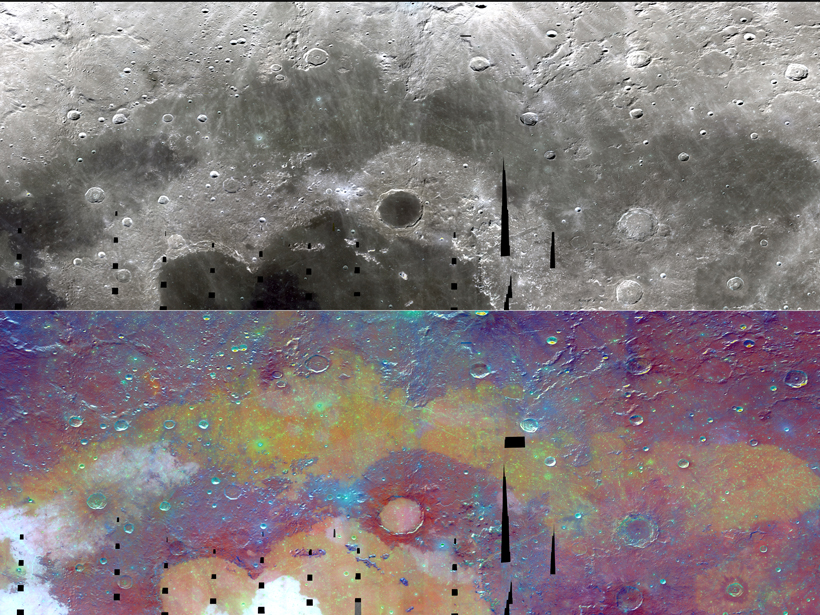
Satellites Reveal the History of the Moon's "Frigid Sea"

by Terri Cook 25 January 201628 July 2022

The history of aluminum-rich basalts in Mare Frigoris may help scientists better understand the evolution of the lunar mantle.

Posted inResearch Spotlights

Curiosity Rover Finds Organic Molecules on Martian Surface

by David Shultz 12 October 201524 April 2024

Scientists assess the present and past habitability of Mars from organic compounds detected at Gale Crater.
Posted inResearch Spotlights

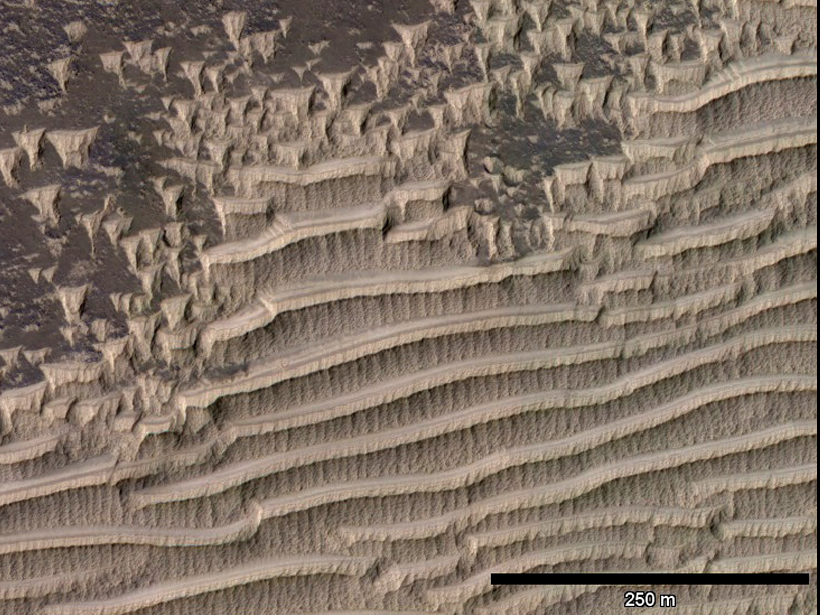
What Formed These Curious Ripples on Mars?

by C. Minnehan 18 September 20156 March 2023

Dunes, ridges, or something else? Scientists seek to understand the origins of transverse aeolian ridges.

Posted inAGU News

New Editors for AGU Journals

by J. Panning 28 October 201430 May 2023

AGU announces new editors for several of its journals.

Posts pagination

Newer posts 1 … 13 14 15
A view of a bridge, with the New Orleans skyline visible in the distance between the bridge and the water. A purple tint, a teal curved line representing a river, and the text “#AGU25 coverage from Eos” overlie the photo.

Features from AGU Publications

Research Spotlights

Marine Heat Waves Can Exacerbate Heat and Humidity over Land

2 January 20262 January 2026
Editors' Highlights

Frictional Properties of the Nankai Accretionary Prism

11 December 20259 December 2025
Editors' Vox

Hydrothermal Circulation and Its Impact on the Earth System

3 December 20253 December 2025
Eos logo at left; AGU logo at right

About Eos
ENGAGE
Awards
Contact

Advertise
Submit
Career Center
Sitemap

© 2026 American Geophysical Union. All rights reserved Powered by Newspack