• About
  • Special Reports
  • Topics
    • Climate
    • Earth Science
    • Oceans
    • Space & Planets
    • Health & Ecosystems
    • Culture & Policy
    • Education & Careers
    • Opinions
  • Projects
    • Postcards From the Field
    • ENGAGE
    • Editors’ Highlights
    • Editors’ Vox
    • Eos en Español
    • Eos 简体中文版
    • Print Archive: 2015–2025
  • Policy Tracker
  • Blogs
    • Research & Developments
    • The Landslide Blog
  • Newsletter
  • Submit to Eos
  • AGU.org
  • Career Center
  • Join AGU
  • Give to AGU
  • About
  • Special Reports
  • Topics
    • Climate
    • Earth Science
    • Oceans
    • Space & Planets
    • Health & Ecosystems
    • Culture & Policy
    • Education & Careers
    • Opinions
  • Projects
    • Postcards From the Field
    • ENGAGE
    • Editors’ Highlights
    • Editors’ Vox
    • Eos en Español
    • Eos 简体中文版
    • Print Archive: 2015–2025
  • Policy Tracker
  • Blogs
    • Research & Developments
    • The Landslide Blog
  • Newsletter
  • Submit to Eos
Skip to content
  • AGU.org
  • Career Center
  • Join AGU
  • Give to AGU
Eos

Eos

Science News by AGU

Support Eos
Sign Up for Newsletter
  • About
  • Special Reports
  • Topics
    • Climate
    • Earth Science
    • Oceans
    • Space & Planets
    • Health & Ecosystems
    • Culture & Policy
    • Education & Careers
    • Opinions
  • Projects
    • Postcards From the Field
    • ENGAGE
    • Editors’ Highlights
    • Editors’ Vox
    • Eos en Español
    • Eos 简体中文版
    • Print Archive: 2015–2025
  • Policy Tracker
  • Blogs
    • Research & Developments
    • The Landslide Blog
  • Newsletter
  • Submit to Eos

Journal of Geophysical Research: Solid Earth
Visit the journal.

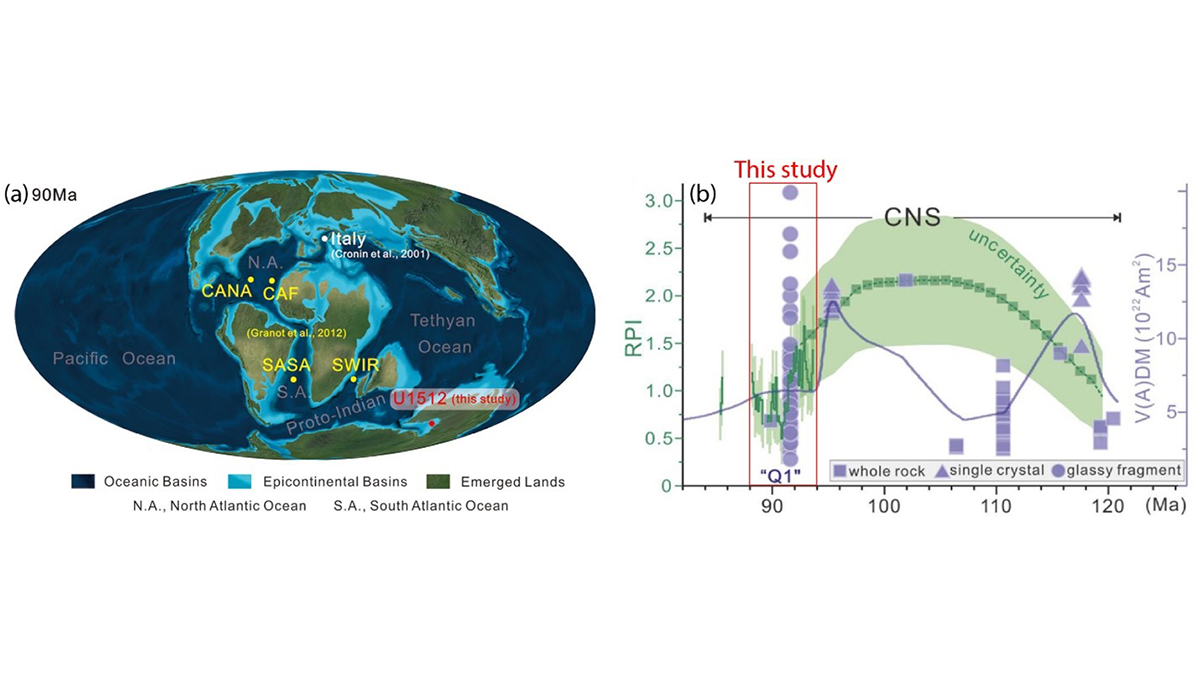
A map and graph from the paper.
Posted inEditors' Highlights

The Not-So-Quiet Cretaceous Quiet Zone

by Bjarne S. G. Almqvist 4 June 20243 June 2024

A new study finds that Earth’s magnetic field intensity varied significantly during the Cretaceous Normal Superchron, providing insights into the operation of the geodynamo during superchrons.
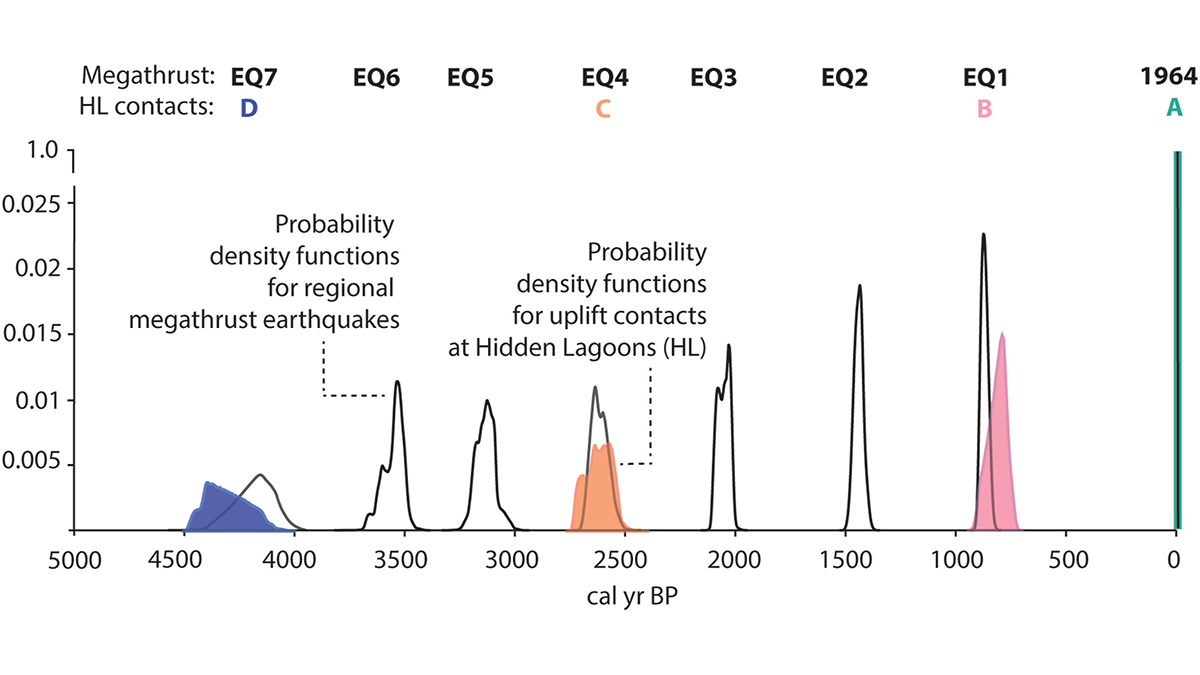
Graph from the paper.
Posted inEditors' Highlights

Repeated Coseismic Uplift Above the Patton Bay Splay Fault, Alaska

by Daniel Melnick 30 May 20243 June 2024

Stratigraphic and diatom analyses suggest ruptures of the Patton Bay splay fault occurred together with half of the documented great Alaskan megathrust earthquakes during the past 4,200 years.

A young man wearing glasses operates an earthquake experiment setup. Four yellow cylinders attached to metallic tubes sit beside a layer of plexiglass held up by wooden columns.
Posted inResearch Spotlights

The Secret to Mimicking Natural Faults? Plexiglass and Teflon

Sarah Derouin, Science Writer by Sarah Derouin 10 May 202413 June 2024

Researchers found an effective way to produce natural fault behavior in the laboratory.

Diagram and graphs from the paper.
Posted inEditors' Highlights

GAD is Enough!

by Daniel Pastor-Galán 10 May 202425 September 2024

An exhaustive study in China finds no need to invoke extreme true polar wander nor anomalous geomagnetic fields in the early Neoproterozoic.

Diagrams from the study
Posted inEditors' Highlights

Greenland Could Have Records of 3.7-billion-year-old Geomagnetic Fields

by Agnes Kontny 7 May 20246 May 2024

Scientists argue that paleomagnetic field tests preserve a geomagnetic field record acquired as chemical remnant magnetization in banded iron formations in southwest Greenland.

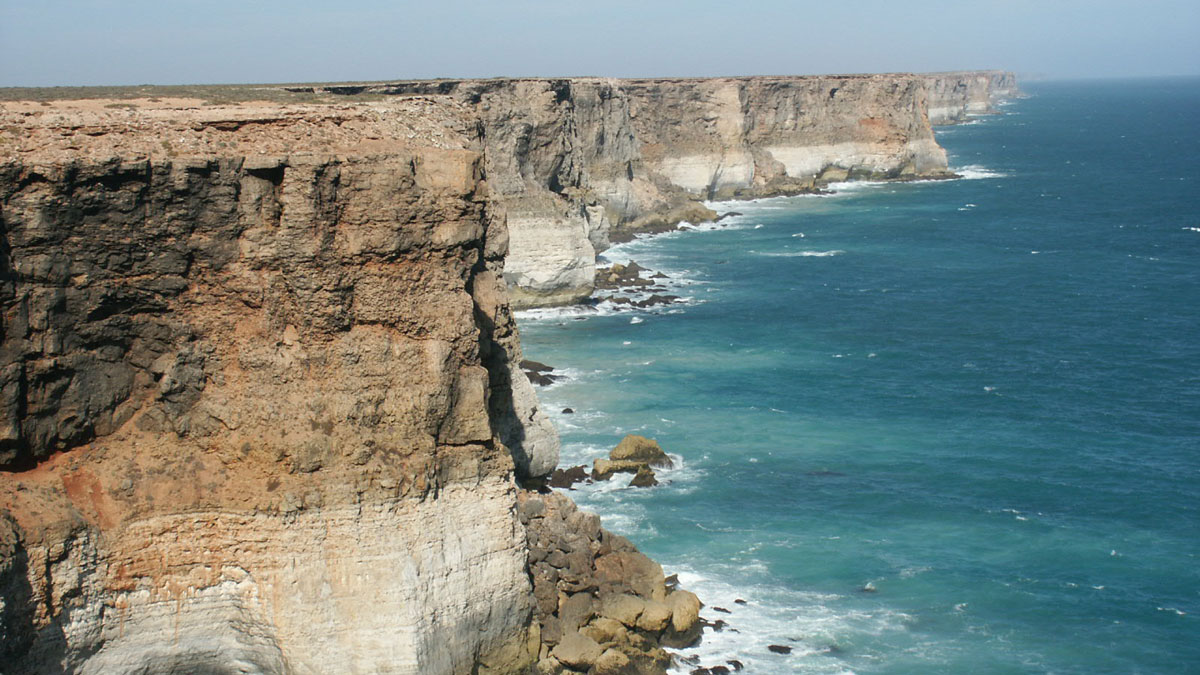
Gray and beige cliffs on the left overlook a blue ocean on the right.
Posted inResearch Spotlights

How Mantle Movements Shape Earth’s Surface

Rachel Fritts, Science Writer by Rachel Fritts 2 May 202418 June 2024

Two new data sets help researchers tease apart the influences of plate tectonics and mantle movement on surface topography.

Diagram from the study.
Posted inEditors' Highlights

Hydraulic Fractures Are Lazy

by Douglas R. Schmitt 19 April 20248 July 2024

The layering of rock masses can help constrain and focus the growth of hydraulic fractures.

Diagram from the paper.
Posted inEditors' Highlights

How Earthquakes Grow from a Tiny Fracture to a Catastrophic Event

by Satoshi Ide 27 March 202422 March 2024

State-of-art numerical simulations illustrate how a small-scale shear instability can become a giant earthquake in a manner that is consistent with seismological observation.

Map of seafloor from the paper.
Posted inEditors' Highlights

What’s Hot in Iceland? A Close Up View of Hotspot-Ridge Interaction

by Lindsay Lowe Worthington 25 March 202425 March 2024

New seafloor magnetic data help scientists retrace the evolution of the Reykjanes Ridge, lending insights into the effects of a mantle plume on mid-ocean ridge organization and evolution.

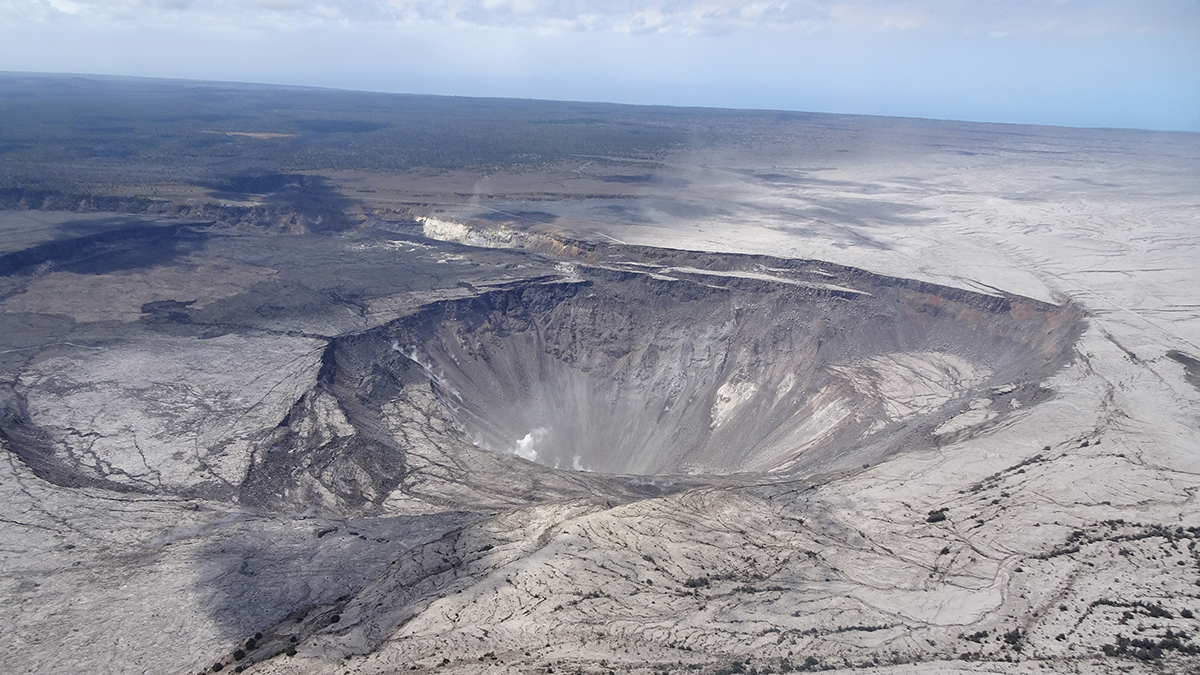
Map of the Hawaiian islands with colors and contour lines overlain.
Posted inEditors' Highlights

A Strong Pacific Plate Bends Under the Hawaiian Volcanic Chain

by Emilie Hooft 14 March 202413 March 2024

Two seismic studies reveal the volcanic loads and resulting flexure of the Pacific plate at the Hawaiian Ridge and, surprisingly, show no magmatic underplating.

Posts pagination

Newer posts 1 … 3 4 5 6 7 … 28 Older posts
Over a dark blue-green square appear the words Special Report: The State of the Science 1 Year On.

Features from AGU Publications

Research Spotlights

How Much Will Western Wildfires Worsen Under Warming?

15 May 202615 May 2026
Editors' Highlights

A Digital Twin for Arctic Permafrost Beneath Roads

8 May 202612 May 2026
Editors' Vox

The Impact of Advocacy: American Geophysical Union’s Days of Action

14 May 202613 May 2026
Eos logo at left; AGU logo at right

About Eos
ENGAGE
Awards
Contact

Advertise
Submit
Career Center
Sitemap

© 2026 American Geophysical Union. All rights reserved Powered by Newspack