• About
  • Sections
  • Topics
    • Climate
    • Earth Science
    • Oceans
    • Space & Planets
    • Health & Ecosystems
    • Culture & Policy
    • Education & Careers
    • Opinions
  • Projects
    • ENGAGE
    • Editors’ Highlights
    • Editors’ Vox
    • Eos en Español
    • Eos 简体中文版
    • Print Archive
  • Science Policy Tracker
  • Blogs
    • Research & Developments
    • The Landslide Blog
  • Newsletter
  • Submit to Eos
  • AGU.org
  • Career Center
  • Join AGU
  • Give to AGU
  • About
  • Sections
  • Topics
    • Climate
    • Earth Science
    • Oceans
    • Space & Planets
    • Health & Ecosystems
    • Culture & Policy
    • Education & Careers
    • Opinions
  • Projects
    • ENGAGE
    • Editors’ Highlights
    • Editors’ Vox
    • Eos en Español
    • Eos 简体中文版
    • Print Archive
  • Science Policy Tracker
  • Blogs
    • Research & Developments
    • The Landslide Blog
  • Newsletter
  • Submit to Eos
Skip to content
  • AGU.org
  • Career Center
  • Join AGU
  • Give to AGU
Eos

Eos

Science News by AGU

Support Eos
Sign Up for Newsletter
  • About
  • Sections
  • Topics
    • Climate
    • Earth Science
    • Oceans
    • Space & Planets
    • Health & Ecosystems
    • Culture & Policy
    • Education & Careers
    • Opinions
  • Projects
    • ENGAGE
    • Editors’ Highlights
    • Editors’ Vox
    • Eos en Español
    • Eos 简体中文版
    • Print Archive
  • Science Policy Tracker
  • Blogs
    • Research & Developments
    • The Landslide Blog
  • Newsletter
  • Submit to Eos

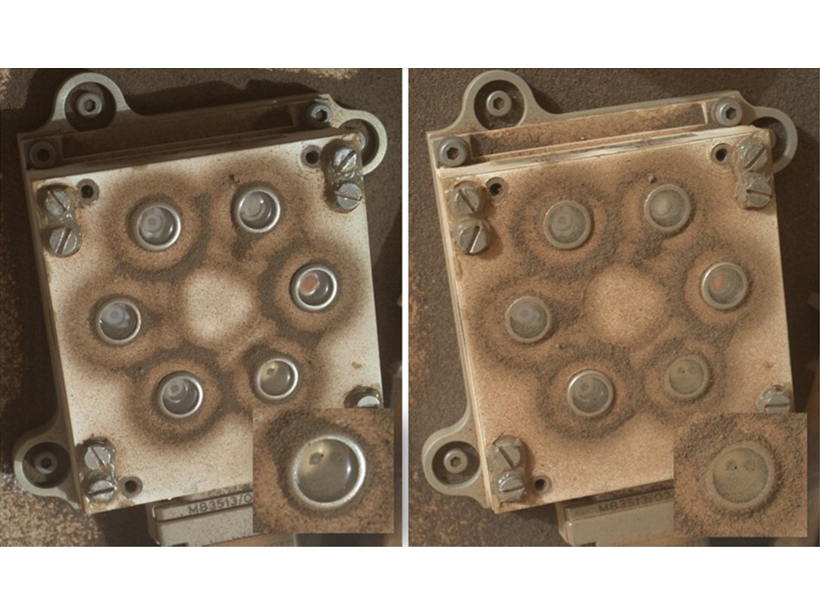
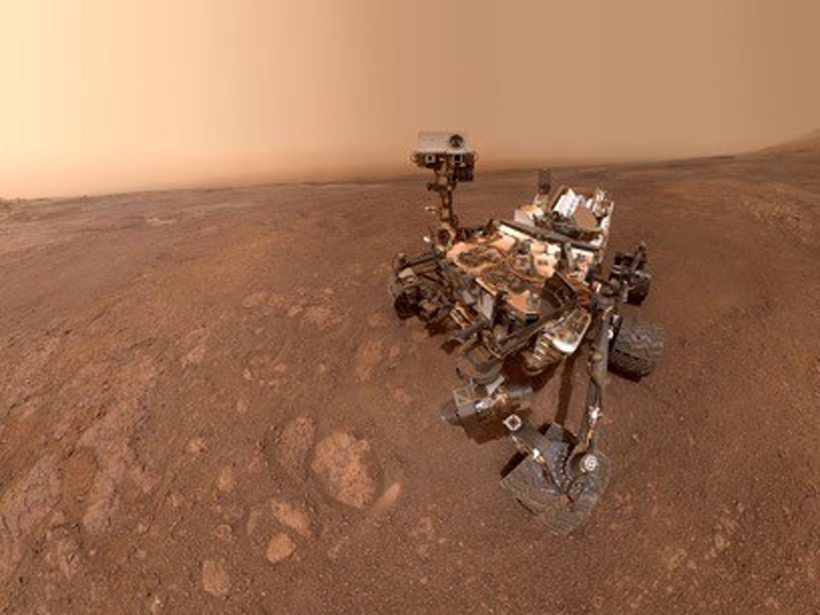
Mars Curiosity Rover

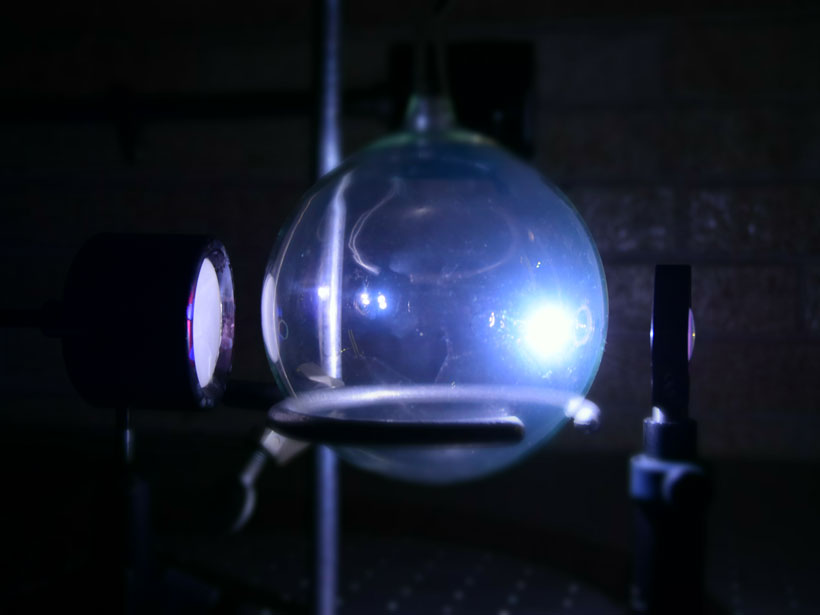
Laboratory experiment used to simulate the shock wave made by an asteroid impact on Mars
Posted inResearch Spotlights

Rover and Lasers Unlock Clues to Early Martian Atmosphere

Aaron Sidder, freelance science writer by Aaron Sidder 3 April 201924 April 2024

Sediments from the Curiosity rover and experiments using tanks of gas and laser beams helped reveal how water continued to flow on Mars after the planet lost its atmospheric carbon dioxide.

Posted inEditors' Vox

A Rover’s Eye View of Moving Martian Dunes

by A. Deanne Rogers and Bethany Ehlmann 21 November 201724 April 2024

A new special issue of JGR: Planets presents findings on sand motion, morphology, and mineralogy from the Curiosity rover’s traverse of the active Bagnold dune field in Gale crater.
Posted inEditors' Vox

Insights into the Habitability of Mars

by M. Rice 15 May 201724 April 2024

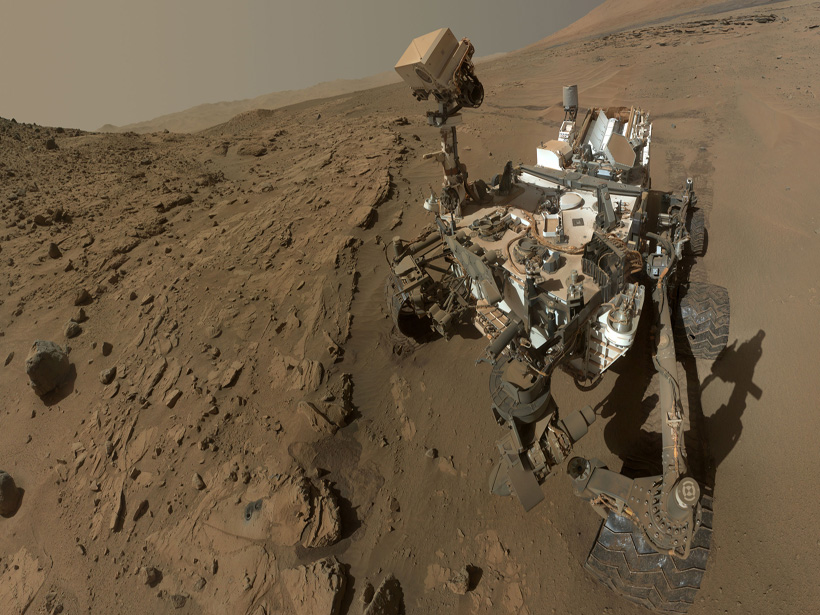
NASA’s Curiosity rover explored the Kimberley region of Mars to search for signs that the planet was once habitable.

Portion of a photo taken by NASA's Curiosity rover while traversing the Kimberly formation on its journey south toward the center of Gale Crater.
Posted inResearch Spotlights

Curiosity Sends Curious Water Data from Mars

Sarah Stanley, Science Writer by Sarah Stanley 8 June 201624 April 2024

The rover's neutron spectroscopy instrument hints at an unexpected trend: The upper soil levels in the layers of Gale Crater's Kimberley formation seem to hold more water-associated hydrogen.

Artist's concept of a rover on the Martian surface.
Posted inAGU News

How on Earth to Decide Where on Mars to Land?

Claire Wilson by C. Wilson 25 May 201624 April 2024

The Public Lecture at AGU's 2016 Fall Meeting will feature three experts—including one still in high school—to discuss landing site selection for the Mars 2020 rover.
Posted inScience Updates

Where Curiosity Has Taken Us

by A. R. Vasavada 12 January 201624 April 2024

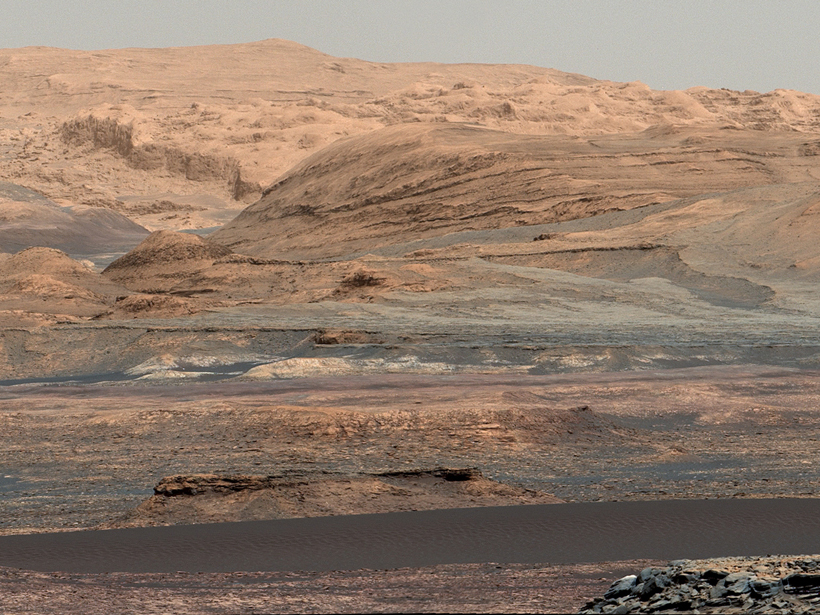
The Curiosity rover, one of NASA's flagship missions, analyzes Martian geology, geochemistry, climatology, and radiation to assess whether Mars could have supported microbial life.

Posted inResearch Spotlights

Curiosity Rover Finds Organic Molecules on Martian Surface

by David Shultz 12 October 201524 April 2024

Scientists assess the present and past habitability of Mars from organic compounds detected at Gale Crater.

Posted inFeatures

Future Mars Rovers: The Next Places to Direct Our Curiosity

by B. J. Thomson and F. El-Baz 2 September 201424 April 2024

Where will the next Mars rovers will land? Think of the selection process as the science fair to end all science fairs, where participating scientists get first looks at the newest Mars data.

Posts pagination

Newer posts 1 2
A view of a bridge, with the New Orleans skyline visible in the distance between the bridge and the water. A purple tint, a teal curved line representing a river, and the text “#AGU25 coverage from Eos” overlie the photo.

Features from AGU Publications

Research Spotlights

Watershed Sustainability Project Centers Place-Based Research

4 December 20254 December 2025
Editors' Highlights

Changes in Slab Dip Cause Rapid Changes in Plate Motion

4 December 20252 December 2025
Editors' Vox

Hydrothermal Circulation and Its Impact on the Earth System

3 December 20253 December 2025
Eos logo at left; AGU logo at right

About Eos
ENGAGE
Awards
Contact

Advertise
Submit
Career Center
Sitemap

© 2025 American Geophysical Union. All rights reserved Powered by Newspack