• About
  • Special Reports
  • Topics
    • Climate
    • Earth Science
    • Oceans
    • Space & Planets
    • Health & Ecosystems
    • Culture & Policy
    • Education & Careers
    • Opinions
  • Projects
    • Postcards From the Field
    • ENGAGE
    • Editors’ Highlights
    • Editors’ Vox
    • Eos en Español
    • Eos 简体中文版
    • Print Archive: 2015–2025
  • Policy Tracker
  • Blogs
    • Research & Developments
    • The Landslide Blog
  • Newsletter
  • Submit to Eos
  • AGU.org
  • Career Center
  • Join AGU
  • Give to AGU
  • About
  • Special Reports
  • Topics
    • Climate
    • Earth Science
    • Oceans
    • Space & Planets
    • Health & Ecosystems
    • Culture & Policy
    • Education & Careers
    • Opinions
  • Projects
    • Postcards From the Field
    • ENGAGE
    • Editors’ Highlights
    • Editors’ Vox
    • Eos en Español
    • Eos 简体中文版
    • Print Archive: 2015–2025
  • Policy Tracker
  • Blogs
    • Research & Developments
    • The Landslide Blog
  • Newsletter
  • Submit to Eos
Skip to content
  • AGU.org
  • Career Center
  • Join AGU
  • Give to AGU
Eos

Eos

Science News by AGU

Support Eos
Sign Up for Newsletter
  • About
  • Special Reports
  • Topics
    • Climate
    • Earth Science
    • Oceans
    • Space & Planets
    • Health & Ecosystems
    • Culture & Policy
    • Education & Careers
    • Opinions
  • Projects
    • Postcards From the Field
    • ENGAGE
    • Editors’ Highlights
    • Editors’ Vox
    • Eos en Español
    • Eos 简体中文版
    • Print Archive: 2015–2025
  • Policy Tracker
  • Blogs
    • Research & Developments
    • The Landslide Blog
  • Newsletter
  • Submit to Eos

Mars

Carbon dioxide frost presence at sunrise on Mars integrated over 1 year; note CO2 frost at low latitudes.
Posted inResearch Spotlights

Carbon Dioxide Frost May Keep Martian Soil Dusty

by David Shultz 8 July 201612 October 2022

Temperature readings acquired from orbit show that Mars's surface gets cold enough at night to allow layers of solid carbon dioxide frost up to several hundred micrometers thick to build up near the equator.

800-meter-tall dust devil above northern Mars.
Posted inResearch Spotlights

A (Dust) Devil of a Time—on Mars

Sarah Stanley, Science Writer by Sarah Stanley 23 June 201621 March 2022

New computer simulations of Martian dust devils could aid Red Planet weather forecasts.

Portion of a photo taken by NASA's Curiosity rover while traversing the Kimberly formation on its journey south toward the center of Gale Crater.
Posted inResearch Spotlights

Curiosity Sends Curious Water Data from Mars

Sarah Stanley, Science Writer by Sarah Stanley 8 June 201624 April 2024

The rover's neutron spectroscopy instrument hints at an unexpected trend: The upper soil levels in the layers of Gale Crater's Kimberley formation seem to hold more water-associated hydrogen.

Mars colony in The Space Between Us
Posted inNews

As Mars Gets Close, So Does a Blitz of Red Planet Dramas

by Randy Showstack 27 May 201627 October 2022

NASA's first Mars program director advised the creators of the new film The Space Between Us, which opens this summer, on the science related to Mars colonization.

Artist's concept of a rover on the Martian surface.
Posted inAGU News

How on Earth to Decide Where on Mars to Land?

Claire Wilson by C. Wilson 25 May 201624 April 2024

The Public Lecture at AGU's 2016 Fall Meeting will feature three experts—including one still in high school—to discuss landing site selection for the Mars 2020 rover.

Artist's rendering of NASA's MAVEN spacecraft, which observes interactions between the solar wind and the upper atmosphere of Mars.
Posted inResearch Spotlights

Mysterious Heavy Ion Beams Above Mars Explained

by Mark Zastrow 20 May 20164 May 2022

NASA's latest mission to Mars has uncovered the origins of fast-moving streams of particles high above the planet, flowing against the solar wind.

Thermal image showing elevated ice-rich lobes likely deposited by the second of two tsunamis suspected to have inundated Martian shorelines billions of years ago.
Posted inNews

Tsunamis Splashed Ancient Mars

Shannon Hall by S. Hall 19 May 201628 January 2022

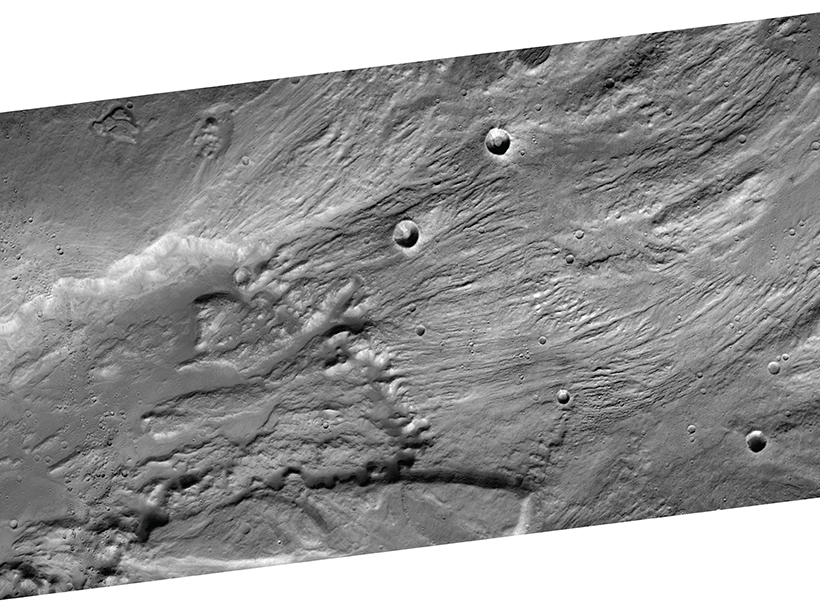
Massive meteorites likely slammed into a Martian ocean billions of years ago, unleashing tsunami waves up to 120 meters tall, a close study of a region of the Red Planet's terrain has found.

Unnamed crater in eastern Hesperia Planum, Mars.
Posted inResearch Spotlights

Martian Carbonates Spotted by the Orbiter

Kate Wheeling, freelance science writer by Kate Wheeling 3 May 201628 July 2022

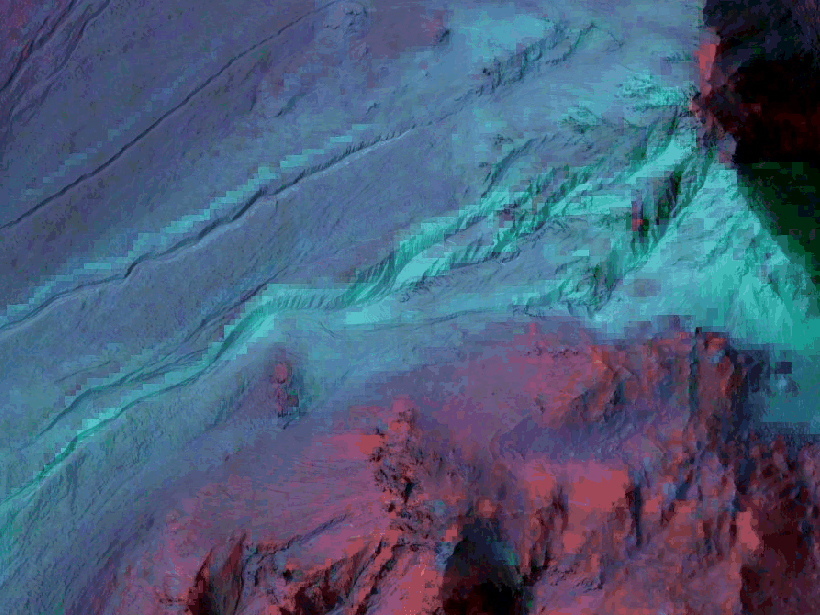
The minerals identified by the Mars Reconnaissance Orbiter provide more evidence that the planet may have once been habitable.

This relatively recent impact crater photographed last year spans a little more than a kilometer in the Sirenum Fossae region of Mars.
Posted inNews

Impacts Might Have Made Ancient Mars Briefly Hospitable to Life

Shannon Hall by S. Hall 28 April 201628 January 2022

A bombardment of the Red Planet 4 billion years ago could have created hot springs that allowed life to flourish.

Posted inScience Updates

Where Curiosity Has Taken Us

by A. R. Vasavada 12 January 201624 April 2024

The Curiosity rover, one of NASA's flagship missions, analyzes Martian geology, geochemistry, climatology, and radiation to assess whether Mars could have supported microbial life.

Posts pagination

Newer posts 1 … 21 22 23 24 25 Older posts
Over a dark blue-green square appear the words Special Report: The State of the Science 1 Year On.

Features from AGU Publications

Research Spotlights

How Internal Waves Transport Energy Thousands of Miles Across the Ocean

26 March 202626 March 2026
Editors' Highlights

What’s Under the Water Matters

27 March 202626 March 2026
Editors' Vox

The Future of Earth’s Future

24 March 202624 March 2026
Eos logo at left; AGU logo at right

About Eos
ENGAGE
Awards
Contact

Advertise
Submit
Career Center
Sitemap

© 2026 American Geophysical Union. All rights reserved Powered by Newspack