• About
  • Special Reports
  • Topics
    • Climate
    • Earth Science
    • Oceans
    • Space & Planets
    • Health & Ecosystems
    • Culture & Policy
    • Education & Careers
    • Opinions
  • Projects
    • Postcards From the Field
    • ENGAGE
    • Editors’ Highlights
    • Editors’ Vox
    • Eos en Español
    • Eos 简体中文版
    • Print Archive: 2015–2025
  • Policy Tracker
  • Blogs
    • Research & Developments
    • The Landslide Blog
  • Newsletter
  • Submit to Eos
  • AGU.org
  • Career Center
  • Join AGU
  • Give to AGU
  • About
  • Special Reports
  • Topics
    • Climate
    • Earth Science
    • Oceans
    • Space & Planets
    • Health & Ecosystems
    • Culture & Policy
    • Education & Careers
    • Opinions
  • Projects
    • Postcards From the Field
    • ENGAGE
    • Editors’ Highlights
    • Editors’ Vox
    • Eos en Español
    • Eos 简体中文版
    • Print Archive: 2015–2025
  • Policy Tracker
  • Blogs
    • Research & Developments
    • The Landslide Blog
  • Newsletter
  • Submit to Eos
Skip to content
  • AGU.org
  • Career Center
  • Join AGU
  • Give to AGU
Eos

Eos

Science News by AGU

Support Eos
Sign Up for Newsletter
  • About
  • Special Reports
  • Topics
    • Climate
    • Earth Science
    • Oceans
    • Space & Planets
    • Health & Ecosystems
    • Culture & Policy
    • Education & Careers
    • Opinions
  • Projects
    • Postcards From the Field
    • ENGAGE
    • Editors’ Highlights
    • Editors’ Vox
    • Eos en Español
    • Eos 简体中文版
    • Print Archive: 2015–2025
  • Policy Tracker
  • Blogs
    • Research & Developments
    • The Landslide Blog
  • Newsletter
  • Submit to Eos

methane

Two young women take notes next to freshly upturned soil and a sediment drill.
Posted inNews

Fugitive Gas Abetted by Barometric Pressure

Sarah Derouin, Science Writer by Sarah Derouin 19 November 201919 August 2022

Barometric pressure, in addition to factors such as lithology and the depth of the water table, can influence patterns of natural gas that escapes to subsurface soils.

Aerial view over the Alaskan tundra showing patches of snow, ice, and bare land
Posted inResearch Spotlights

Methane-Releasing Tundra Soils Freezing Later Each Year

Sarah Stanley, Science Writer by Sarah Stanley 18 September 201911 August 2022

Scientists find links between delayed freezing of Alaskan soils and higher atmospheric methane concentrations during the cold season.
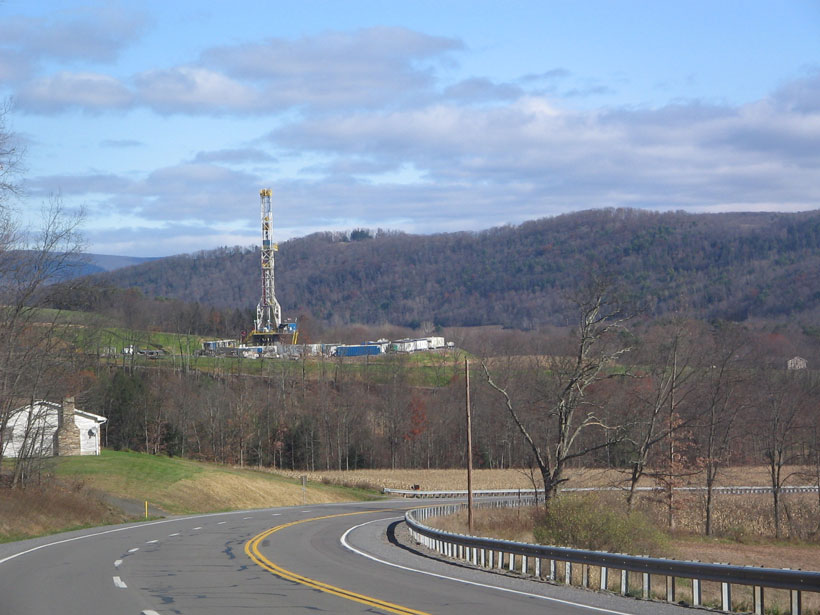
A natural gas drilling tower
Posted inResearch Spotlights

In Pennsylvania, Methane Emissions Higher Than EPA Estimates

Aaron Sidder, freelance science writer by Aaron Sidder 14 May 20192 November 2021

Although methane emission estimates from underground coal production appear to be accurate, the calculated emissions from natural gas production are underreported.
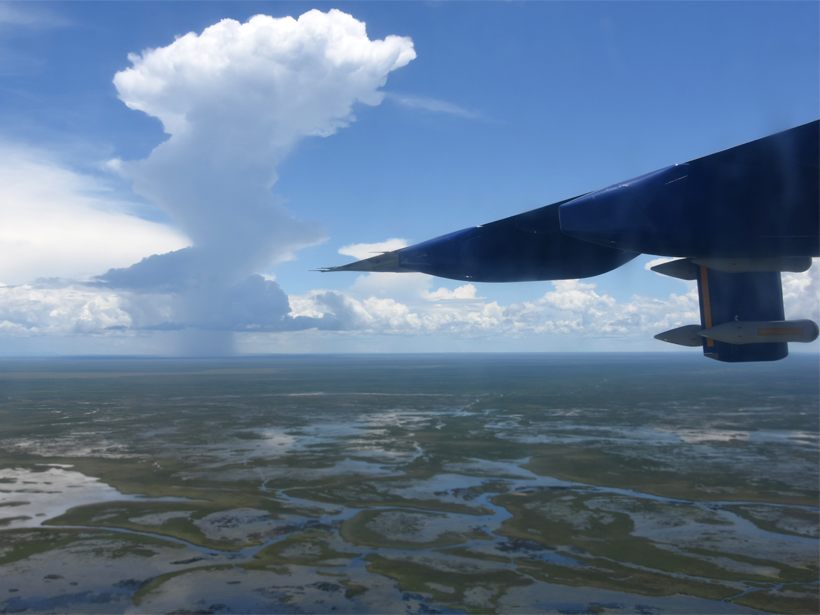
Aerial view of storm over the Bangweulu wetlands in Zambia
Posted inResearch Spotlights

Rising Methane Emissions Could Derail the Paris Agreement

by E. Underwood 19 April 20192 November 2021

A new study looks for the source of a spike in the potent greenhouse gas methane.
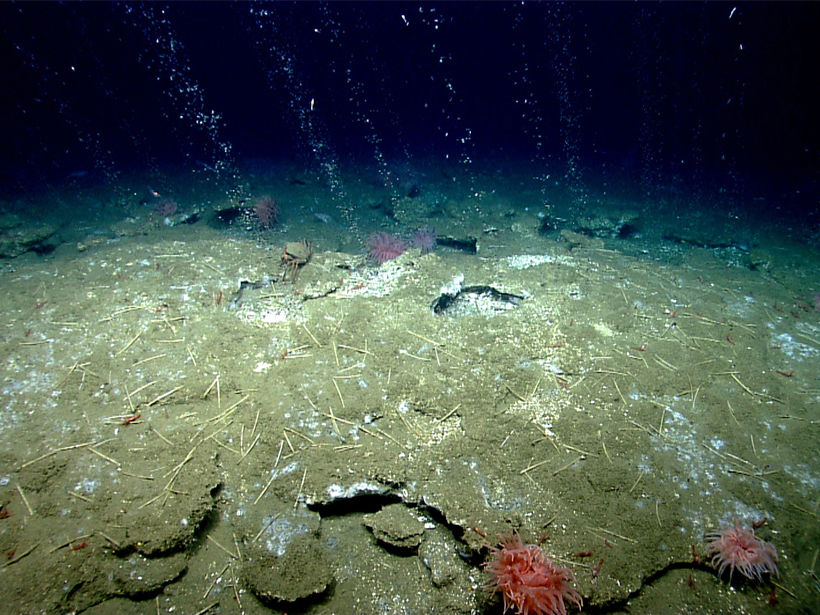
seafloor-cold-methane-seep-bubbles-NOAA-virginia
Posted inScience Updates

Compiling a Census for SEAFLEAs

by B. Phrampus, T. Lee and W. Wood 2 April 201910 March 2023

Collaboration to Compile Open-Source Sites of Seafloor Fluid Expulsion Anomalies, AGU Fall Meeting 2018; Washington, D.C., 14 December 2018

Researchers backfill testbed trenches with natural soil at METEC in Fort Collins, Colo.
Posted inNews

Detecting Fugitive Methane Leaks for Public Safety

by K. Brown 14 January 20192 November 2021

A holistic approach to tracking leaks from natural gas pipelines could prevent explosions and also help reduce greenhouse gases in the atmosphere.

A landfill in Maryland’s Eastern Shore attracts seagulls
Posted inResearch Spotlights

Greenhouse Gas Inventories Underestimate Methane Emissions

Aaron Sidder, freelance science writer by Aaron Sidder 13 November 201831 October 2022

A new study in the Baltimore-Washington metropolitan area reveals prior estimates may significantly underrepresent methane emissions, particularly from landfills and natural gas systems.

Methane bubbles escape from the seafloor off the Oregon coast.
Posted inNews

Audio Reveals Sizes of Methane Bubbles Rising from the Seafloor

Katherine Kornei, Science Writer by Katherine Kornei 6 August 20182 November 2021

A sensitive underwater microphone captures the sounds of methane, a potent greenhouse gas, escaping into waters off the coast of Oregon. Using this sound, researchers can estimate the bubbles’ sizes.

Researchers examine the link between drowned river deltas and methane emissions, and how they might be affected by rising sea levels
Posted inResearch Spotlights

Rising Seas Increase Methane Emissions from the Mouths of Rivers

by E. Underwood 2 August 201819 September 2023

Drowned river deltas exhale large quantities of greenhouse gas, new study finds.

Posted inEditors' Vox

Methane, Climate Change, and Our Uncertain Future

by J. Dean 11 May 201829 September 2021

Methane is generally considered secondary to carbon dioxide in its importance to climate change, but what role might methane play in the future if global temperatures continue to rise?

Posts pagination

Newer posts 1 … 7 8 9 10 11 … 13 Older posts
Over a dark blue-green square appear the words Special Report: The State of the Science 1 Year On.

Features from AGU Publications

Research Spotlights

Stretching and Squeezing Release Glacial Meltwater

26 May 202626 May 2026
Editors' Highlights

From Grains to Bands: Modeling Deformation in Porous Rocks

26 May 202621 May 2026
Editors' Vox

Mapping the Hidden Electrical Anatomy of a Continent

26 May 202621 May 2026
Eos logo at left; AGU logo at right

About Eos
ENGAGE
Awards
Contact

Advertise
Submit
Career Center
Sitemap

© 2026 American Geophysical Union. All rights reserved Powered by Newspack